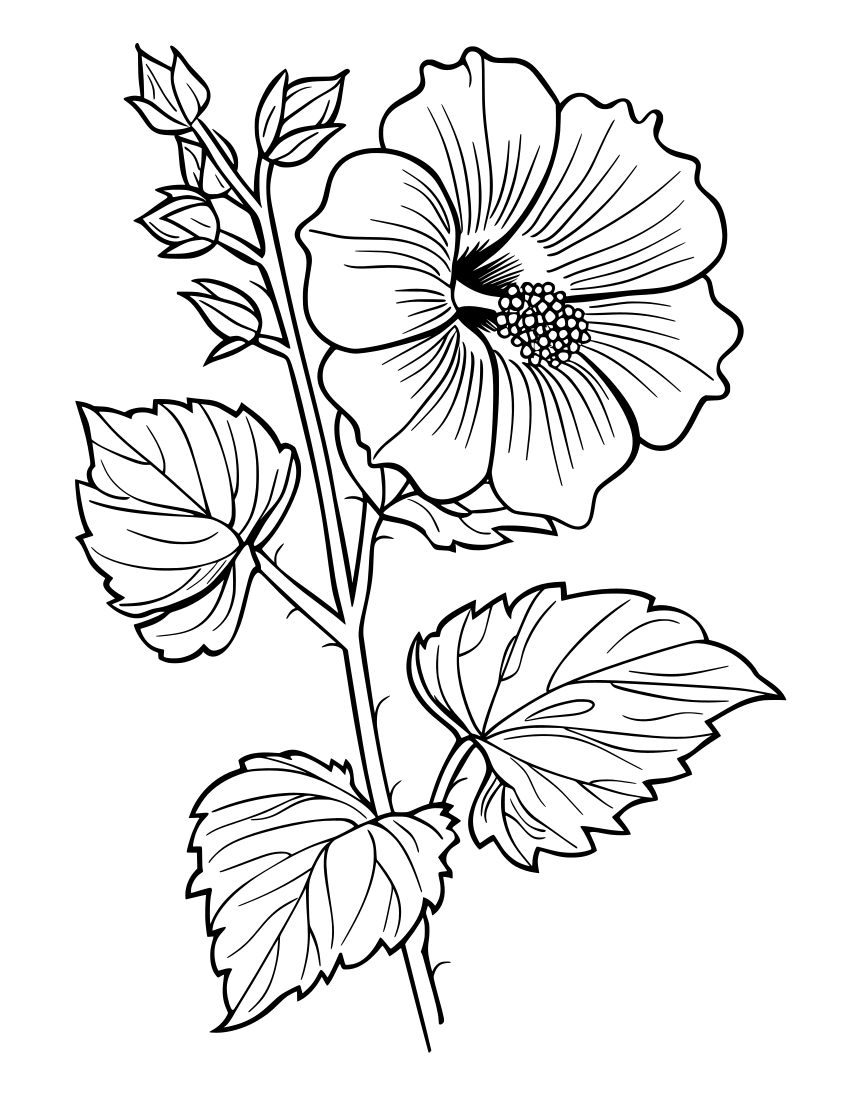
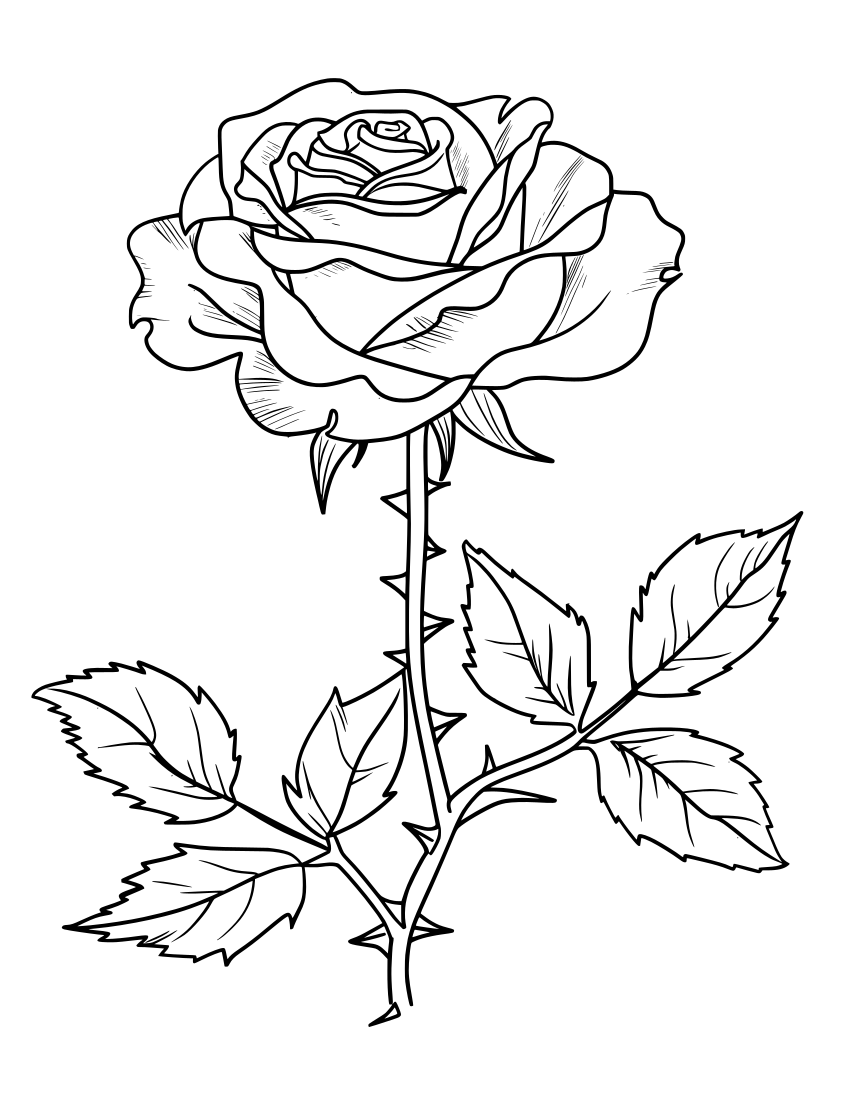
Garden Zinnia Coloring Page captures the timeless beauty of the zinnia in its natural garden setting — a design that celebrates one of the most beloved subjects in floral art and one of the most satisfying to bring to life with color. From our free flower coloring pages collection, this page invites you to explore the classic garden aesthetic through your own palette.
The zinnia is named after the 18th-century German botanist Johann Gottfried Zinn — though Zinn himself never saw the flower, as it was named posthumously by Linnaeus in 1759. Native to the dry highland meadows of Mexico and Central America, zinnias were introduced to Europe by Spanish explorers and initially dismissed as too simple to be fashionable. Not until the 20th century, when breeders developed the extraordinary range of vivid colors and double-flower forms now available, did the zinnia become a garden staple. In 2016, astronaut Scott Kelly grew zinnias aboard the International Space Station — the first flowering plant cultivated in space — making the zinnia a genuinely interplanetary flower.
Zinnias are among the most richly colored flowers in the garden — their jewel-toned palette of scarlet, magenta, burnt orange, deep gold, ivory and coral makes them ideal for bold, saturated coloring. Single-flowered varieties have simple daisy-like structure with flat ray petals and a raised central disc; double varieties are pompon-like with dozens of overlapping petals. For double zinnias, establish a color scheme and apply it consistently through the layers, slightly deeper at the center and lighter at the outermost petals. The stems are notably hairy and rough — render them in a warm, textured mid-green.
In a garden composition, the zinnia is shown in relationship with its natural companions — leaves, stems, neighbouring blooms — creating a coloring page rich with contextual detail. The classic garden aesthetic calls for a naturalistic palette that draws from real botanical colors: observe the actual hues of living zinnias and let them guide your choices. Begin with the focal bloom, establish its colors first, then build the supporting foliage and stems in harmonious tones that frame without competing. This coloring page is available as a completely free print-ready PDF. No account, no subscription — just download, print and enjoy a garden-inspired creative moment.
Leave a Comment
Comments
No comments yet. Be the first!