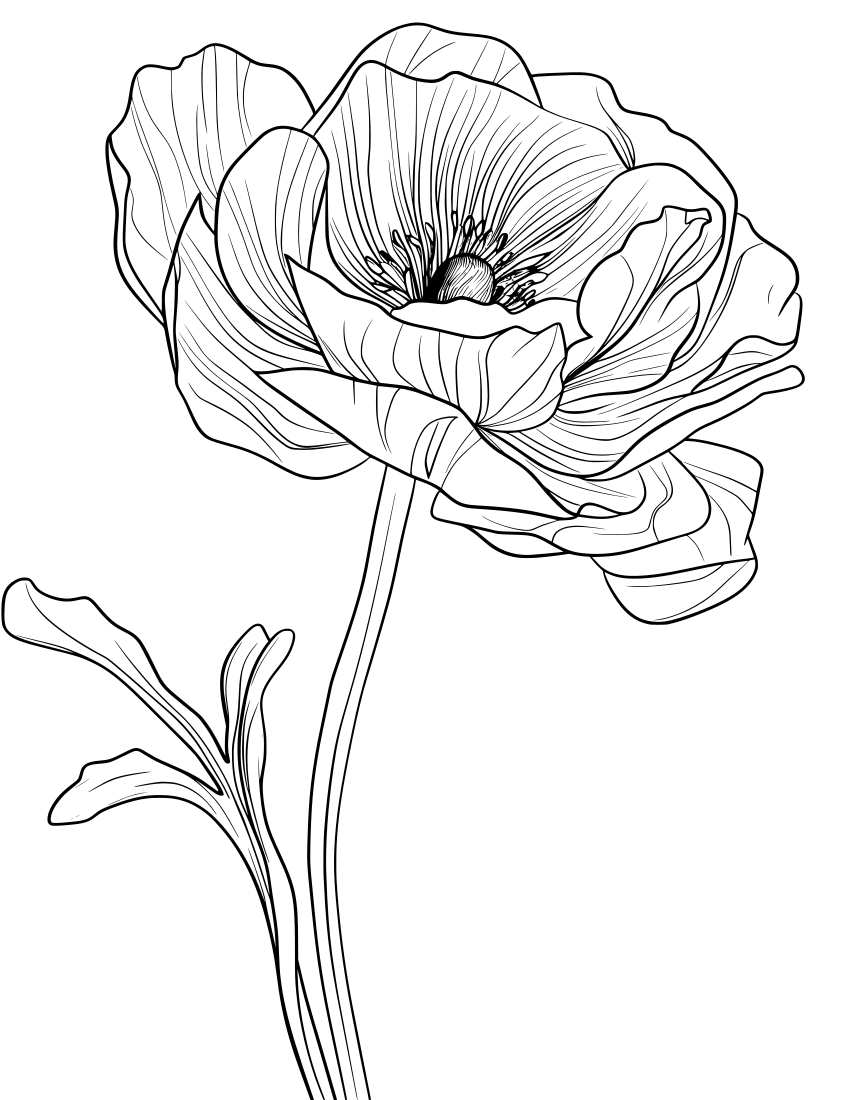
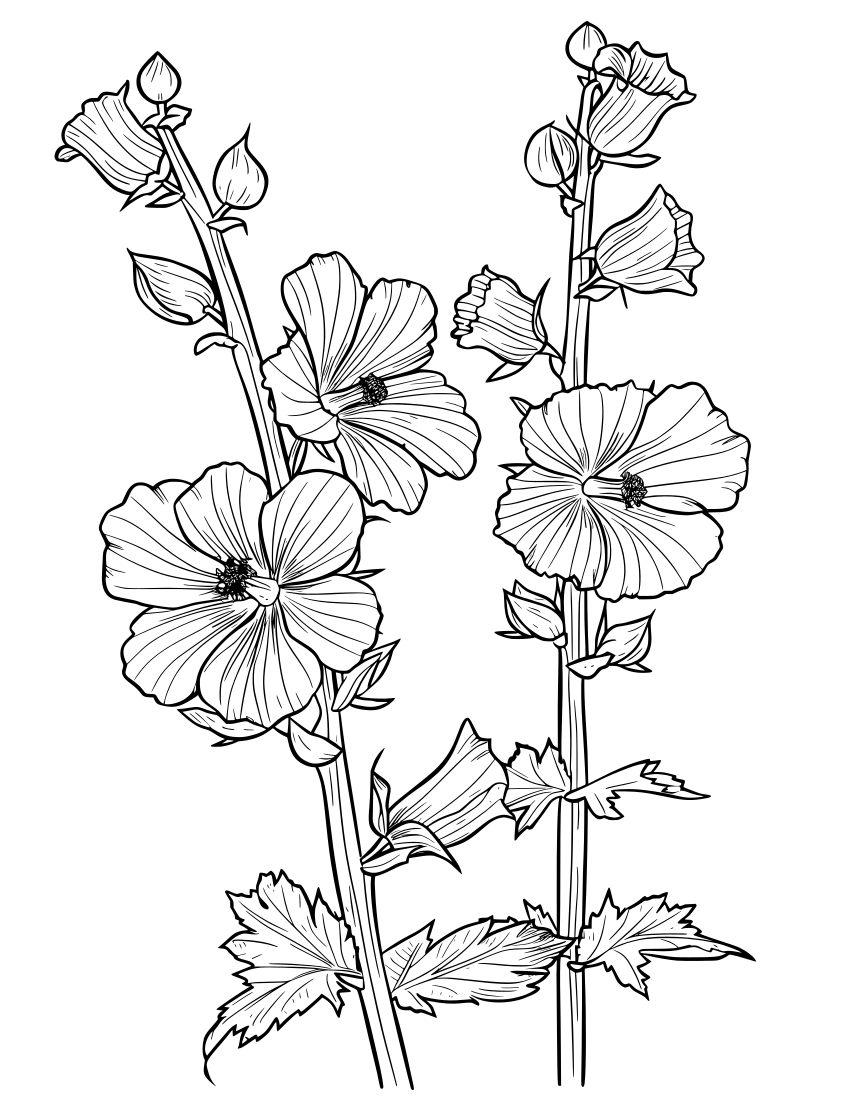
Vintage Dahlia Coloring Page evokes the refined world of Victorian botanical printing — the illustrated gift books, chromolithographic flower plates and hand-colored engravings that made botanical art one of the great aesthetic achievements of the 19th century. Part of our free flower coloring pages collection, this design is made for colorists who love the muted, harmonious palette of the historical botanical tradition.
The dahlia is the national flower of Mexico, where the Aztecs cultivated it for food (the tubers are edible), medicine and decoration. When the Spanish brought dahlias to Europe in the late 18th century, there were attempts to cultivate them as a food crop — but it was as an ornamental flower that the dahlia triumphed. The early 19th century saw the beginning of "dahlia mania": intensive breeding programmes in France, Germany and England produced increasingly spectacular varieties, and dahlia shows became major social events. By 1826, over 200 varieties were in cultivation; today there are over 57,000 registered varieties. The dahlia is named after the Swedish botanist Anders Dahl, a student of Linnaeus — who never knew the extraordinary proliferation his namesake would achieve.
Dahlias offer perhaps the greatest formal variety of any coloring subject: from simple single flowers to elaborate cactus dahlias with spiky quilled petals, waterlily dahlias with broad flat blooms, and dinner-plate dahlias that can exceed 30cm in diameter. The pompom and ball forms — perfect geometric spheres of tightly packed florets — are particularly satisfying to color with a systematic, radial approach. Dahlias are available in every color except blue: the so-called "black" dahlias (like "Karma Choc") are an extraordinary deep chocolate-burgundy that photographs almost black. Bi-colored varieties with distinct zones or tips in contrasting colors offer spectacular coloring possibilities.
Achieving an authentic vintage botanical aesthetic requires deliberate restraint with your palette. Choose colors that feel slightly aged, slightly muted: dusty rose rather than hot pink, sage green rather than bright emerald, antique gold rather than vivid yellow. A very light wash of warm grey or pale sepia applied as a base layer creates the illusion of aged paper. Fine pencil hatching in the shadow areas — rather than flat color fills — echoes the engraving technique of 18th- and 19th-century botanical plates. The dahlia in a vintage treatment has the quality of a specimen encountered in an old illustrated book: precious, carefully observed, quietly beautiful. This vintage-style coloring page is free to download and print. Complete it with a muted botanical palette and it looks extraordinary mounted in a simple gilt or dark wood frame.
Leave a Comment
Comments
No comments yet. Be the first!