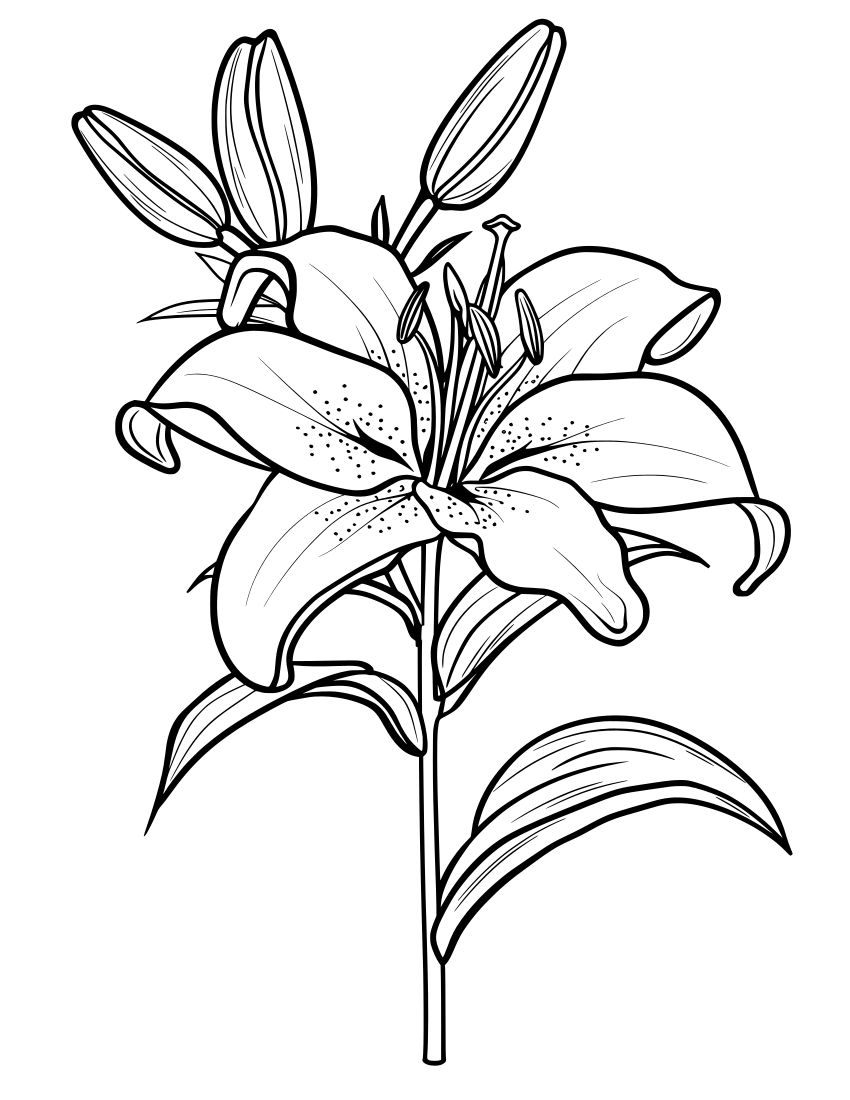
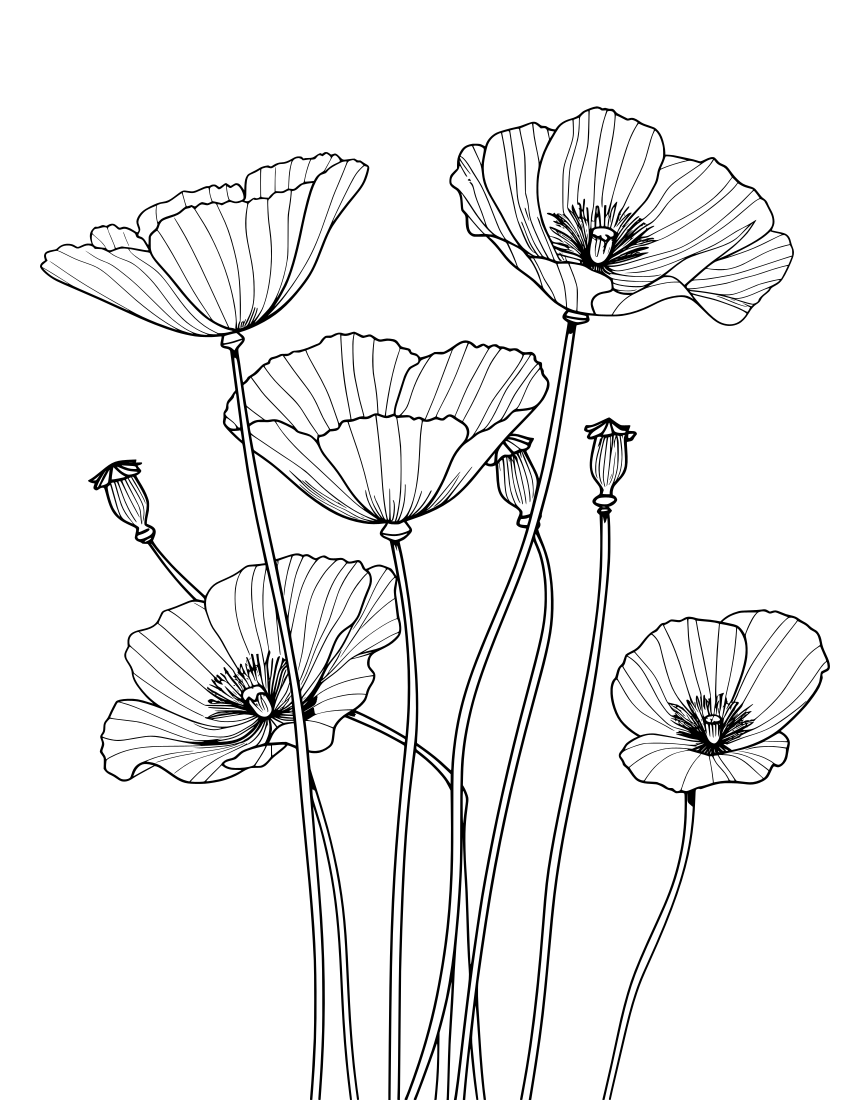
Wild Zinnia Coloring Page places the zinnia in the untamed, organic beauty of its natural wild habitat — a world away from the formal garden, this design celebrates the authentic botanical character of the flower growing freely, with all the asymmetry and liveliness that cultivation often irons out. Part of our free flower coloring pages collection, this page calls for a freer, more instinctive approach to color.
The zinnia is named after the 18th-century German botanist Johann Gottfried Zinn — though Zinn himself never saw the flower, as it was named posthumously by Linnaeus in 1759. Native to the dry highland meadows of Mexico and Central America, zinnias were introduced to Europe by Spanish explorers and initially dismissed as too simple to be fashionable. Not until the 20th century, when breeders developed the extraordinary range of vivid colors and double-flower forms now available, did the zinnia become a garden staple. In 2016, astronaut Scott Kelly grew zinnias aboard the International Space Station — the first flowering plant cultivated in space — making the zinnia a genuinely interplanetary flower.
Zinnias are among the most richly colored flowers in the garden — their jewel-toned palette of scarlet, magenta, burnt orange, deep gold, ivory and coral makes them ideal for bold, saturated coloring. Single-flowered varieties have simple daisy-like structure with flat ray petals and a raised central disc; double varieties are pompon-like with dozens of overlapping petals. For double zinnias, establish a color scheme and apply it consistently through the layers, slightly deeper at the center and lighter at the outermost petals. The stems are notably hairy and rough — render them in a warm, textured mid-green.
Wild flower coloring rewards an organic, slightly informal approach: resist the urge for perfect, uniform fills. Real zinnias growing in the wild show subtle variations in petal color from flower to flower, slight asymmetries, insect damage, sun-bleaching at the tips. These imperfections are the life of the design — include them deliberately. The foliage in wild settings is particularly expressive: mix olive, khaki, grass green and blue-green to suggest the variety of wild grasses and plants that surround the zinnia in its natural habitat. This wild flower coloring page is free to download and print as a PDF. Let the organic, living quality of the design inspire an equally free and instinctive approach to color.
Leave a Comment
Comments
No comments yet. Be the first!