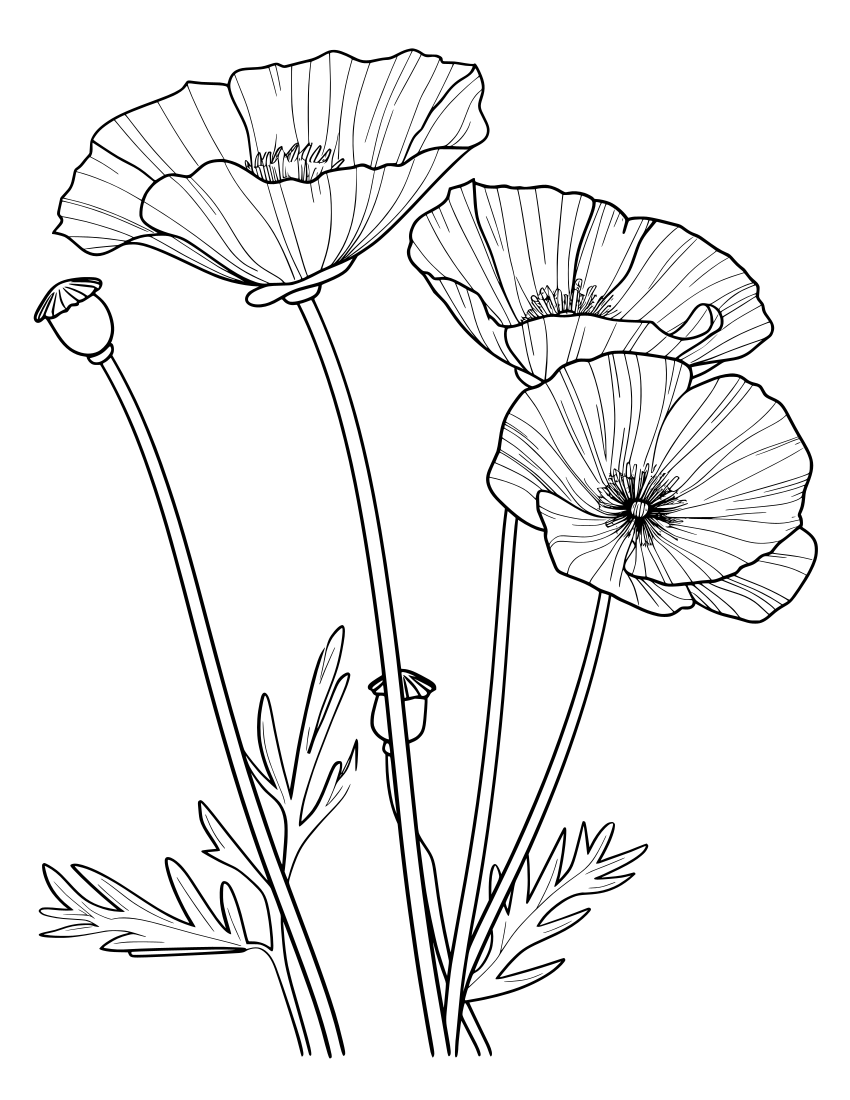
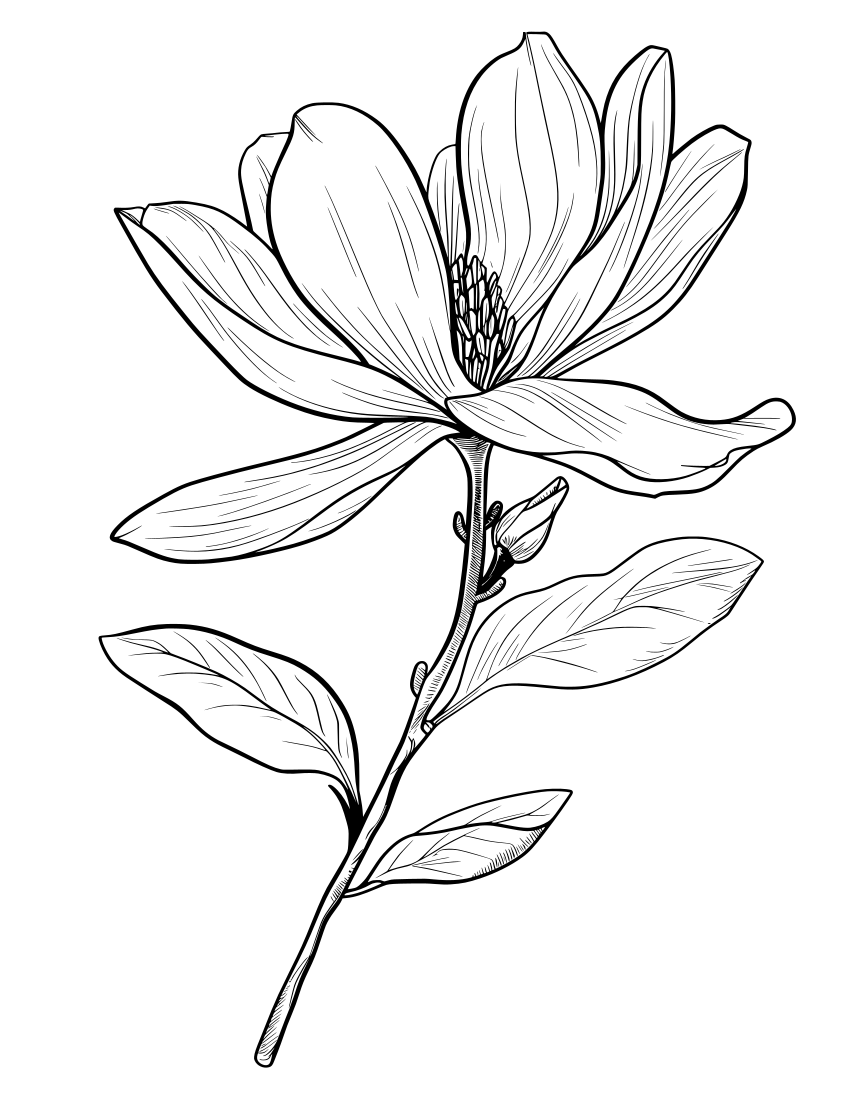
Delicate Buttercup Coloring Page presents the buttercup in the finest tradition of botanical line art — every petal edge, leaf vein and stem detail rendered with the precision and delicacy of a 19th-century scientific illustration. Part of our free flower coloring pages collection, this design is created for colorists who love the meditative satisfaction of fine, careful work.
The buttercup is one of England's most beloved wildflowers, its glossy golden cups brightening meadows and verges from April to August. Its name comes from a Victorian folk belief: cows that ate buttercups produced especially yellow, richly flavored butter — a charming theory that is, unfortunately, false (buttercups are mildly toxic to cattle and are consistently avoided). The "do you like butter?" childhood game — holding a buttercup under a friend's chin to see if the yellow is reflected — exploits the flower's extraordinary petal glossiness: buttercup petals have a unique dual-layer structure that creates a mirror-like reflectivity, the only flower known to produce this effect. The buttercup appears in paintings from Botticelli to the Pre-Raphaelites, its golden yellow inseparable from the idea of the English summer meadow.
The buttercup's extraordinary petal gloss — the result of a smooth, reflective epidermal layer over a yellow pigment layer — is its most distinctive feature and its most interesting coloring challenge. To suggest this mirror-like quality, leave a small, bright highlight on each petal (the highest point of the curved surface) completely untouched — or apply pure white gel pen as a final touch. The petal yellow should be vivid and warm: a rich golden-yellow rather than a pale or lemony tone. The deeply cut, complex leaves — dark green with multiple fine lobes — provide a beautiful detailed counterpoint to the simple, gleaming flowers.
Fine botanical line art requires fine tools and a fine touch. Use sharpened colored pencils (harder leads — H or 2H — for the thinnest details) and build color in multiple light layers rather than applying it all at once. For the buttercup's more detailed elements — vein patterns, stamen details, petal textures — work with minimal pressure and maximum patience. Leave highlights completely uncolored: this is especially important for delicate designs where a white highlight on a petal edge or the tip of a stamen suggests three-dimensionality without heavy shading. This delicate coloring page is available as a free high-resolution PDF. Print on smooth, heavier paper (100 g/m² or above) for the finest coloring experience — the delicacy of the design deserves the best surface you can offer it.
Leave a Comment
Comments
No comments yet. Be the first!