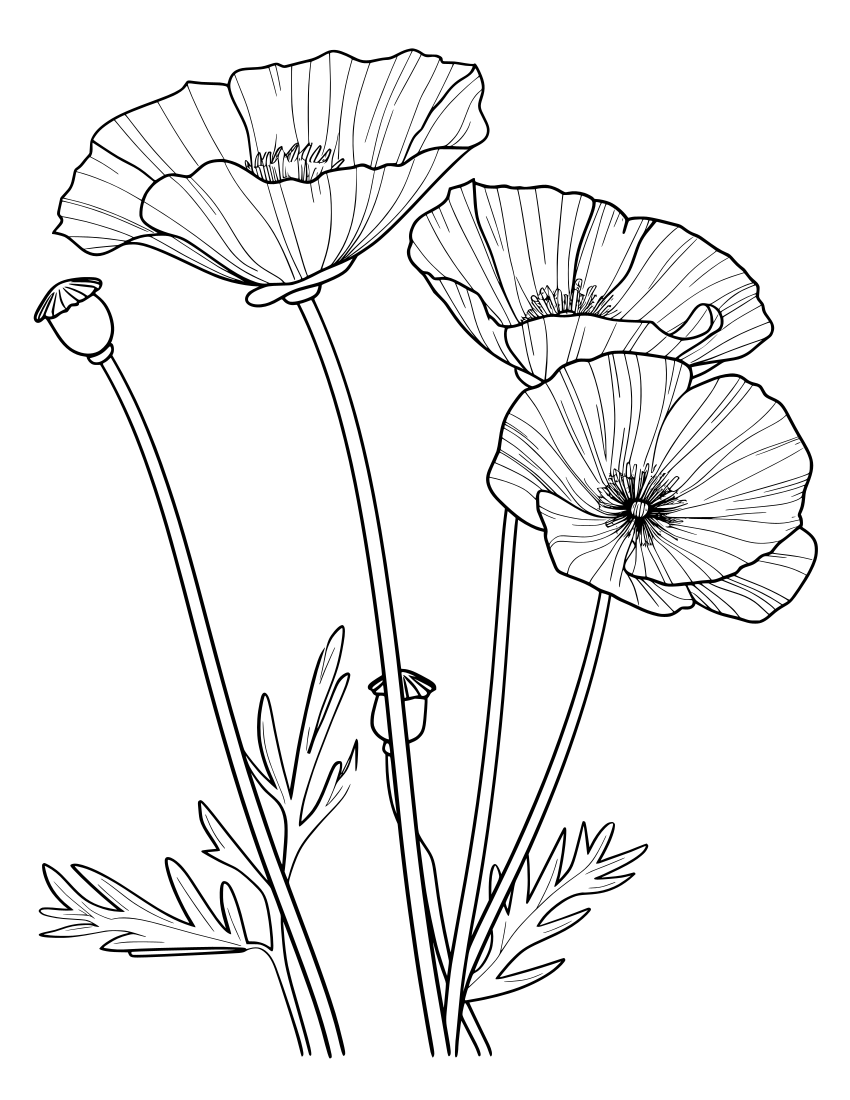
Delicate Foxglove Coloring Page presents the foxglove in the finest tradition of botanical line art — every petal edge, leaf vein and stem detail rendered with the precision and delicacy of a 19th-century scientific illustration. Part of our free flower coloring pages collection, this design is created for colorists who love the meditative satisfaction of fine, careful work.
The foxglove's common name is one of English folklore's most evocative: the Old English foxes glofa — "fox gloves" — referring to the glove-like shape of the bell flowers. In Norwegian, the same flower is called revbjølle — "fox bells." Celtic legend called it "fairy fingers" and believed that bad fairies gave the flowers to foxes to muffle their footsteps while hunting. The foxglove's scientific importance came in 1785, when the physician William Withering published An Account of the Foxglove after studying how an old herbalist woman used it to treat dropsy (heart failure). He identified the active compound — digitalin — establishing the foundation for modern cardiac medicine. Today, digitalis drugs derived from foxglove are still used to treat heart conditions.
The foxglove's tall spire of pendulous tubular bells — opening from the bottom upward, with the top buds still closed — creates a beautiful vertical rhythm unique among garden flowers. Each individual bell is a small masterpiece of pattern: the interior is typically spotted with a contrasting color against a background that differs from the exterior. For pink-purple foxgloves, the exterior is a soft rose-purple while the interior is cream or white with deep magenta spots surrounded by white "eyes." Render the interior spots carefully — they're the most distinctive feature of the flower — using a fine point and working from larger to smaller marks as they approach the petal edge.
Fine botanical line art requires fine tools and a fine touch. Use sharpened colored pencils (harder leads — H or 2H — for the thinnest details) and build color in multiple light layers rather than applying it all at once. For the foxglove's more detailed elements — vein patterns, stamen details, petal textures — work with minimal pressure and maximum patience. Leave highlights completely uncolored: this is especially important for delicate designs where a white highlight on a petal edge or the tip of a stamen suggests three-dimensionality without heavy shading. This delicate coloring page is available as a free high-resolution PDF. Print on smooth, heavier paper (100 g/m² or above) for the finest coloring experience — the delicacy of the design deserves the best surface you can offer it.
Leave a Comment
Comments
No comments yet. Be the first!