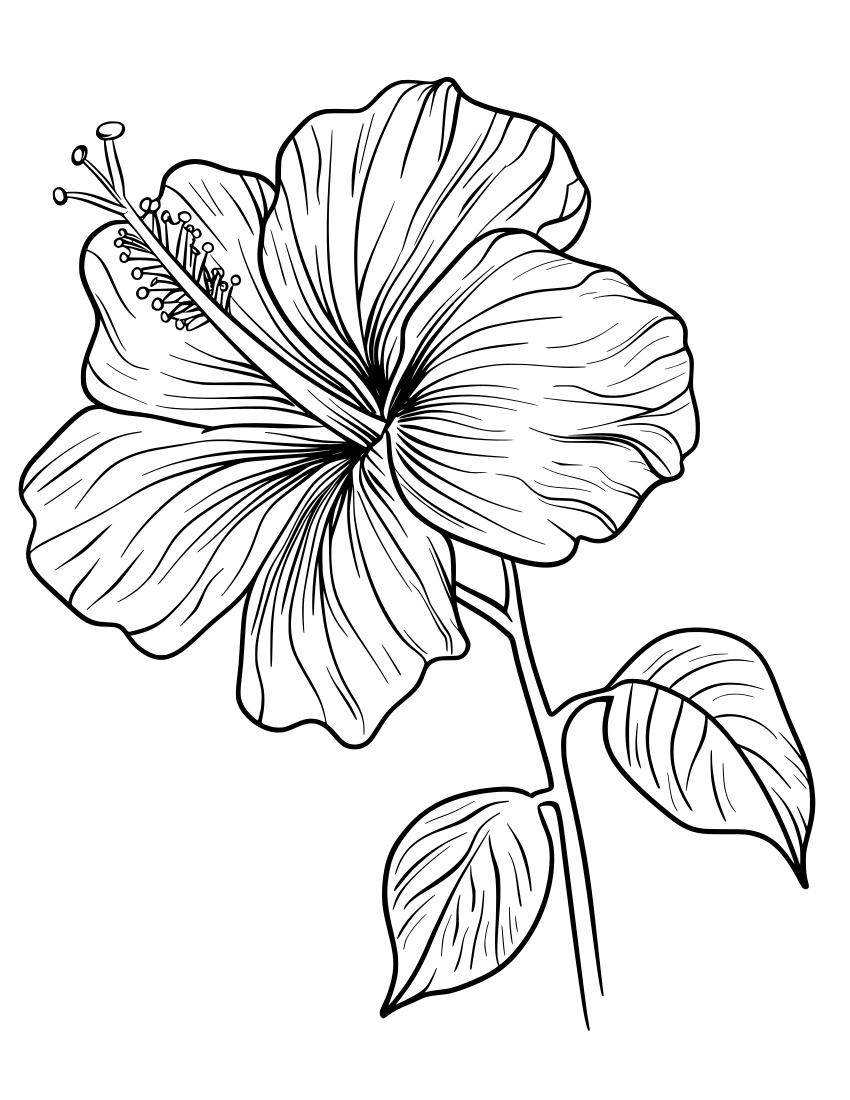
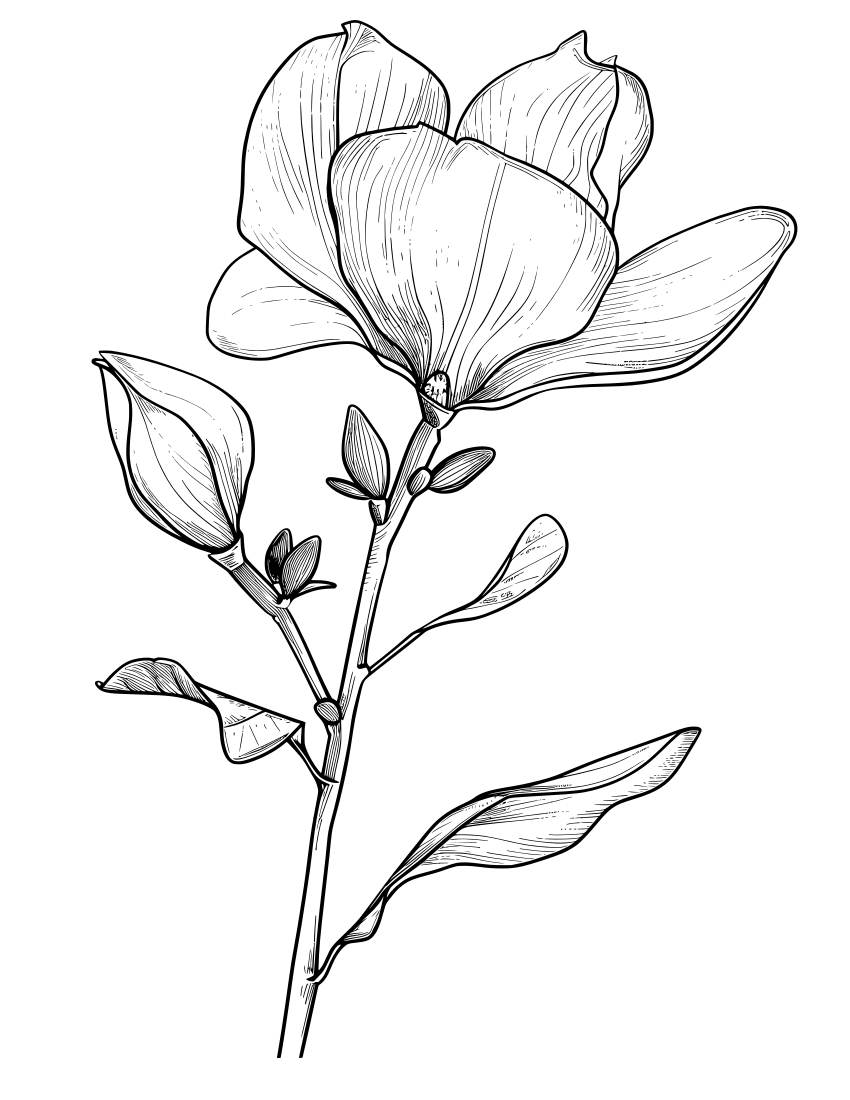
Delicate Carnation Coloring Page presents the carnation in the finest tradition of botanical line art — every petal edge, leaf vein and stem detail rendered with the precision and delicacy of a 19th-century scientific illustration. Part of our free flower coloring pages collection, this design is created for colorists who love the meditative satisfaction of fine, careful work.
The carnation has one of the longest histories in cultivation of any ornamental flower — it was grown in ancient China over 2,000 years ago and in ancient Greece, where it was known as dianthos, "flower of the gods." In the Victorian language of flowers, carnations carried precise color-coded meanings: red for deep love, pink for a mother's undying love, white for pure love and luck, yellow for rejection, purple for capriciousness. It was Anna Jarvis who chose the white carnation as the symbol of Mother's Day in 1908 — honoring her own mother who had always worn a white carnation. The carnation is also deeply associated with political movements: in Portugal's 1974 Carnation Revolution, soldiers placed carnations in their rifle barrels as a symbol of peaceful change.
The carnation's fringed, deeply ruffled petals — as if each petal has been cut with pinking shears at the edge — give it a texture no other flower matches. This fringe is the key coloring detail: render the petal edges with a slightly irregular, feathery touch using fine strokes of the same color, marginally darker or lighter than the main petal tone. Carnations are natural graduates: many varieties show a white or cream base that intensifies toward a richer hue at the petal tips. Working light to dark from base to fringed edge captures this quality perfectly. The calyx (the green collar below the bloom) has a beautiful tubular structure worth rendering carefully.
Fine botanical line art requires fine tools and a fine touch. Use sharpened colored pencils (harder leads — H or 2H — for the thinnest details) and build color in multiple light layers rather than applying it all at once. For the carnation's more detailed elements — vein patterns, stamen details, petal textures — work with minimal pressure and maximum patience. Leave highlights completely uncolored: this is especially important for delicate designs where a white highlight on a petal edge or the tip of a stamen suggests three-dimensionality without heavy shading. This delicate coloring page is available as a free high-resolution PDF. Print on smooth, heavier paper (100 g/m² or above) for the finest coloring experience — the delicacy of the design deserves the best surface you can offer it.
Leave a Comment
Comments
No comments yet. Be the first!