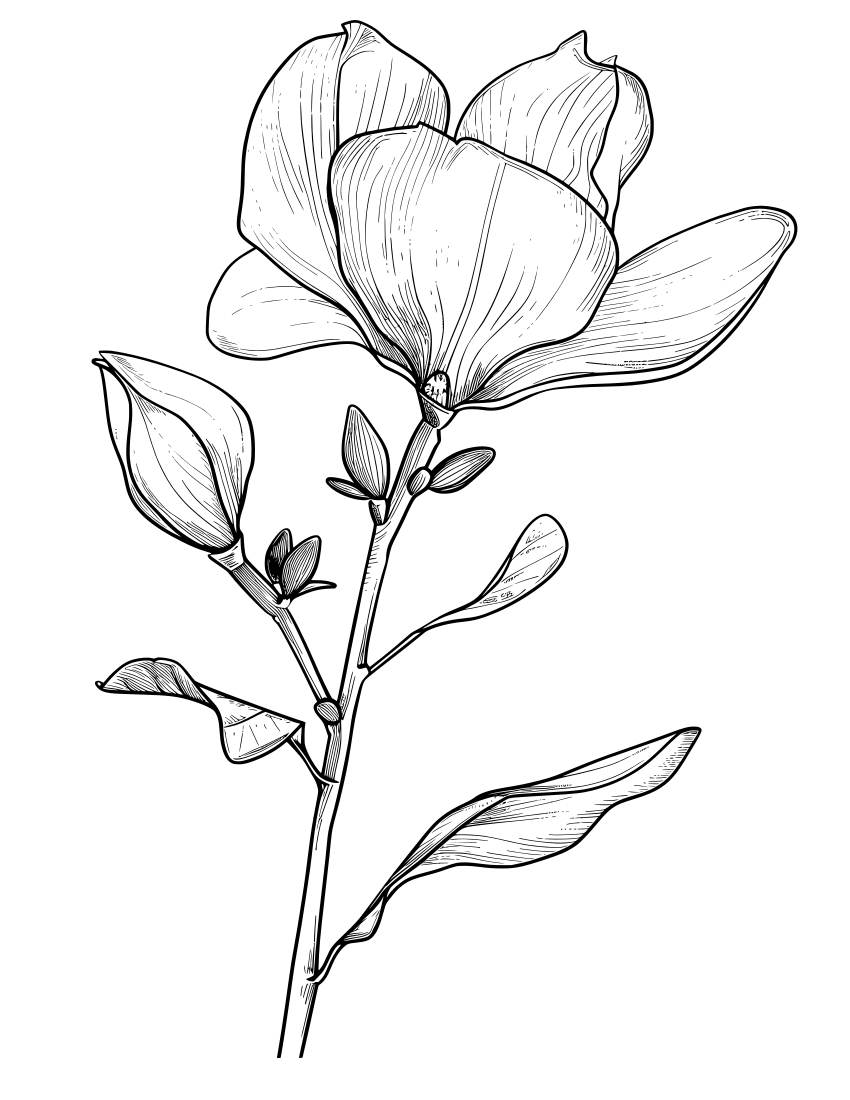
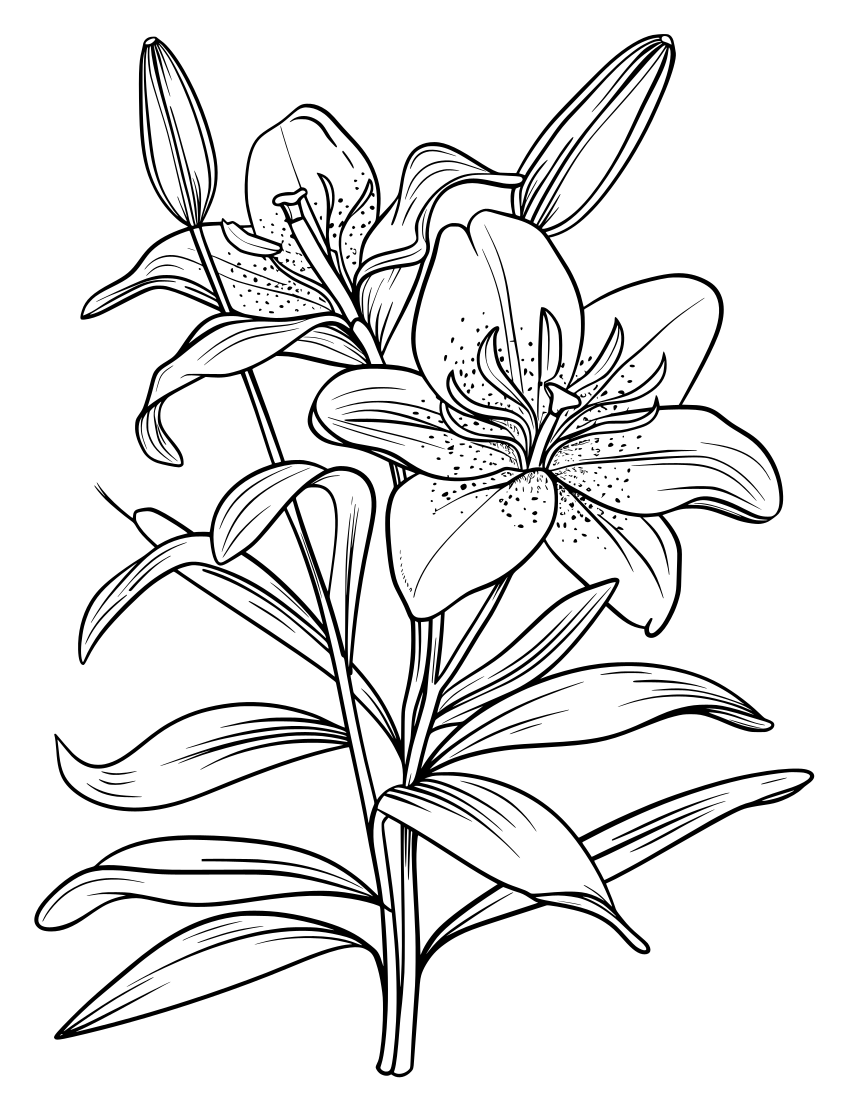
Delicate Aster Coloring Page presents the aster in the finest tradition of botanical line art — every petal edge, leaf vein and stem detail rendered with the precision and delicacy of a 19th-century scientific illustration. Part of our free flower coloring pages collection, this design is created for colorists who love the meditative satisfaction of fine, careful work.
The aster takes its name from the Greek word for "star" — an accurate description of its perfectly star-like flower form. In ancient Greece, asters were burned as incense to drive away evil spirits, and garlands of asters were placed on the altars of the gods. The Cherokees used asters medicinally; the ancient Chinese regarded the aster as a symbol of love and wisdom. In the Victorian language of flowers, the aster meant patience, elegance and "I will think of you." The Michaelmas daisy (Aster novi-belgii), an aster species, became one of Victorian England's most beloved garden flowers — its blue-purple flowers blooming in September just as summer releases its hold, providing color when most other flowers have faded.
The aster's star-like radiation of narrow ray petals around a bright yellow or golden disc makes it one of the most structurally satisfying flowers to color. Classic asters range from pure white through pale lavender to rich violet-purple, with some cultivars in deep red, pink and soft blue. The petal color is typically most intense at the tip and slightly paler where the petals meet the disc. The yellow central disc provides a warm, contrasting anchor: work it from bright gold at the outer edge to deeper amber-orange at the very center. The fine, precise ray petals benefit from a careful, patient approach — line art rendering with strokes following the petal direction.
Fine botanical line art requires fine tools and a fine touch. Use sharpened colored pencils (harder leads — H or 2H — for the thinnest details) and build color in multiple light layers rather than applying it all at once. For the aster's more detailed elements — vein patterns, stamen details, petal textures — work with minimal pressure and maximum patience. Leave highlights completely uncolored: this is especially important for delicate designs where a white highlight on a petal edge or the tip of a stamen suggests three-dimensionality without heavy shading. This delicate coloring page is available as a free high-resolution PDF. Print on smooth, heavier paper (100 g/m² or above) for the finest coloring experience — the delicacy of the design deserves the best surface you can offer it.
Leave a Comment
Comments
No comments yet. Be the first!