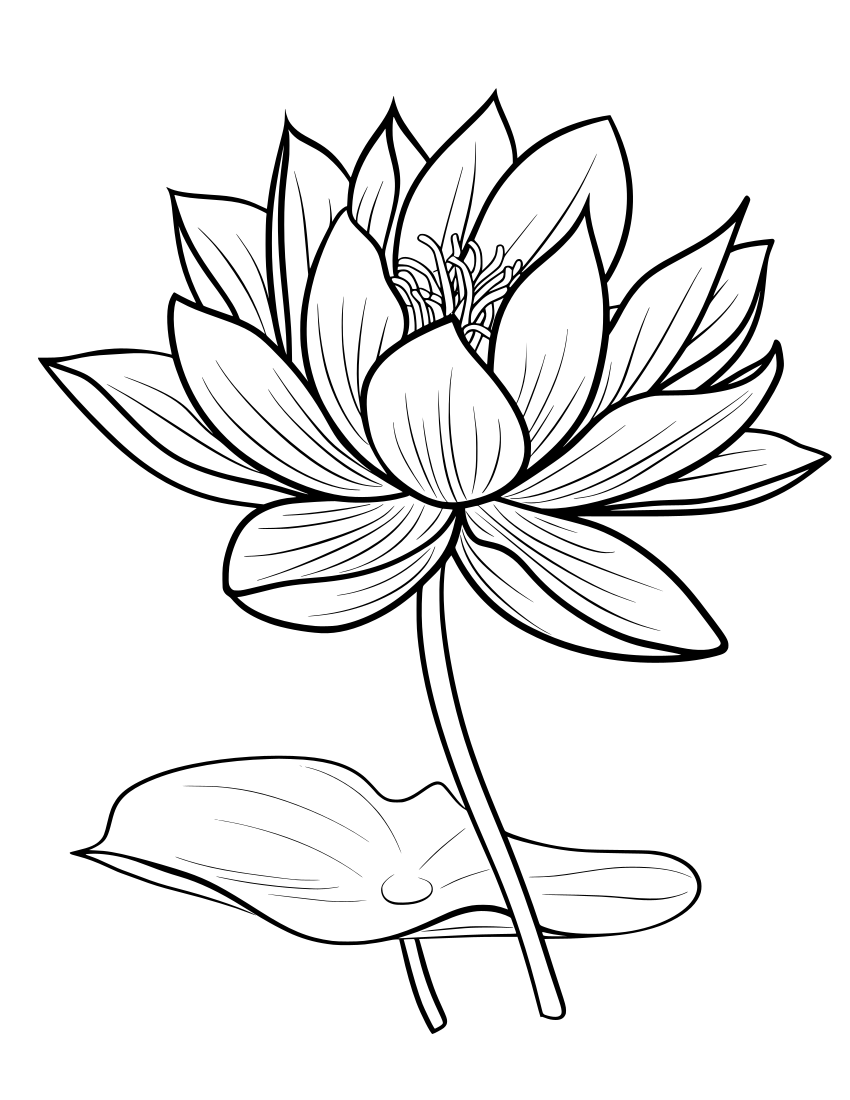
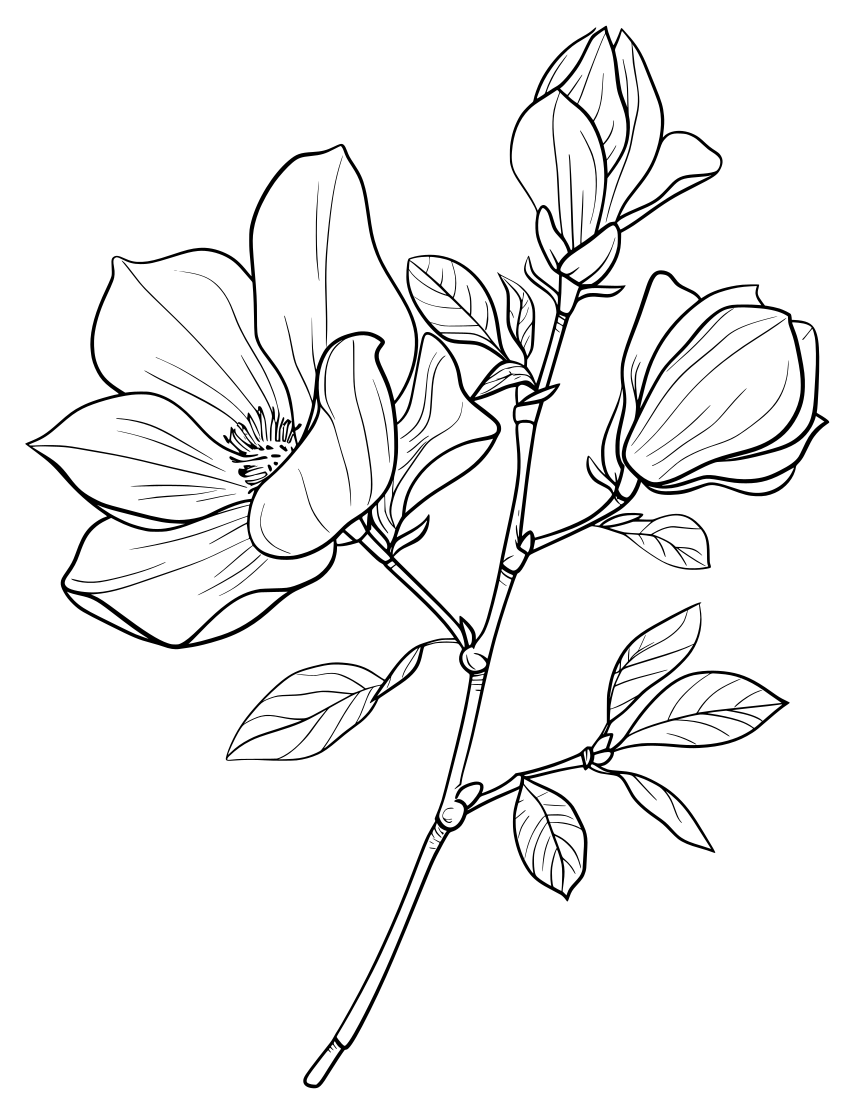
Delicate Daffodil Coloring Page presents the daffodil in the finest tradition of botanical line art — every petal edge, leaf vein and stem detail rendered with the precision and delicacy of a 19th-century scientific illustration. Part of our free flower coloring pages collection, this design is created for colorists who love the meditative satisfaction of fine, careful work.
The daffodil has been a symbol of spring's return for thousands of years — but it entered the literary imagination most powerfully through William Wordsworth's poem "I Wandered Lonely as a Cloud" (1807), inspired by a mass of daffodils he and his sister Dorothy encountered at Ullswater in the Lake District. "Ten thousand saw I at a glance, / Tossing their heads in sprightly dance." In Welsh tradition, the daffodil is the national flower, worn on St. David's Day (1 March). In ancient Greek mythology, the daffodil is named for Narcissus, the youth who fell in love with his own reflection and was transformed into a flower — giving us the word "narcissism." The daffodil is also the symbol of cancer charities in several countries, sold in the millions each year to fund cancer research.
The daffodil's distinctive two-part structure — the flat, star-like "perianth" of six petals surrounding the central trumpet-shaped "corona" — offers a beautiful coloring opportunity. The corona (trumpet) is typically deeper and more vivid in color than the surrounding petals: rich golden orange for classic daffodils, apricot or deep coral for some varieties. The perianth petals are cooler and lighter, often a clean lemon-yellow or cream-white. Let the trumpet be your color statement; the petals provide the backdrop. The long, elegant stems and strap-like leaves are a clean, cool blue-green.
Fine botanical line art requires fine tools and a fine touch. Use sharpened colored pencils (harder leads — H or 2H — for the thinnest details) and build color in multiple light layers rather than applying it all at once. For the daffodil's more detailed elements — vein patterns, stamen details, petal textures — work with minimal pressure and maximum patience. Leave highlights completely uncolored: this is especially important for delicate designs where a white highlight on a petal edge or the tip of a stamen suggests three-dimensionality without heavy shading. This delicate coloring page is available as a free high-resolution PDF. Print on smooth, heavier paper (100 g/m² or above) for the finest coloring experience — the delicacy of the design deserves the best surface you can offer it.
Leave a Comment
Comments
No comments yet. Be the first!