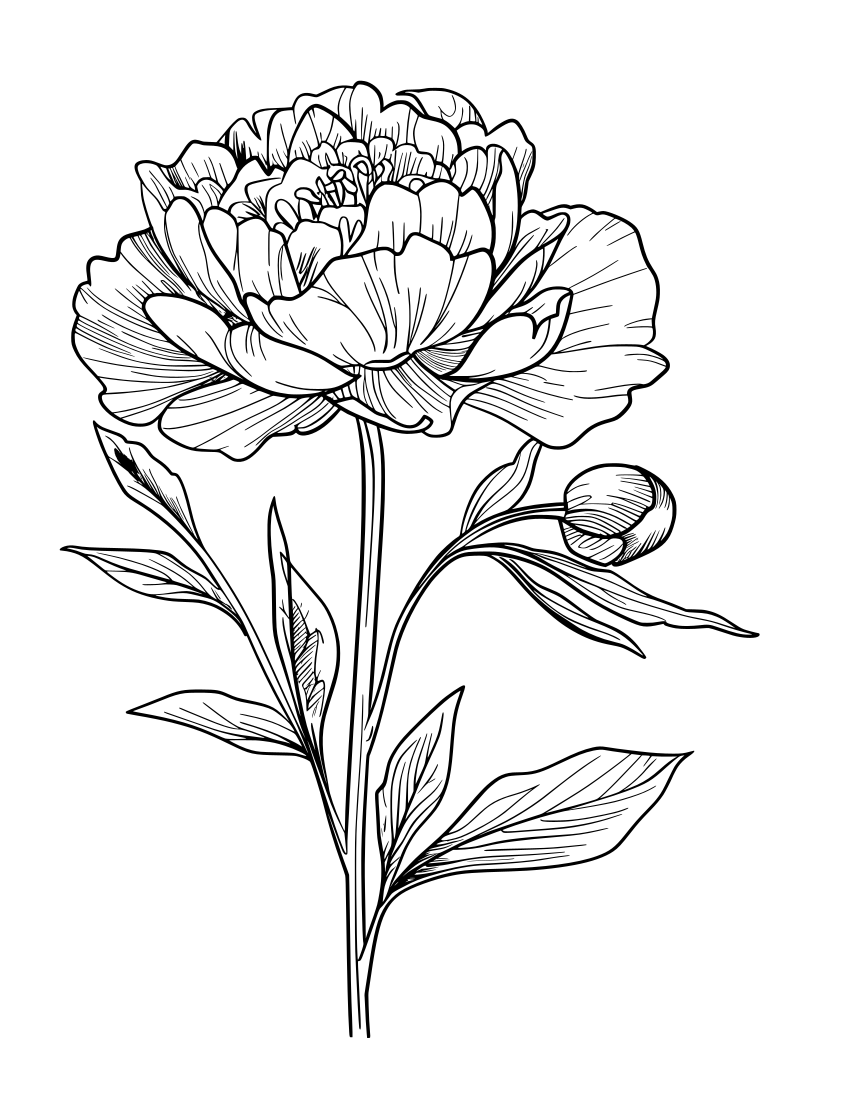
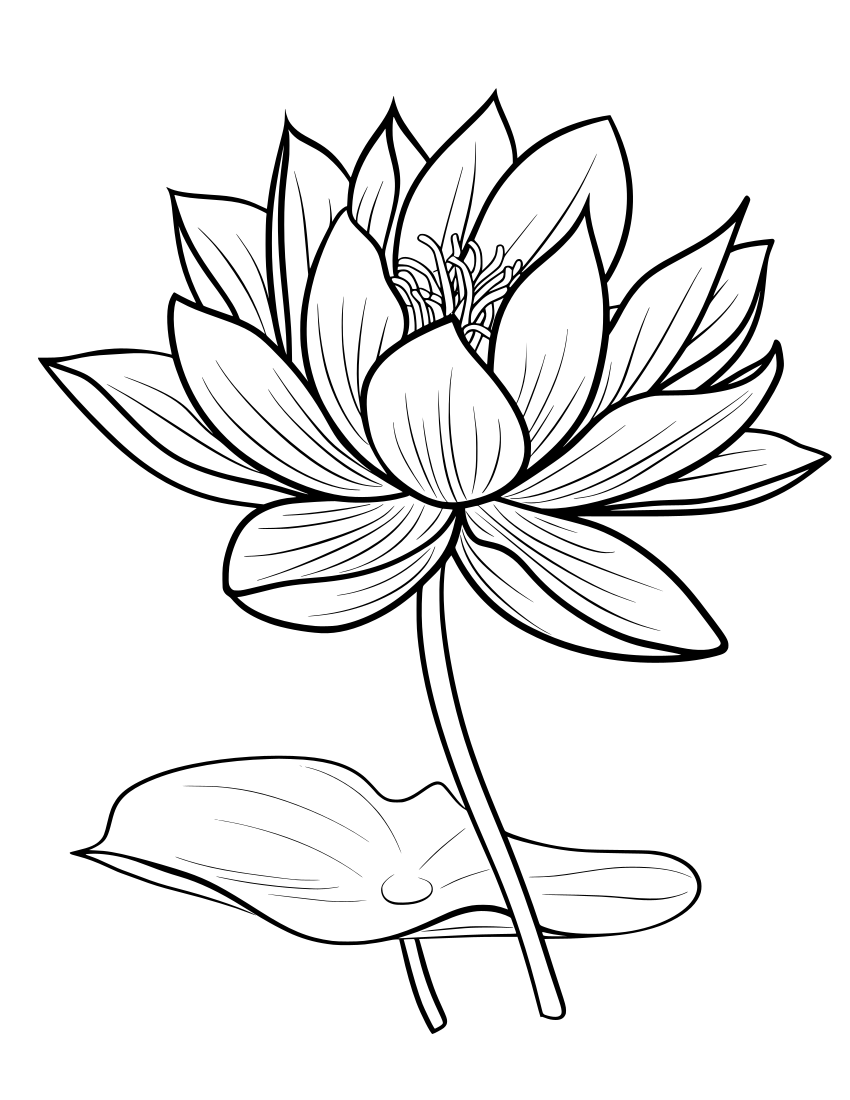
Delicate Lotus Coloring Page presents the lotus in the finest tradition of botanical line art — every petal edge, leaf vein and stem detail rendered with the precision and delicacy of a 19th-century scientific illustration. Part of our free flower coloring pages collection, this design is created for colorists who love the meditative satisfaction of fine, careful work.
The lotus occupies a unique place in world spirituality. In Hindu and Buddhist cosmology, the lotus is the throne of the gods: Brahma the creator sits on a lotus emerging from the navel of Vishnu; the Buddha is always depicted seated on a lotus. This symbolism derives from the lotus's miraculous biology: the plant rises each morning from muddy, stagnant water to open its pure, pristine flowers above the surface — a living metaphor for spiritual transcendence, the emergence of the pure from the impure. Ancient Egyptians worshipped the blue lotus (Nymphaea caerulea) as a symbol of creation and rebirth — it appears in thousands of wall paintings and carvings. The lotus seed can lie dormant for 1,300 years and still germinate.
The lotus displays a beautiful architectural symmetry: concentric rings of petals surrounding a distinctive flat-topped seed pod at the center. The outer petals are typically the largest and most open; as you move inward, the petals become progressively smaller and more upright, cupping the center pod. Indian sacred lotuses range from pure white through the palest pink to a deep, warm rose — color them accordingly, with the deepest tones at the petal bases and the lightest at the tips. The seed pod itself is a wonderful geometric element: a dome of holes, best rendered in warm olive or ochre.
Fine botanical line art requires fine tools and a fine touch. Use sharpened colored pencils (harder leads — H or 2H — for the thinnest details) and build color in multiple light layers rather than applying it all at once. For the lotus's more detailed elements — vein patterns, stamen details, petal textures — work with minimal pressure and maximum patience. Leave highlights completely uncolored: this is especially important for delicate designs where a white highlight on a petal edge or the tip of a stamen suggests three-dimensionality without heavy shading. This delicate coloring page is available as a free high-resolution PDF. Print on smooth, heavier paper (100 g/m² or above) for the finest coloring experience — the delicacy of the design deserves the best surface you can offer it.
Leave a Comment
Comments
No comments yet. Be the first!