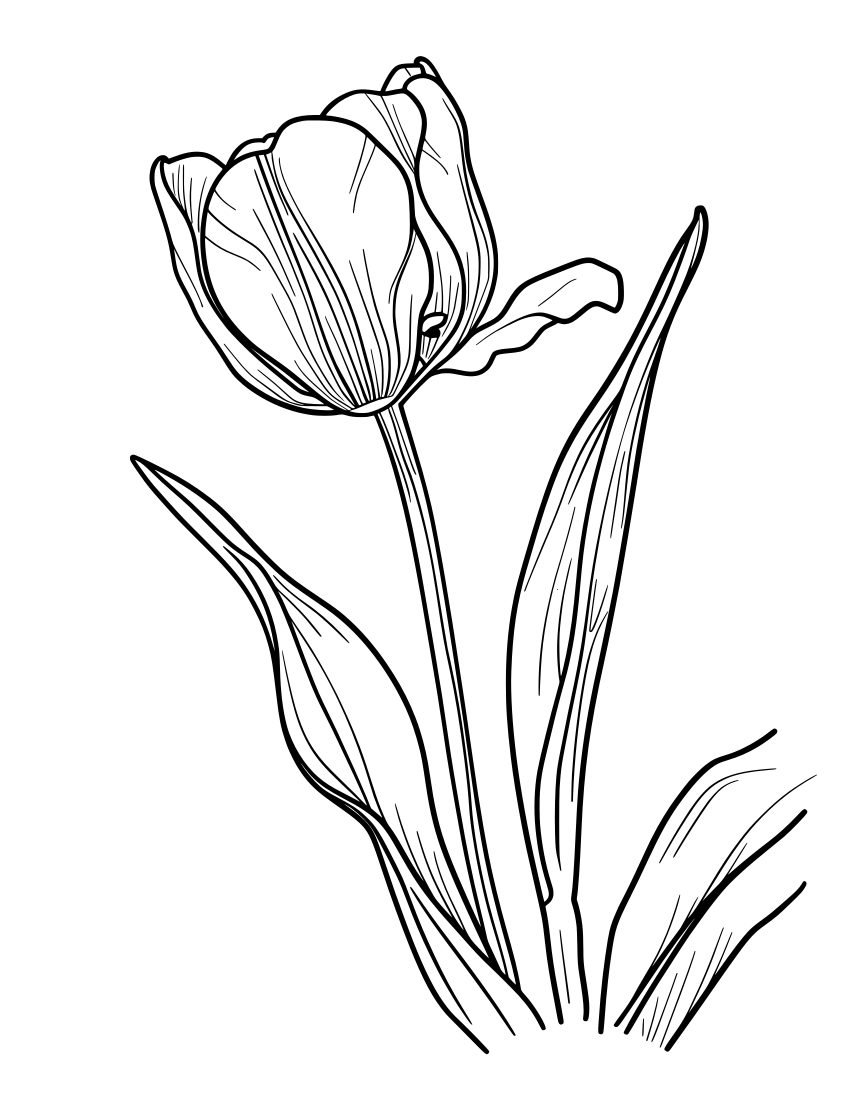
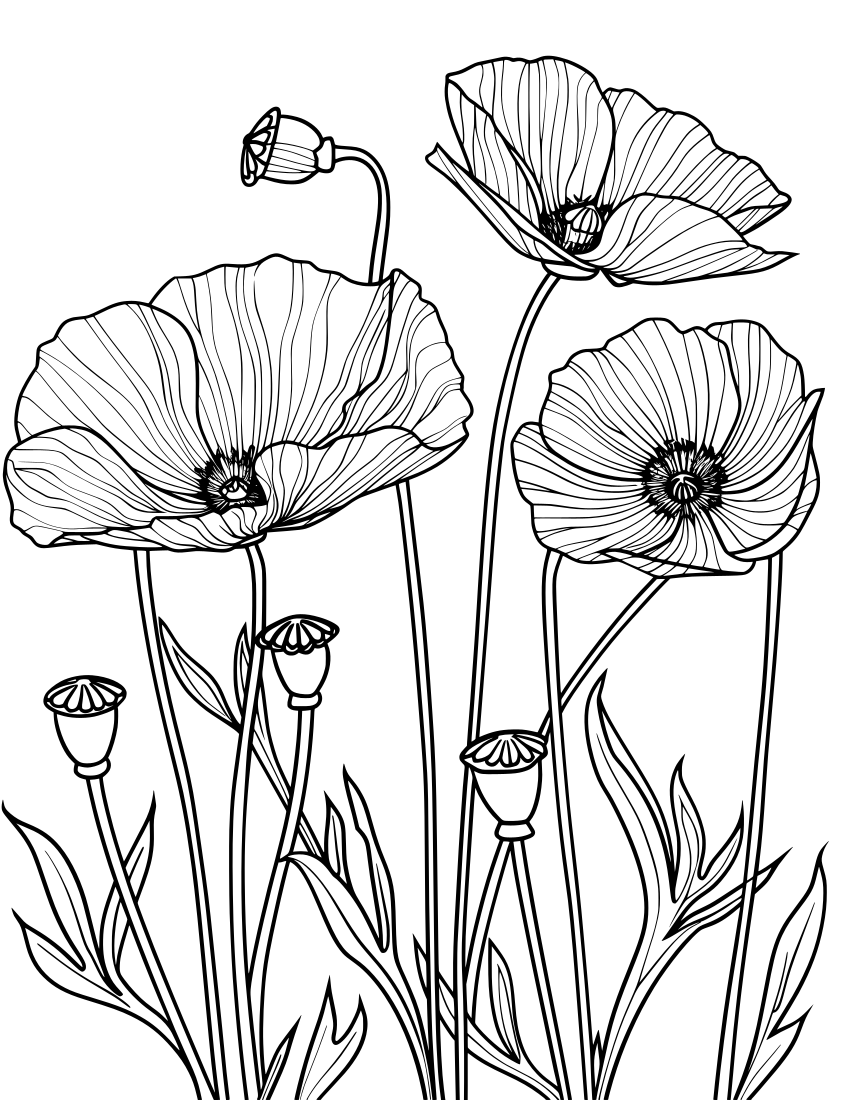
Delicate Hibiscus Coloring Page presents the hibiscus in the finest tradition of botanical line art — every petal edge, leaf vein and stem detail rendered with the precision and delicacy of a 19th-century scientific illustration. Part of our free flower coloring pages collection, this design is created for colorists who love the meditative satisfaction of fine, careful work.
The hibiscus grows across tropical and subtropical regions worldwide and carries deep cultural significance in many of them. It is the national flower of Malaysia (where it appears on the coat of arms as Bunga Raya, "celebratory flower"), South Korea, and Haiti. In Hawaii, the yellow hibiscus (pua aloalo) is the state flower and has long been worn in the hair — behind the left ear if you're taken, the right if you're available. Ancient Egyptians used hibiscus petals to make karkadé, a crimson herbal tea still drunk across the Middle East and Africa. The Aztecs used hibiscus in ritual offerings, recognising in its blood-red petals a connection to sacred solar energies.
The hibiscus is one of the most dramatic flowers to color: enormous petals — sometimes 15cm across — radiate from a prominent staminal column that thrusts boldly from the centre. The petals often show a darker "eye" zone near the centre transitioning to a lighter, brighter color at the edges: deep crimson fading to coral, or dark purple transitioning to lavender. The staminal column is spectacular — render each individual anther (the tiny pollen sacs at the tips) carefully for a botanically accurate touch. Use your full range of warm reds and pinks without restraint.
Fine botanical line art requires fine tools and a fine touch. Use sharpened colored pencils (harder leads — H or 2H — for the thinnest details) and build color in multiple light layers rather than applying it all at once. For the hibiscus's more detailed elements — vein patterns, stamen details, petal textures — work with minimal pressure and maximum patience. Leave highlights completely uncolored: this is especially important for delicate designs where a white highlight on a petal edge or the tip of a stamen suggests three-dimensionality without heavy shading. This delicate coloring page is available as a free high-resolution PDF. Print on smooth, heavier paper (100 g/m² or above) for the finest coloring experience — the delicacy of the design deserves the best surface you can offer it.
Leave a Comment
Comments
No comments yet. Be the first!