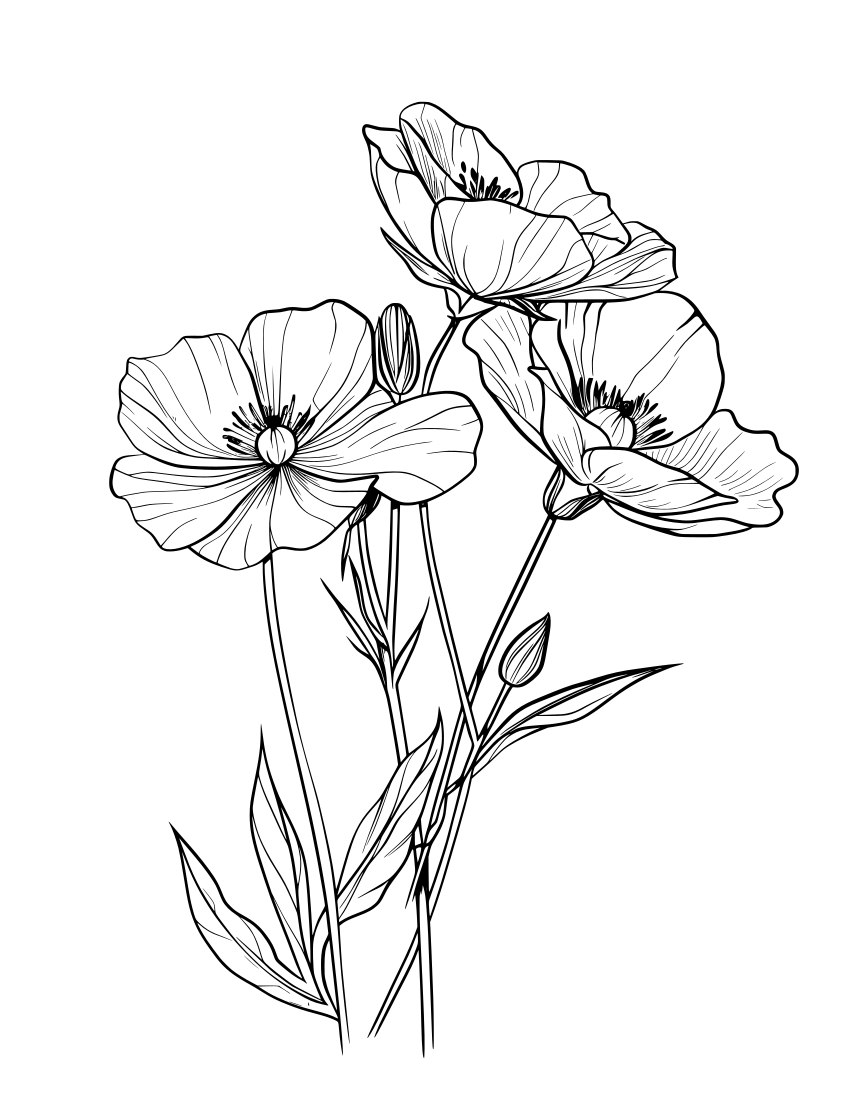
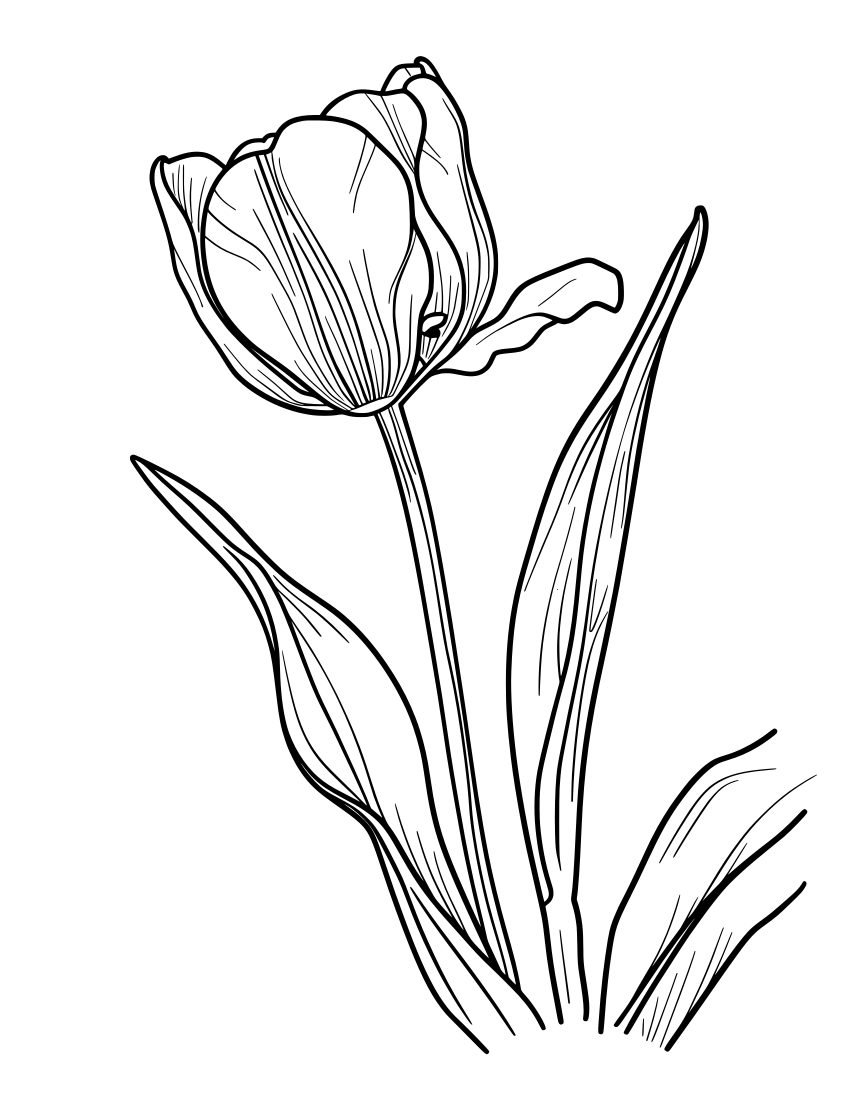
Delicate Iris Coloring Page presents the iris in the finest tradition of botanical line art — every petal edge, leaf vein and stem detail rendered with the precision and delicacy of a 19th-century scientific illustration. Part of our free flower coloring pages collection, this design is created for colorists who love the meditative satisfaction of fine, careful work.
The iris takes its name from Iris, the Greek goddess of the rainbow — its extraordinary range of colours (purple, blue, yellow, white, burgundy, black, bi-coloured) makes the name entirely apt. The fleur-de-lis, the heraldic symbol of French royalty, is widely believed to represent a stylised iris — used on the royal standard of France since the 12th century. Vincent van Gogh painted a celebrated series of irises during his stay at the Saint-Paul-de-Mausole asylum in Saint-Rémy (1889), finding in their swirling forms and rich colours a source of consolation and beauty. Japanese iris festivals (hanashÅbu) have been celebrated for centuries, with entire temple gardens devoted to their cultivation.
The iris has a uniquely complex three-part structure: the "falls" (lower drooping petals), the "standards" (upper upright petals) and the delicate "style arms" at the centre. Use this structure as a coloring guide — the falls and standards can be subtly different tones of the same colour family to create depth. Classic bearded irises have a distinctive fuzzy "beard" stripe running down each fall: render it in white or pale yellow against the darker petal colour. The venation of iris petals — fine darker lines running along the petal length — adds beautiful detail when suggested lightly with a slightly deeper shade.
Fine botanical line art requires fine tools and a fine touch. Use sharpened colored pencils (harder leads — H or 2H — for the thinnest details) and build color in multiple light layers rather than applying it all at once. For the iris's more detailed elements — vein patterns, stamen details, petal textures — work with minimal pressure and maximum patience. Leave highlights completely uncolored: this is especially important for delicate designs where a white highlight on a petal edge or the tip of a stamen suggests three-dimensionality without heavy shading. This delicate coloring page is available as a free high-resolution PDF. Print on smooth, heavier paper (100 g/m² or above) for the finest coloring experience — the delicacy of the design deserves the best surface you can offer it.
Leave a Comment
Comments
No comments yet. Be the first!