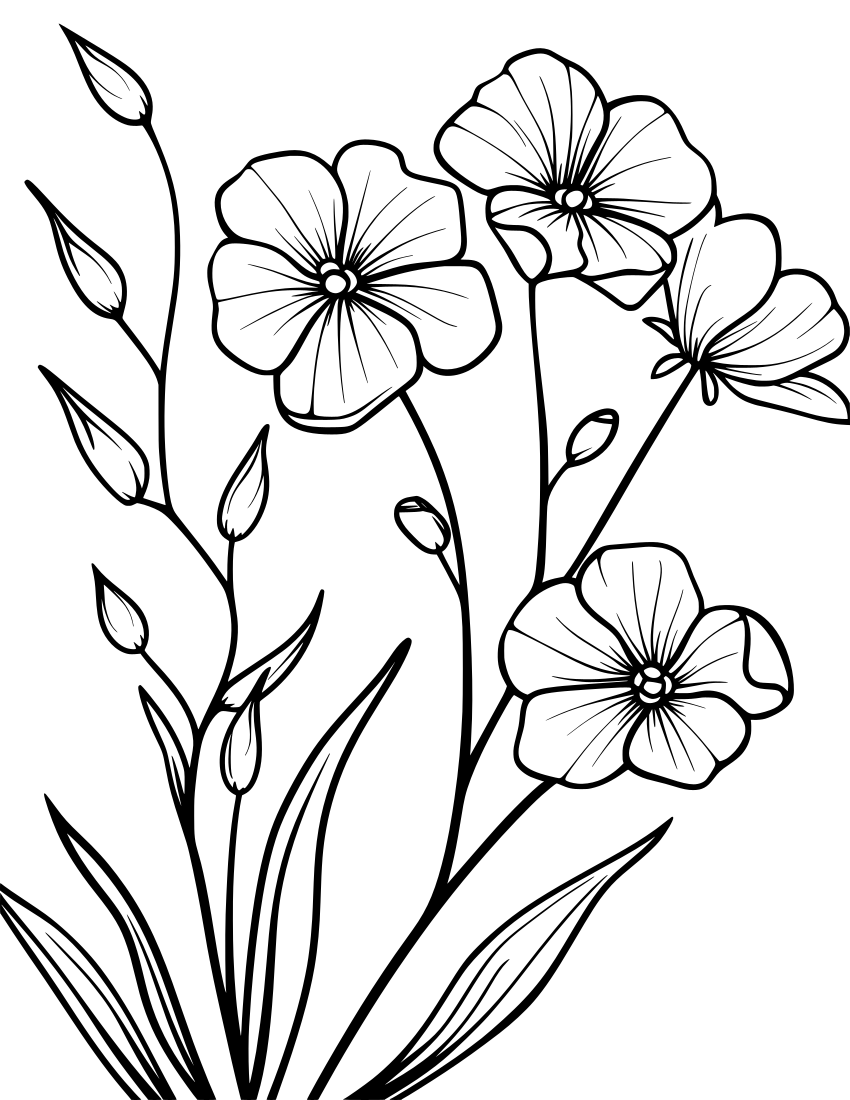
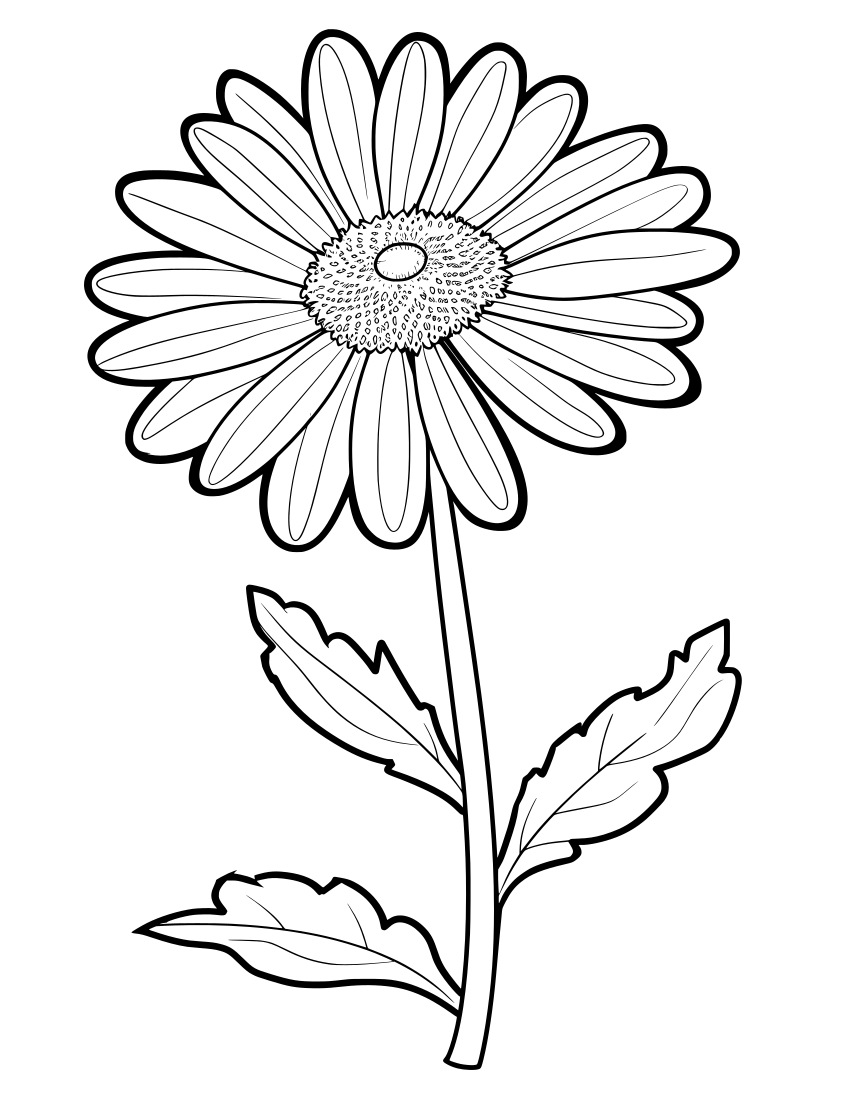
Vintage Buttercup Coloring Page evokes the refined world of Victorian botanical printing — the illustrated gift books, chromolithographic flower plates and hand-colored engravings that made botanical art one of the great aesthetic achievements of the 19th century. Part of our free flower coloring pages collection, this design is made for colorists who love the muted, harmonious palette of the historical botanical tradition.
The buttercup is one of England's most beloved wildflowers, its glossy golden cups brightening meadows and verges from April to August. Its name comes from a Victorian folk belief: cows that ate buttercups produced especially yellow, richly flavored butter — a charming theory that is, unfortunately, false (buttercups are mildly toxic to cattle and are consistently avoided). The "do you like butter?" childhood game — holding a buttercup under a friend's chin to see if the yellow is reflected — exploits the flower's extraordinary petal glossiness: buttercup petals have a unique dual-layer structure that creates a mirror-like reflectivity, the only flower known to produce this effect. The buttercup appears in paintings from Botticelli to the Pre-Raphaelites, its golden yellow inseparable from the idea of the English summer meadow.
The buttercup's extraordinary petal gloss — the result of a smooth, reflective epidermal layer over a yellow pigment layer — is its most distinctive feature and its most interesting coloring challenge. To suggest this mirror-like quality, leave a small, bright highlight on each petal (the highest point of the curved surface) completely untouched — or apply pure white gel pen as a final touch. The petal yellow should be vivid and warm: a rich golden-yellow rather than a pale or lemony tone. The deeply cut, complex leaves — dark green with multiple fine lobes — provide a beautiful detailed counterpoint to the simple, gleaming flowers.
Achieving an authentic vintage botanical aesthetic requires deliberate restraint with your palette. Choose colors that feel slightly aged, slightly muted: dusty rose rather than hot pink, sage green rather than bright emerald, antique gold rather than vivid yellow. A very light wash of warm grey or pale sepia applied as a base layer creates the illusion of aged paper. Fine pencil hatching in the shadow areas — rather than flat color fills — echoes the engraving technique of 18th- and 19th-century botanical plates. The buttercup in a vintage treatment has the quality of a specimen encountered in an old illustrated book: precious, carefully observed, quietly beautiful. This vintage-style coloring page is free to download and print. Complete it with a muted botanical palette and it looks extraordinary mounted in a simple gilt or dark wood frame.
Leave a Comment
Comments
No comments yet. Be the first!