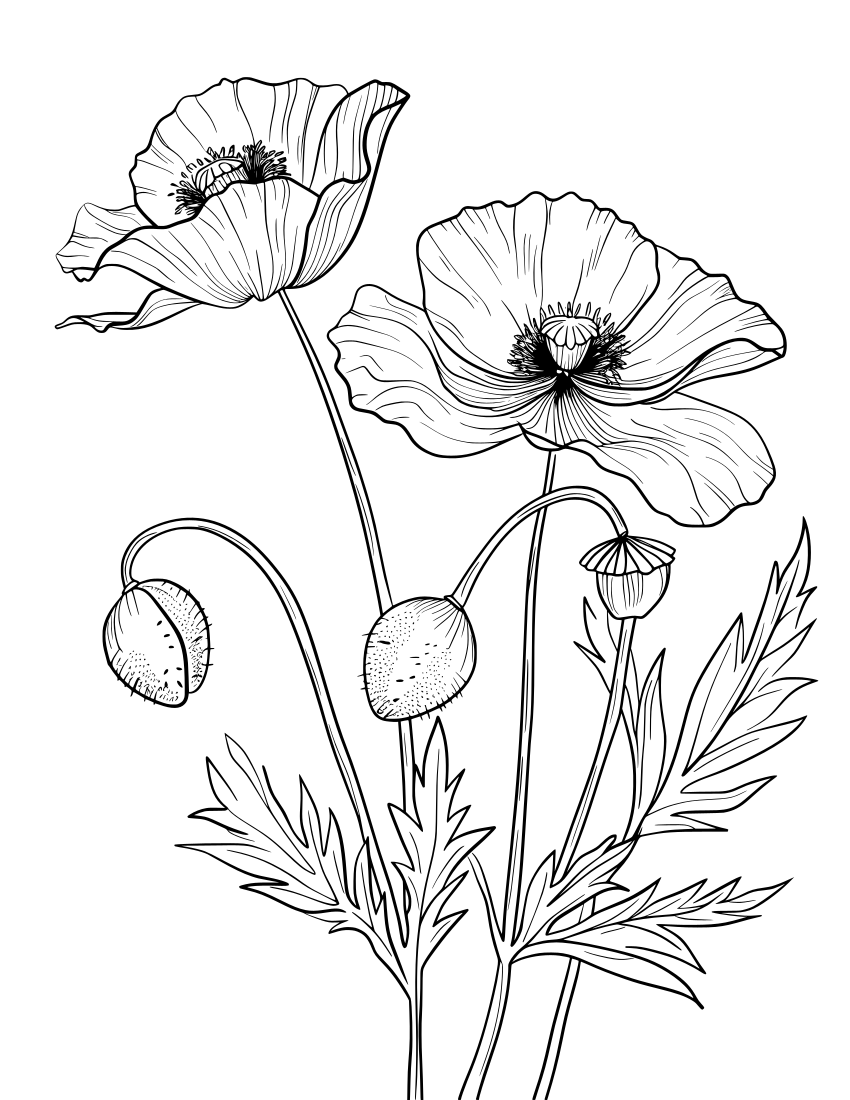
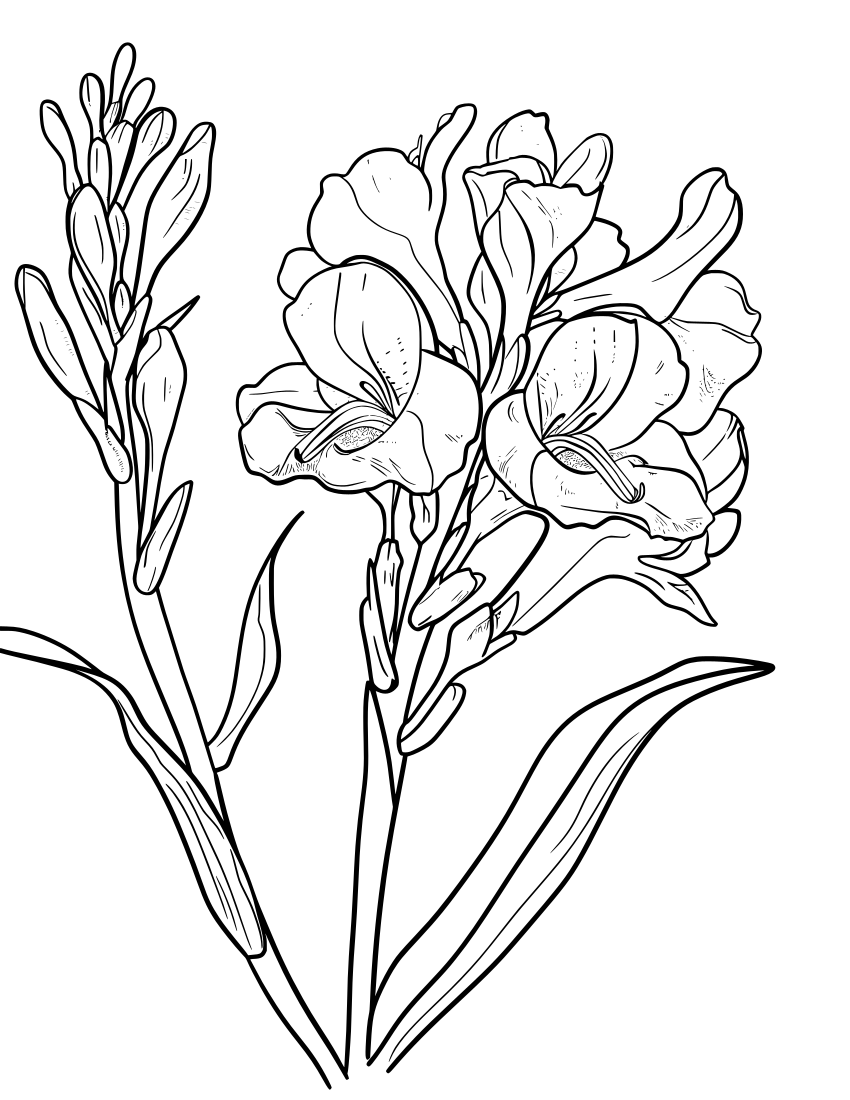
Vintage Hibiscus Coloring Page evokes the refined world of Victorian botanical printing — the illustrated gift books, chromolithographic flower plates and hand-colored engravings that made botanical art one of the great aesthetic achievements of the 19th century. Part of our free flower coloring pages collection, this design is made for colorists who love the muted, harmonious palette of the historical botanical tradition.
The hibiscus grows across tropical and subtropical regions worldwide and carries deep cultural significance in many of them. It is the national flower of Malaysia (where it appears on the coat of arms as Bunga Raya, "celebratory flower"), South Korea, and Haiti. In Hawaii, the yellow hibiscus (pua aloalo) is the state flower and has long been worn in the hair — behind the left ear if you're taken, the right if you're available. Ancient Egyptians used hibiscus petals to make karkadé, a crimson herbal tea still drunk across the Middle East and Africa. The Aztecs used hibiscus in ritual offerings, recognising in its blood-red petals a connection to sacred solar energies.
The hibiscus is one of the most dramatic flowers to color: enormous petals — sometimes 15cm across — radiate from a prominent staminal column that thrusts boldly from the centre. The petals often show a darker "eye" zone near the centre transitioning to a lighter, brighter color at the edges: deep crimson fading to coral, or dark purple transitioning to lavender. The staminal column is spectacular — render each individual anther (the tiny pollen sacs at the tips) carefully for a botanically accurate touch. Use your full range of warm reds and pinks without restraint.
Achieving an authentic vintage botanical aesthetic requires deliberate restraint with your palette. Choose colors that feel slightly aged, slightly muted: dusty rose rather than hot pink, sage green rather than bright emerald, antique gold rather than vivid yellow. A very light wash of warm grey or pale sepia applied as a base layer creates the illusion of aged paper. Fine pencil hatching in the shadow areas — rather than flat color fills — echoes the engraving technique of 18th- and 19th-century botanical plates. The hibiscus in a vintage treatment has the quality of a specimen encountered in an old illustrated book: precious, carefully observed, quietly beautiful. This vintage-style coloring page is free to download and print. Complete it with a muted botanical palette and it looks extraordinary mounted in a simple gilt or dark wood frame.
Leave a Comment
Comments
No comments yet. Be the first!