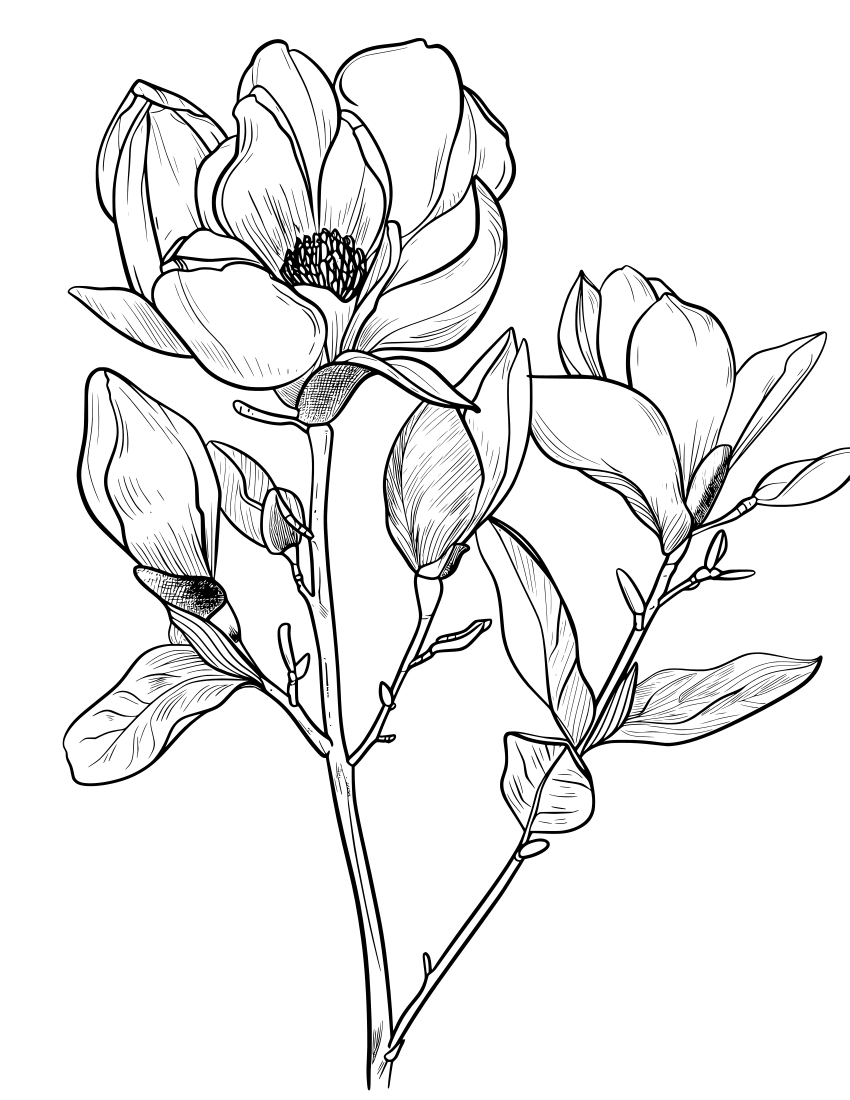
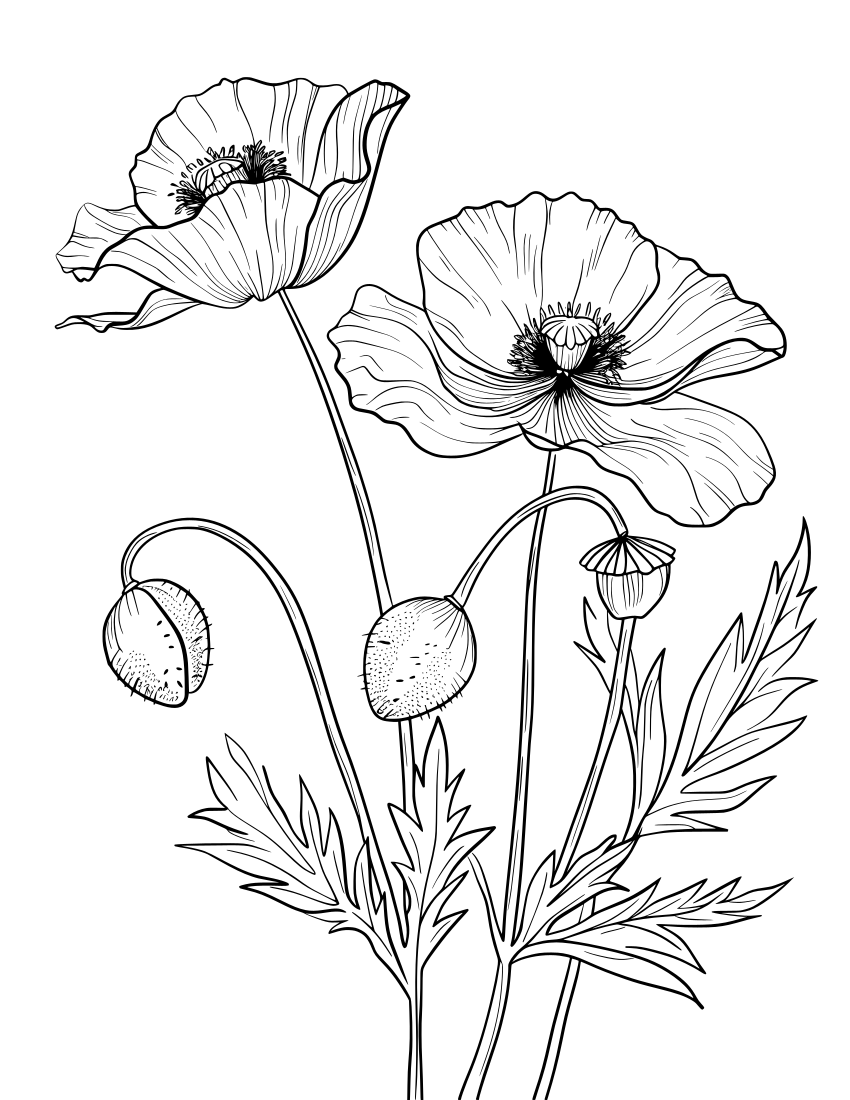
Vintage Iris Coloring Page evokes the refined world of Victorian botanical printing — the illustrated gift books, chromolithographic flower plates and hand-colored engravings that made botanical art one of the great aesthetic achievements of the 19th century. Part of our free flower coloring pages collection, this design is made for colorists who love the muted, harmonious palette of the historical botanical tradition.
The iris takes its name from Iris, the Greek goddess of the rainbow — its extraordinary range of colours (purple, blue, yellow, white, burgundy, black, bi-coloured) makes the name entirely apt. The fleur-de-lis, the heraldic symbol of French royalty, is widely believed to represent a stylised iris — used on the royal standard of France since the 12th century. Vincent van Gogh painted a celebrated series of irises during his stay at the Saint-Paul-de-Mausole asylum in Saint-Rémy (1889), finding in their swirling forms and rich colours a source of consolation and beauty. Japanese iris festivals (hanashÅbu) have been celebrated for centuries, with entire temple gardens devoted to their cultivation.
The iris has a uniquely complex three-part structure: the "falls" (lower drooping petals), the "standards" (upper upright petals) and the delicate "style arms" at the centre. Use this structure as a coloring guide — the falls and standards can be subtly different tones of the same colour family to create depth. Classic bearded irises have a distinctive fuzzy "beard" stripe running down each fall: render it in white or pale yellow against the darker petal colour. The venation of iris petals — fine darker lines running along the petal length — adds beautiful detail when suggested lightly with a slightly deeper shade.
Achieving an authentic vintage botanical aesthetic requires deliberate restraint with your palette. Choose colors that feel slightly aged, slightly muted: dusty rose rather than hot pink, sage green rather than bright emerald, antique gold rather than vivid yellow. A very light wash of warm grey or pale sepia applied as a base layer creates the illusion of aged paper. Fine pencil hatching in the shadow areas — rather than flat color fills — echoes the engraving technique of 18th- and 19th-century botanical plates. The iris in a vintage treatment has the quality of a specimen encountered in an old illustrated book: precious, carefully observed, quietly beautiful. This vintage-style coloring page is free to download and print. Complete it with a muted botanical palette and it looks extraordinary mounted in a simple gilt or dark wood frame.
Leave a Comment
Comments
No comments yet. Be the first!