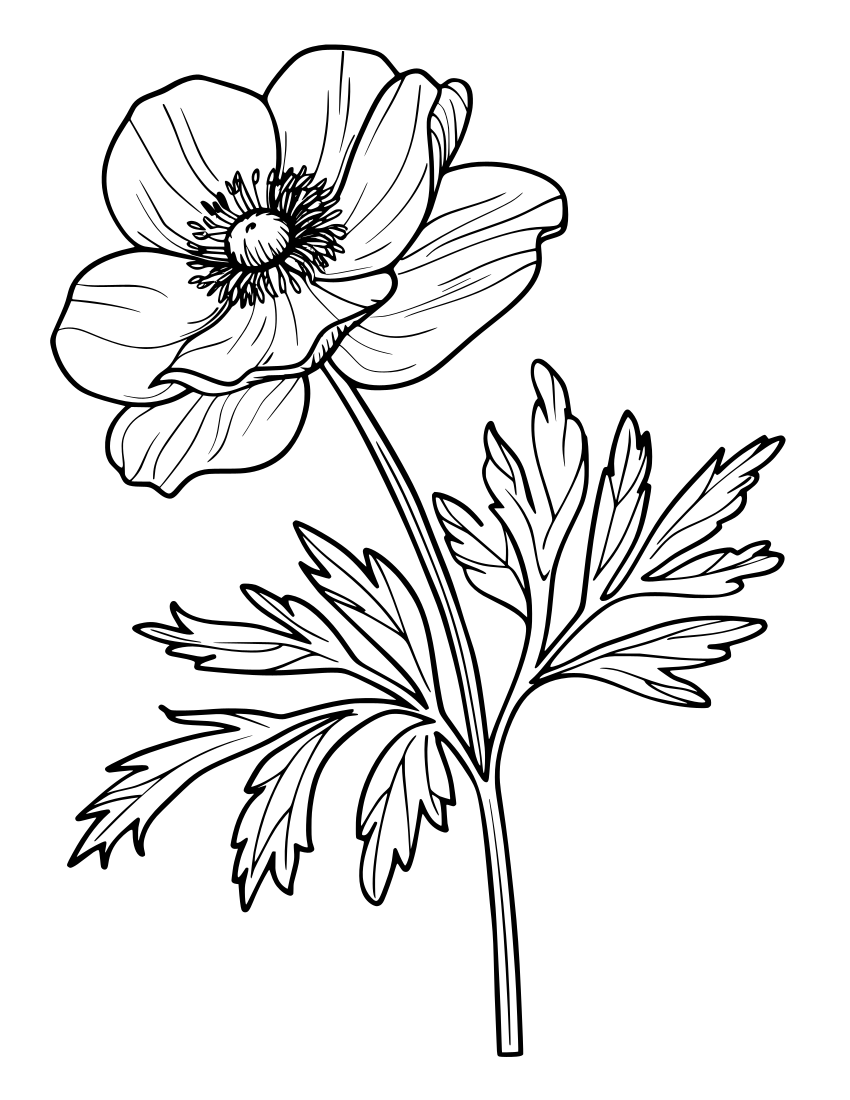
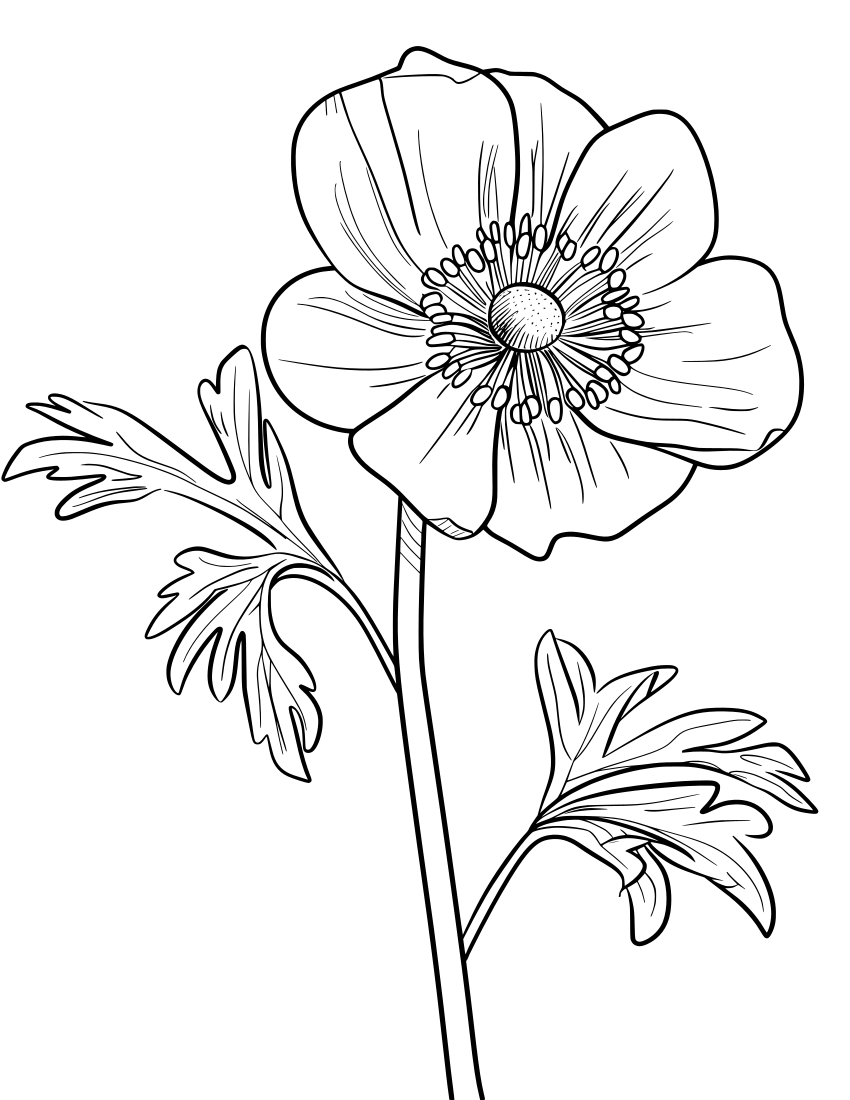
Vintage Lotus Coloring Page evokes the refined world of Victorian botanical printing — the illustrated gift books, chromolithographic flower plates and hand-colored engravings that made botanical art one of the great aesthetic achievements of the 19th century. Part of our free flower coloring pages collection, this design is made for colorists who love the muted, harmonious palette of the historical botanical tradition.
The lotus occupies a unique place in world spirituality. In Hindu and Buddhist cosmology, the lotus is the throne of the gods: Brahma the creator sits on a lotus emerging from the navel of Vishnu; the Buddha is always depicted seated on a lotus. This symbolism derives from the lotus's miraculous biology: the plant rises each morning from muddy, stagnant water to open its pure, pristine flowers above the surface — a living metaphor for spiritual transcendence, the emergence of the pure from the impure. Ancient Egyptians worshipped the blue lotus (Nymphaea caerulea) as a symbol of creation and rebirth — it appears in thousands of wall paintings and carvings. The lotus seed can lie dormant for 1,300 years and still germinate.
The lotus displays a beautiful architectural symmetry: concentric rings of petals surrounding a distinctive flat-topped seed pod at the center. The outer petals are typically the largest and most open; as you move inward, the petals become progressively smaller and more upright, cupping the center pod. Indian sacred lotuses range from pure white through the palest pink to a deep, warm rose — color them accordingly, with the deepest tones at the petal bases and the lightest at the tips. The seed pod itself is a wonderful geometric element: a dome of holes, best rendered in warm olive or ochre.
Achieving an authentic vintage botanical aesthetic requires deliberate restraint with your palette. Choose colors that feel slightly aged, slightly muted: dusty rose rather than hot pink, sage green rather than bright emerald, antique gold rather than vivid yellow. A very light wash of warm grey or pale sepia applied as a base layer creates the illusion of aged paper. Fine pencil hatching in the shadow areas — rather than flat color fills — echoes the engraving technique of 18th- and 19th-century botanical plates. The lotus in a vintage treatment has the quality of a specimen encountered in an old illustrated book: precious, carefully observed, quietly beautiful. This vintage-style coloring page is free to download and print. Complete it with a muted botanical palette and it looks extraordinary mounted in a simple gilt or dark wood frame.
Leave a Comment
Comments
No comments yet. Be the first!