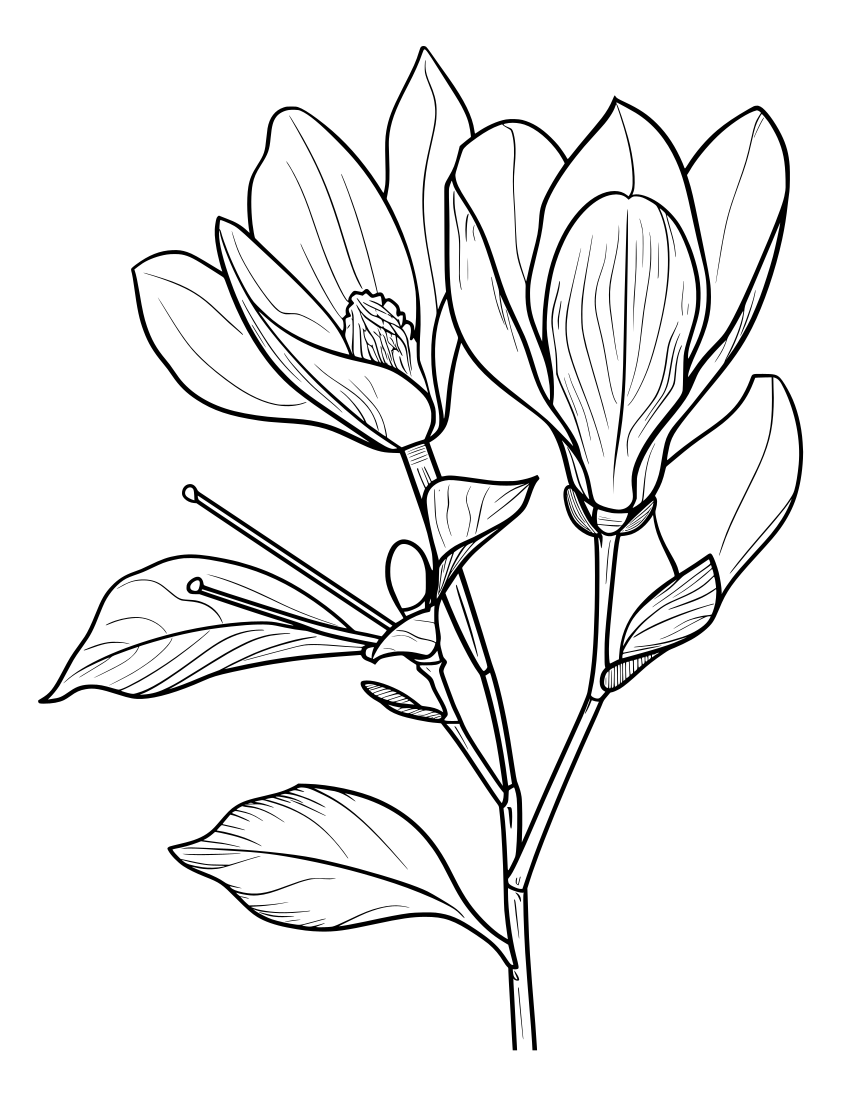
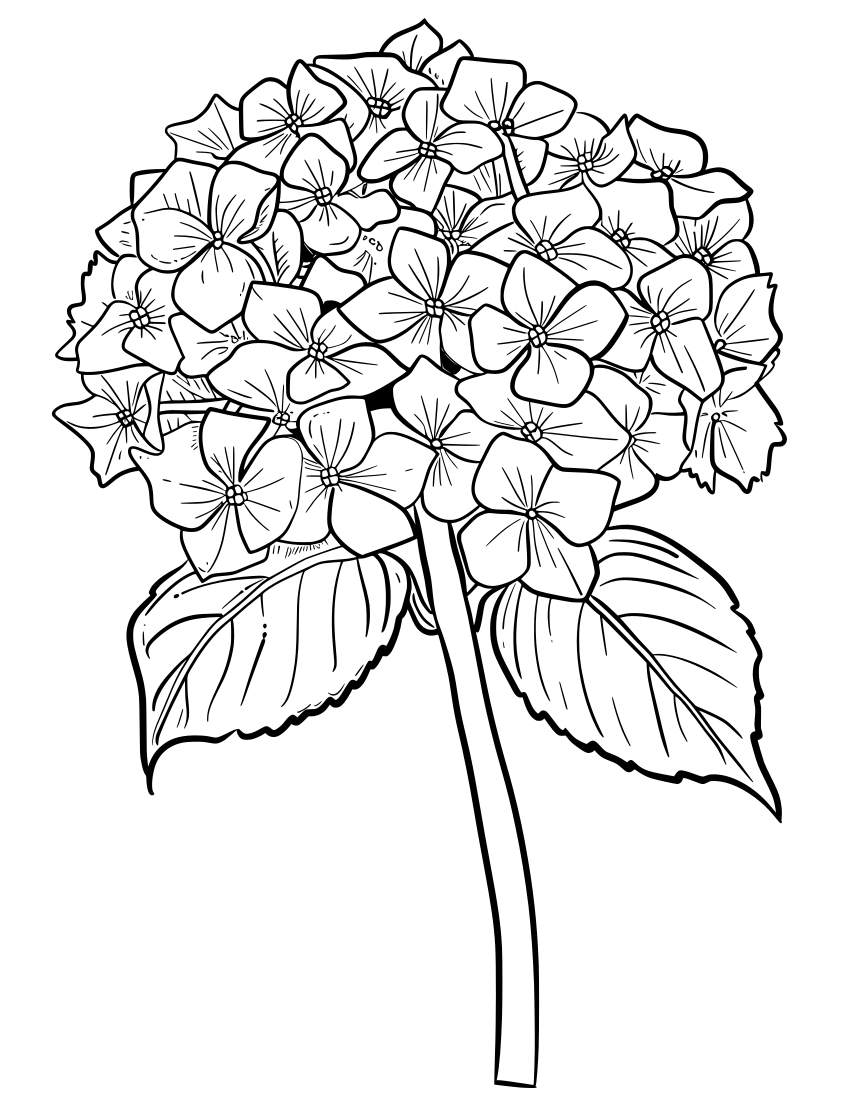
Vintage Wildflower Coloring Page evokes the refined world of Victorian botanical printing — the illustrated gift books, chromolithographic flower plates and hand-colored engravings that made botanical art one of the great aesthetic achievements of the 19th century. Part of our free flower coloring pages collection, this design is made for colorists who love the muted, harmonious palette of the historical botanical tradition.
The wildflower meadow is one of the most ecologically and culturally significant landscapes of the temperate world — and one of its most threatened. Before industrial agriculture, flower-rich meadows covered vast areas of Europe, their extraordinary botanical diversity (up to 40 species per square metre in the finest examples) supporting insects, birds and countless other creatures. Since 1930, Britain has lost 97% of its traditional wildflower meadows. The meadow restoration movement — championed by organisations from the RSPB to individual landowners — is attempting to bring them back. Artists from William Morris, who drew endlessly from English meadow flora, to Cicely Mary Barker (Flower Fairies) have celebrated wildflowers as the embodiment of an idealised, natural English beauty.
A wildflower composition rewards an improvisational, playful approach to color. Unlike formal garden flowers arranged with deliberate order, wildflowers tumble against each other in delightful chaos — overlapping stems, petals touching, leaves intertwining. Let your colors reflect this informality: slightly different greens for different species, a variety of warm and cool tones rather than a single unified palette. The key to a convincing wildflower meadow is to make the greens sing: use at least three different greens (yellow-green, mid-green, blue-green) in the foliage to suggest the variety of species.
Achieving an authentic vintage botanical aesthetic requires deliberate restraint with your palette. Choose colors that feel slightly aged, slightly muted: dusty rose rather than hot pink, sage green rather than bright emerald, antique gold rather than vivid yellow. A very light wash of warm grey or pale sepia applied as a base layer creates the illusion of aged paper. Fine pencil hatching in the shadow areas — rather than flat color fills — echoes the engraving technique of 18th- and 19th-century botanical plates. The wildflower in a vintage treatment has the quality of a specimen encountered in an old illustrated book: precious, carefully observed, quietly beautiful. This vintage-style coloring page is free to download and print. Complete it with a muted botanical palette and it looks extraordinary mounted in a simple gilt or dark wood frame.
Leave a Comment
Comments
No comments yet. Be the first!