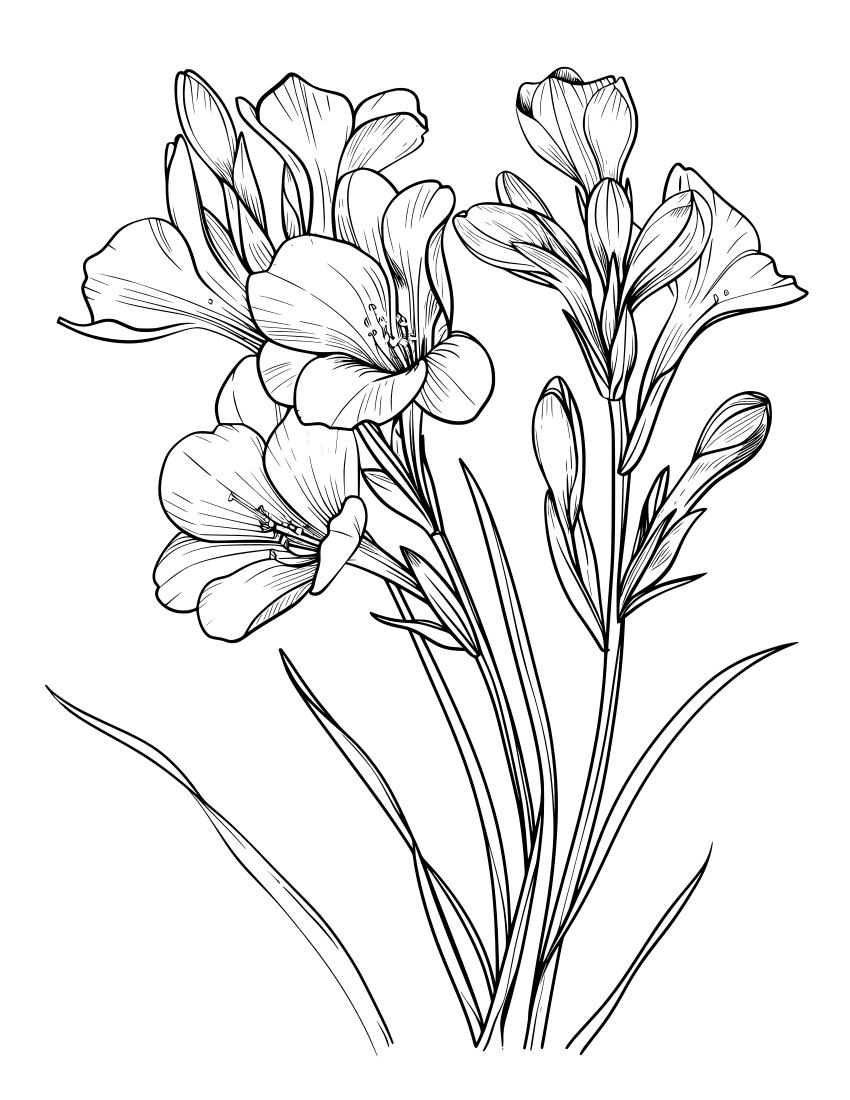
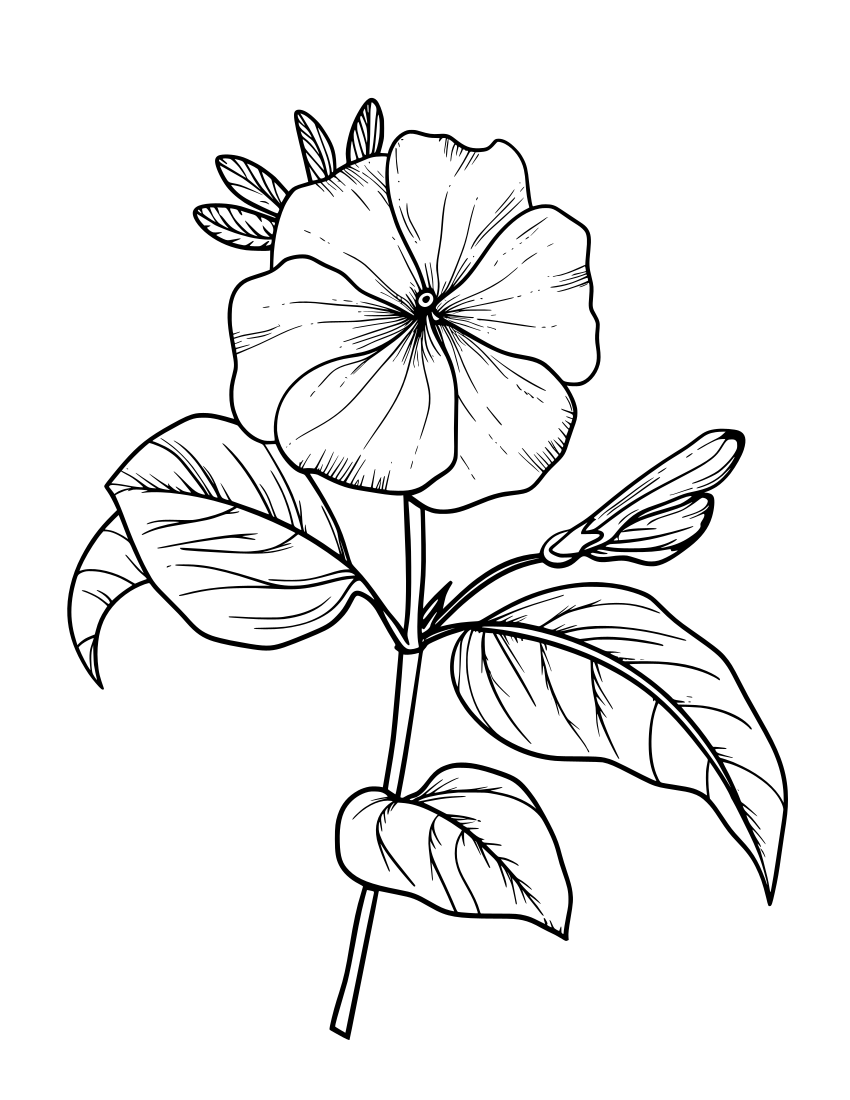
Vintage Rose Coloring Page evokes the refined world of Victorian botanical printing — the illustrated gift books, chromolithographic flower plates and hand-colored engravings that made botanical art one of the great aesthetic achievements of the 19th century. Part of our free flower coloring pages collection, this design is made for colorists who love the muted, harmonious palette of the historical botanical tradition.
The rose is the most celebrated flower in Western civilization — a symbol inseparable from love, beauty and passion across five thousand years of human culture. Ancient Romans scattered rose petals at banquets and ceremonies; medieval poets made the rose the emblem of perfect, unattainable beauty; and in the 15th century, England's ruling dynasties fought the Wars of the Roses — named for the white rose of York and the red rose of Lancaster. The French botanical artist Pierre-Joseph Redouté, court painter to Marie Antoinette, created Les Roses (1817–1824), the most beautiful and scientifically precise record of roses ever published — still in print today.
The rose's layered, spiraling petals are both its greatest beauty and its coloring challenge. Work the deepest tones — burgundy, deep crimson or rich magenta — into the innermost petal curls where shadow falls. Blend outward through progressively lighter pinks toward the outer petals' pale, almost-white edges. The velvety texture of rose petals absorbs light differently than other flowers: subtle cross-hatching with a slightly darker shade over the base color mimics this quality beautifully.
Achieving an authentic vintage botanical aesthetic requires deliberate restraint with your palette. Choose colors that feel slightly aged, slightly muted: dusty rose rather than hot pink, sage green rather than bright emerald, antique gold rather than vivid yellow. A very light wash of warm grey or pale sepia applied as a base layer creates the illusion of aged paper. Fine pencil hatching in the shadow areas — rather than flat color fills — echoes the engraving technique of 18th- and 19th-century botanical plates. The rose in a vintage treatment has the quality of a specimen encountered in an old illustrated book: precious, carefully observed, quietly beautiful. This vintage-style coloring page is free to download and print. Complete it with a muted botanical palette and it looks extraordinary mounted in a simple gilt or dark wood frame.
Leave a Comment
Comments
No comments yet. Be the first!