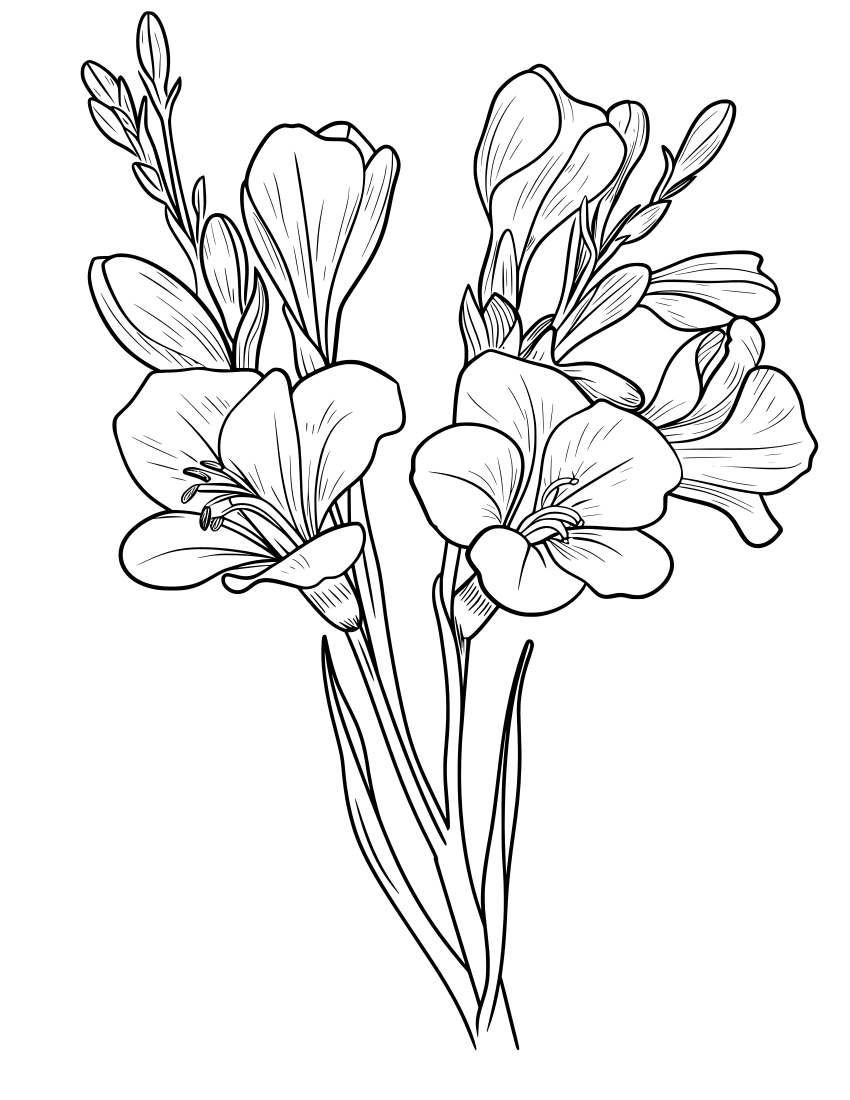
Wild Foxglove Coloring Page places the foxglove in the untamed, organic beauty of its natural wild habitat — a world away from the formal garden, this design celebrates the authentic botanical character of the flower growing freely, with all the asymmetry and liveliness that cultivation often irons out. Part of our free flower coloring pages collection, this page calls for a freer, more instinctive approach to color.
The foxglove's common name is one of English folklore's most evocative: the Old English foxes glofa — "fox gloves" — referring to the glove-like shape of the bell flowers. In Norwegian, the same flower is called revbjølle — "fox bells." Celtic legend called it "fairy fingers" and believed that bad fairies gave the flowers to foxes to muffle their footsteps while hunting. The foxglove's scientific importance came in 1785, when the physician William Withering published An Account of the Foxglove after studying how an old herbalist woman used it to treat dropsy (heart failure). He identified the active compound — digitalin — establishing the foundation for modern cardiac medicine. Today, digitalis drugs derived from foxglove are still used to treat heart conditions.
The foxglove's tall spire of pendulous tubular bells — opening from the bottom upward, with the top buds still closed — creates a beautiful vertical rhythm unique among garden flowers. Each individual bell is a small masterpiece of pattern: the interior is typically spotted with a contrasting color against a background that differs from the exterior. For pink-purple foxgloves, the exterior is a soft rose-purple while the interior is cream or white with deep magenta spots surrounded by white "eyes." Render the interior spots carefully — they're the most distinctive feature of the flower — using a fine point and working from larger to smaller marks as they approach the petal edge.
Wild flower coloring rewards an organic, slightly informal approach: resist the urge for perfect, uniform fills. Real foxgloves growing in the wild show subtle variations in petal color from flower to flower, slight asymmetries, insect damage, sun-bleaching at the tips. These imperfections are the life of the design — include them deliberately. The foliage in wild settings is particularly expressive: mix olive, khaki, grass green and blue-green to suggest the variety of wild grasses and plants that surround the foxglove in its natural habitat. This wild flower coloring page is free to download and print as a PDF. Let the organic, living quality of the design inspire an equally free and instinctive approach to color.
Leave a Comment
Comments
No comments yet. Be the first!