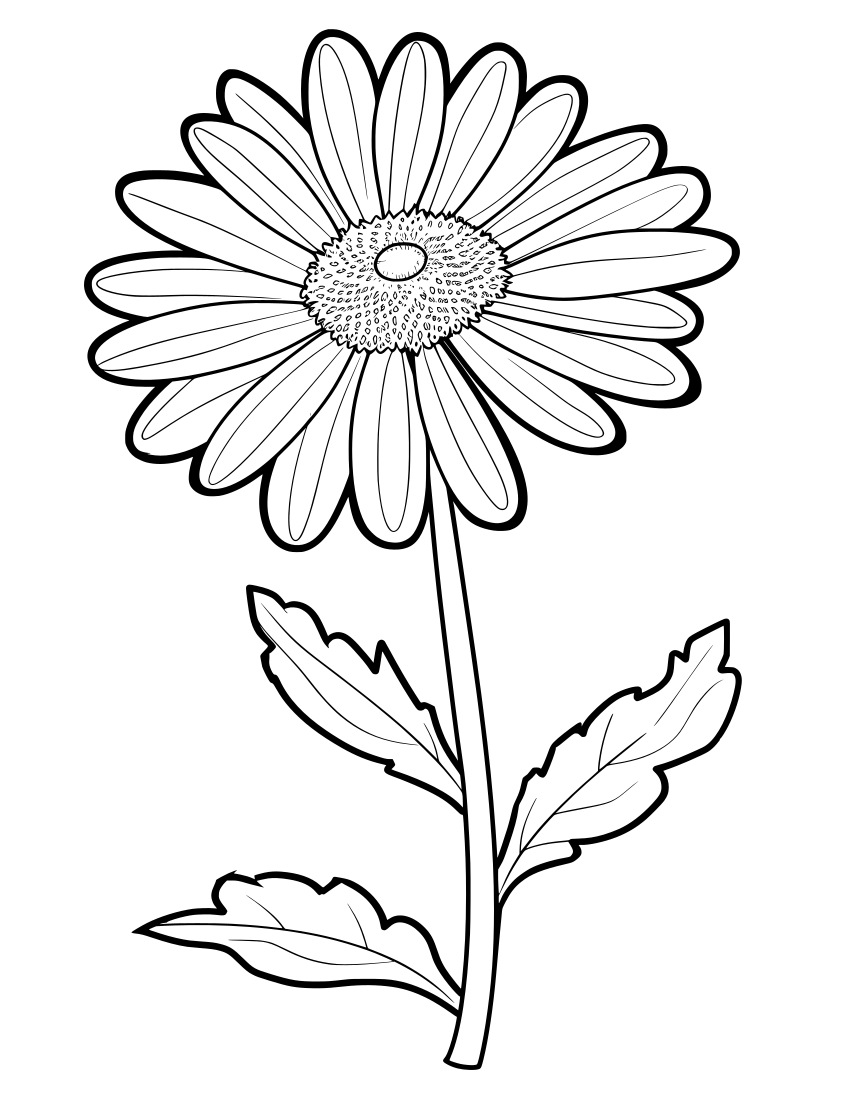
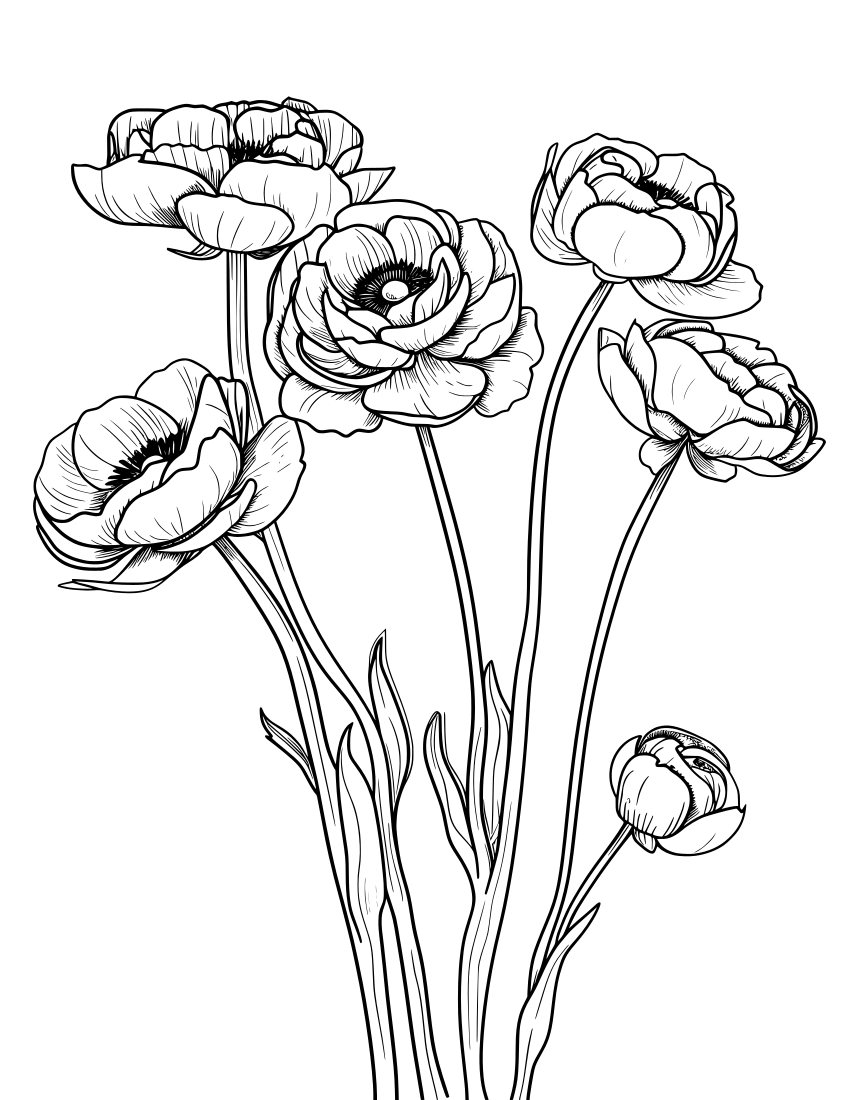
Botanical Daisy Coloring Page presents the daisy as a precise botanical study — combining the scientific accuracy of a natural history illustration with the aesthetic sensibility of a work of art. Part of our free flower coloring pages collection, this design is for colorists who love to engage with the actual form, structure and character of the flower they are coloring, not just its decorative potential.
The daisy's name comes from the Anglo-Saxon daes eage — "day's eye" — because the flower opens at dawn and closes at dusk, following the light like a miniature sun. It is one of Britain's most beloved wildflowers, growing in every meadow and lawn from Cornwall to the Highlands. In Celtic tradition, the daisy (known as "Gowan") was used for love divination — the original "he loves me, he loves me not." Chaucer wrote of "the dayesye" with deep affection in The Legend of Good Women. In the Victorian language of flowers, the daisy meant innocence, loyal love and "I will think of you."
The daisy's classic beauty lies in its simplicity: pure white ray petals surrounding a warm, rounded yellow disc. But real daisies are never quite as flat as they first appear — the underside of the ray petals often carries a faint rose or lilac blush, especially at the base. The central disc has wonderful texture: a dome of tiny florets that darkens at the very centre. Try a warm amber or orange at the disc centre blending outward to bright yellow at the edges for a naturalistic, sunlit effect.
Botanical illustration demands engagement with the actual structure of the daisy as a living plant. Before coloring, take a moment to study the design: identify the different floral parts (petals, sepals, stamens, pistil), the leaf attachment and venation pattern, the stem structure. Color each element with reference to its botanical reality: leaves are lighter on the upper surface (which receives more light) and darker on the underside. Stems show subtle surface texture. The goal is not a pretty decoration but an accurate, beautiful record — in which truth to observation is the highest aesthetic value. This botanical coloring page is available as a free high-quality PDF. Print on premium paper for the finest result — a completed page is a genuine piece of natural history art worth displaying.
Leave a Comment
Comments
No comments yet. Be the first!