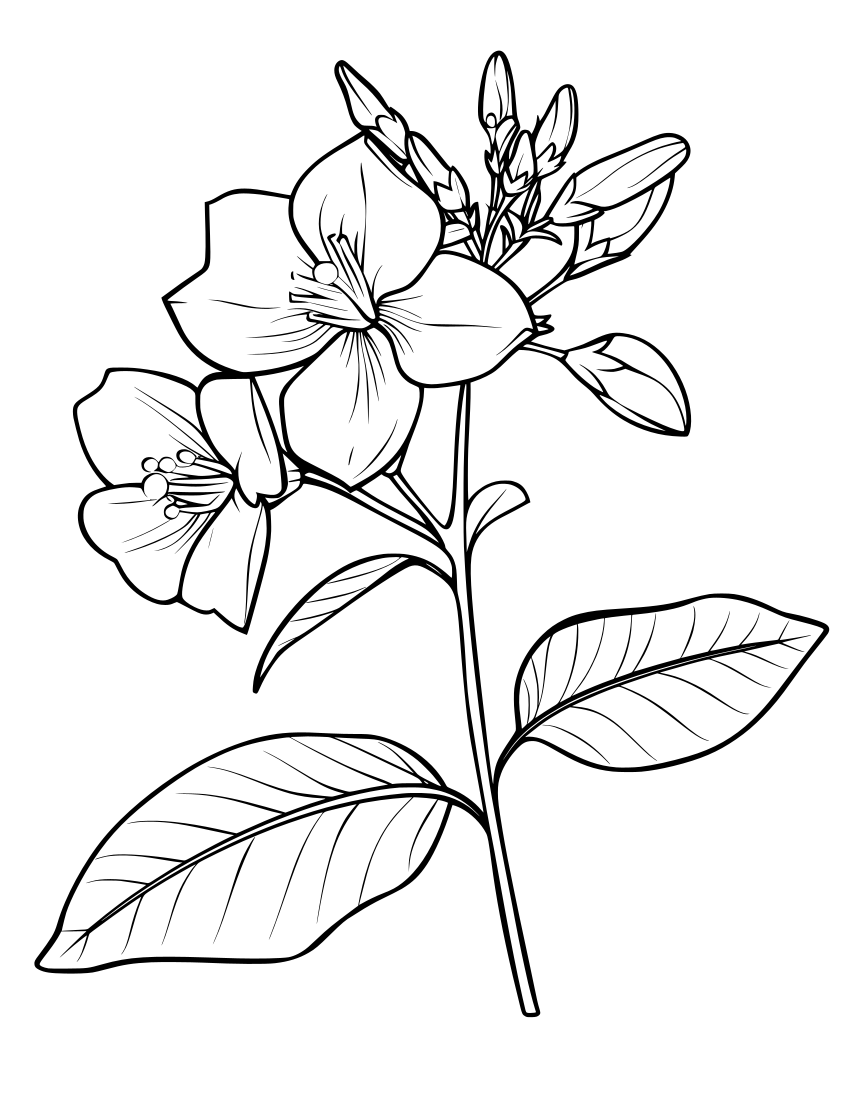
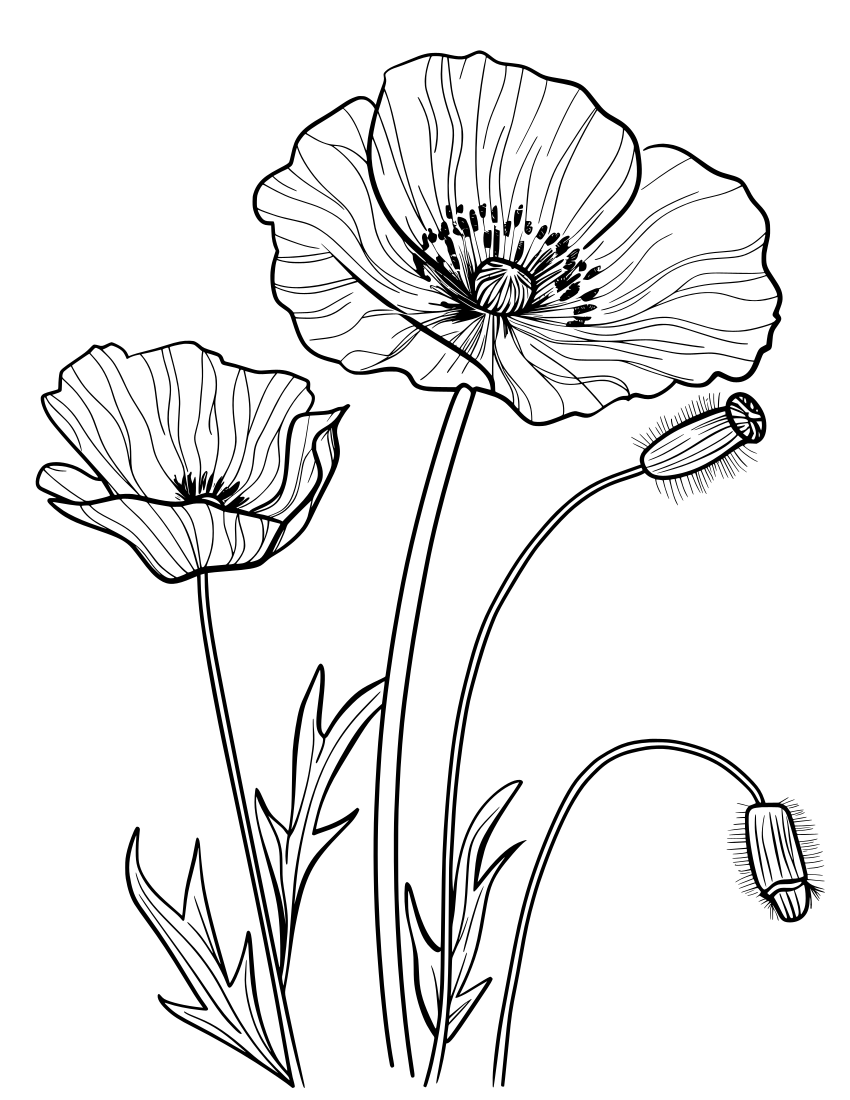
Botanical Morning Glory Coloring Page presents the morning glory as a precise botanical study — combining the scientific accuracy of a natural history illustration with the aesthetic sensibility of a work of art. Part of our free flower coloring pages collection, this design is for colorists who love to engage with the actual form, structure and character of the flower they are coloring, not just its decorative potential.
The morning glory is named for its daily cycle: each flower opens wide in the morning sunshine, then closes and withers by afternoon — living for only a single day. This transience has made it a symbol of ephemeral beauty and fleeting love in Japan, where it is called asagao ("morning face") and has been a beloved garden flower since the 9th century, originally introduced from China as a medicinal plant. The Aztecs used morning glory seeds in religious rituals — the seeds contain ergine (d-lysergic acid amide), a psychoactive compound related to LSD, and were used by priests to communicate with gods. The extraordinary vivid blue of the Japanese Ipomoea nil — an almost impossibly saturated pure blue rare in nature — has inspired Japanese poets, painters and gardeners for over a millennium.
The morning glory's funnel-shaped flower is a beautiful geometric form — a perfect five-pointed star when fully open, the five petals fused into a single smooth trumpet. The most striking coloring feature is the bold color contrast between the vivid colored "limb" (the flat, star-shaped outer face) and the white or pale "throat" (the inner tube leading to the nectaries). For blue morning glories, use pure ultramarine or cerulean at the outer edge, blending to a soft lavender-purple at the star points, then transitioning through pale blue to pure white at the throat. The radiating structure makes it ideal for coloring working outward from the white center.
Botanical illustration demands engagement with the actual structure of the morning glory as a living plant. Before coloring, take a moment to study the design: identify the different floral parts (petals, sepals, stamens, pistil), the leaf attachment and venation pattern, the stem structure. Color each element with reference to its botanical reality: leaves are lighter on the upper surface (which receives more light) and darker on the underside. Stems show subtle surface texture. The goal is not a pretty decoration but an accurate, beautiful record — in which truth to observation is the highest aesthetic value. This botanical coloring page is available as a free high-quality PDF. Print on premium paper for the finest result — a completed page is a genuine piece of natural history art worth displaying.
Leave a Comment
Comments
No comments yet. Be the first!