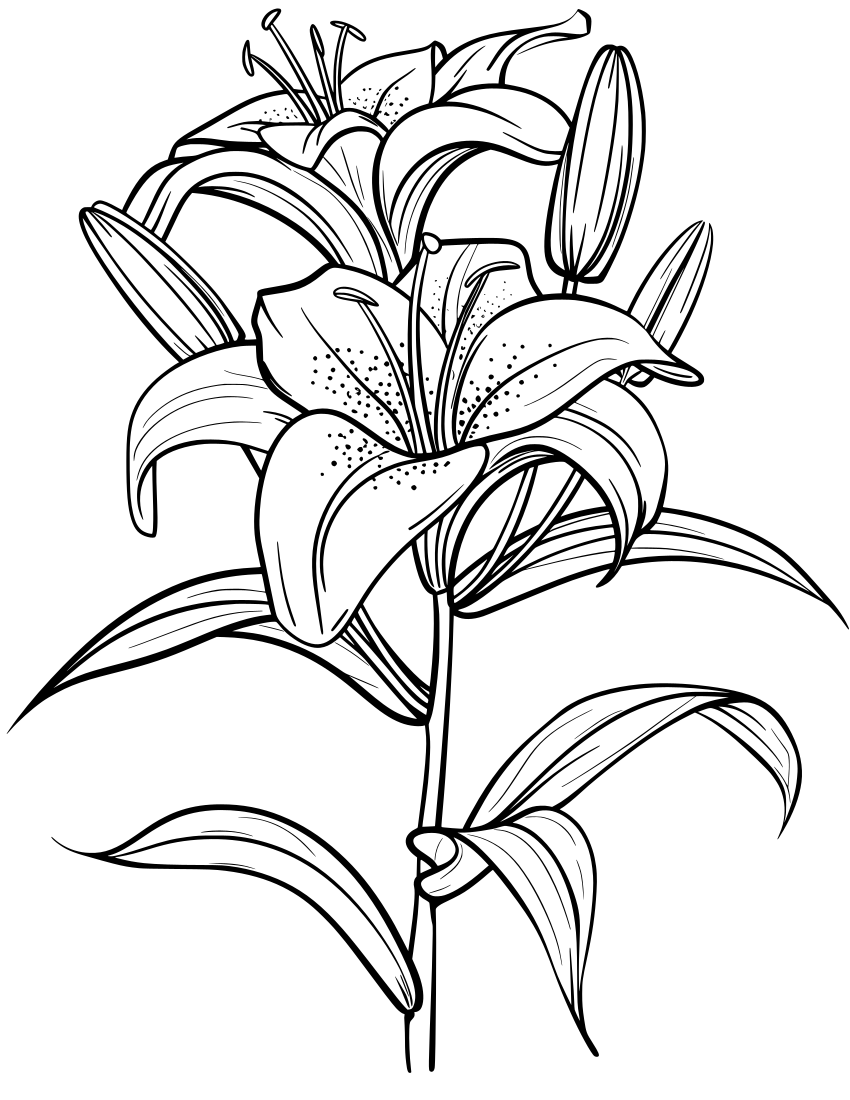
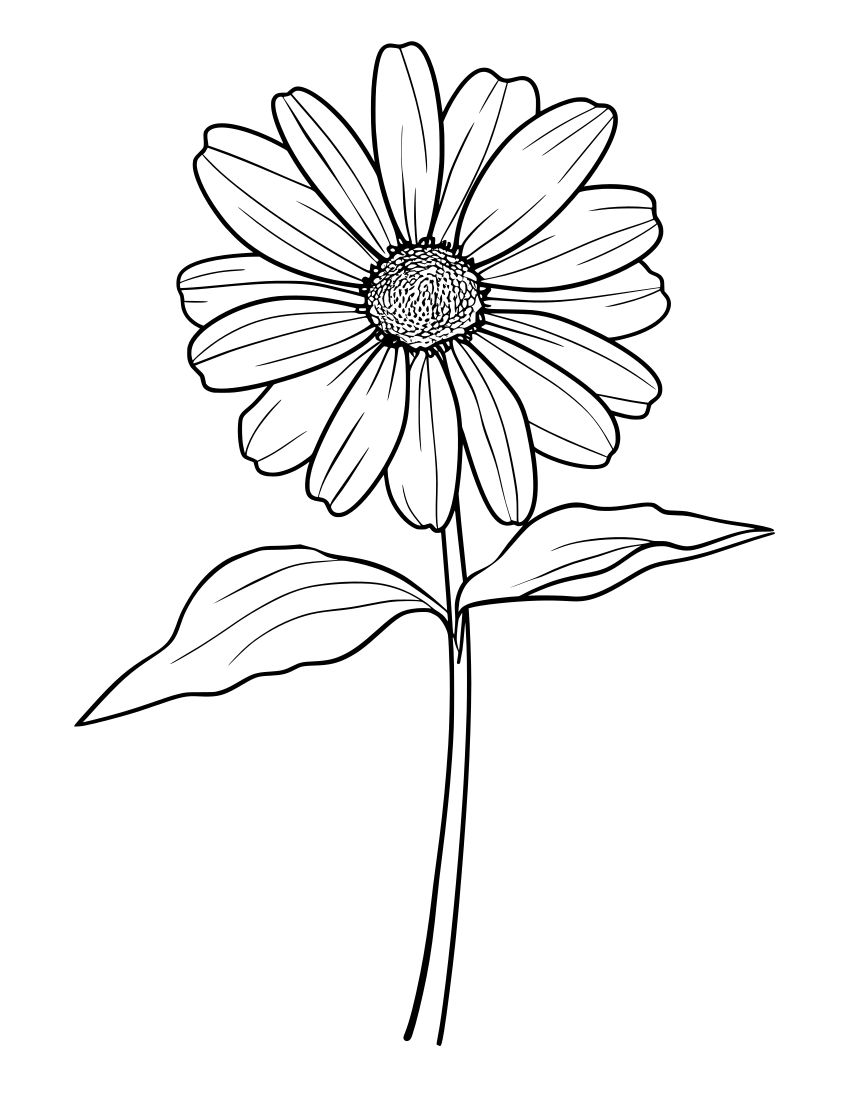
Botanical Foxglove Coloring Page presents the foxglove as a precise botanical study — combining the scientific accuracy of a natural history illustration with the aesthetic sensibility of a work of art. Part of our free flower coloring pages collection, this design is for colorists who love to engage with the actual form, structure and character of the flower they are coloring, not just its decorative potential.
The foxglove's common name is one of English folklore's most evocative: the Old English foxes glofa — "fox gloves" — referring to the glove-like shape of the bell flowers. In Norwegian, the same flower is called revbjølle — "fox bells." Celtic legend called it "fairy fingers" and believed that bad fairies gave the flowers to foxes to muffle their footsteps while hunting. The foxglove's scientific importance came in 1785, when the physician William Withering published An Account of the Foxglove after studying how an old herbalist woman used it to treat dropsy (heart failure). He identified the active compound — digitalin — establishing the foundation for modern cardiac medicine. Today, digitalis drugs derived from foxglove are still used to treat heart conditions.
The foxglove's tall spire of pendulous tubular bells — opening from the bottom upward, with the top buds still closed — creates a beautiful vertical rhythm unique among garden flowers. Each individual bell is a small masterpiece of pattern: the interior is typically spotted with a contrasting color against a background that differs from the exterior. For pink-purple foxgloves, the exterior is a soft rose-purple while the interior is cream or white with deep magenta spots surrounded by white "eyes." Render the interior spots carefully — they're the most distinctive feature of the flower — using a fine point and working from larger to smaller marks as they approach the petal edge.
Botanical illustration demands engagement with the actual structure of the foxglove as a living plant. Before coloring, take a moment to study the design: identify the different floral parts (petals, sepals, stamens, pistil), the leaf attachment and venation pattern, the stem structure. Color each element with reference to its botanical reality: leaves are lighter on the upper surface (which receives more light) and darker on the underside. Stems show subtle surface texture. The goal is not a pretty decoration but an accurate, beautiful record — in which truth to observation is the highest aesthetic value. This botanical coloring page is available as a free high-quality PDF. Print on premium paper for the finest result — a completed page is a genuine piece of natural history art worth displaying.
Leave a Comment
Comments
No comments yet. Be the first!