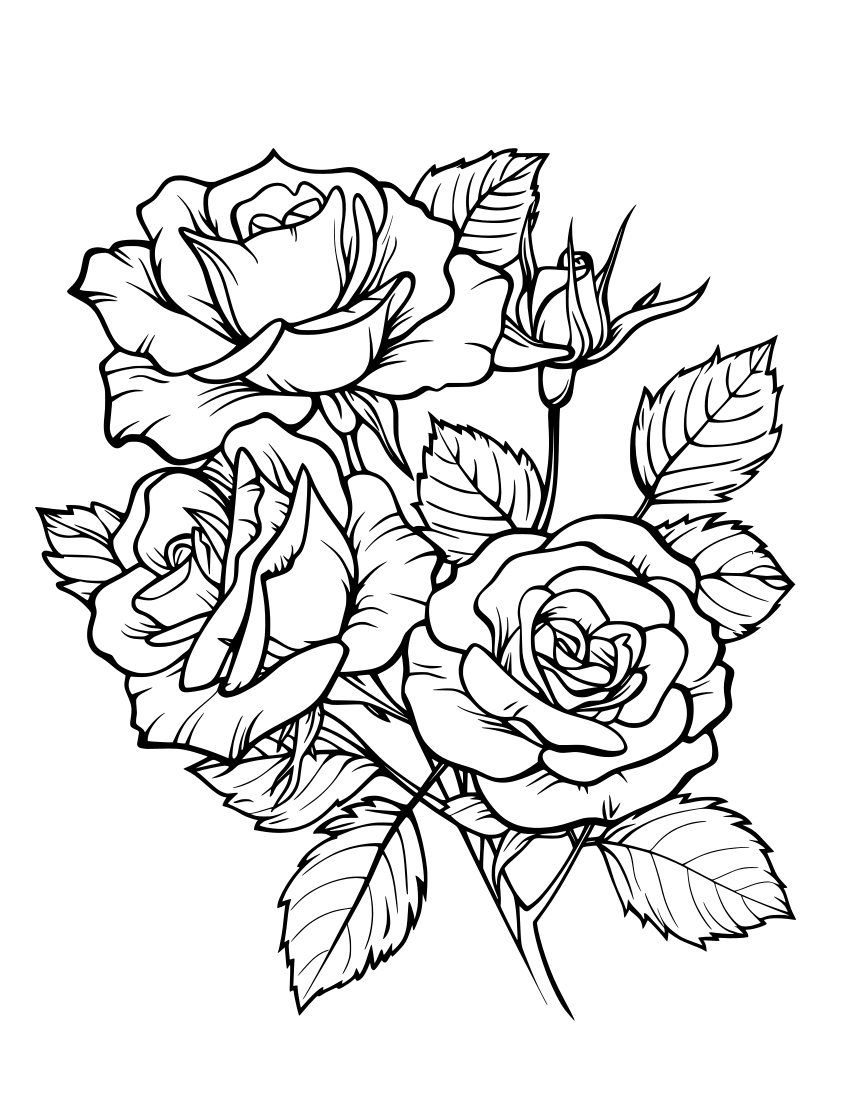
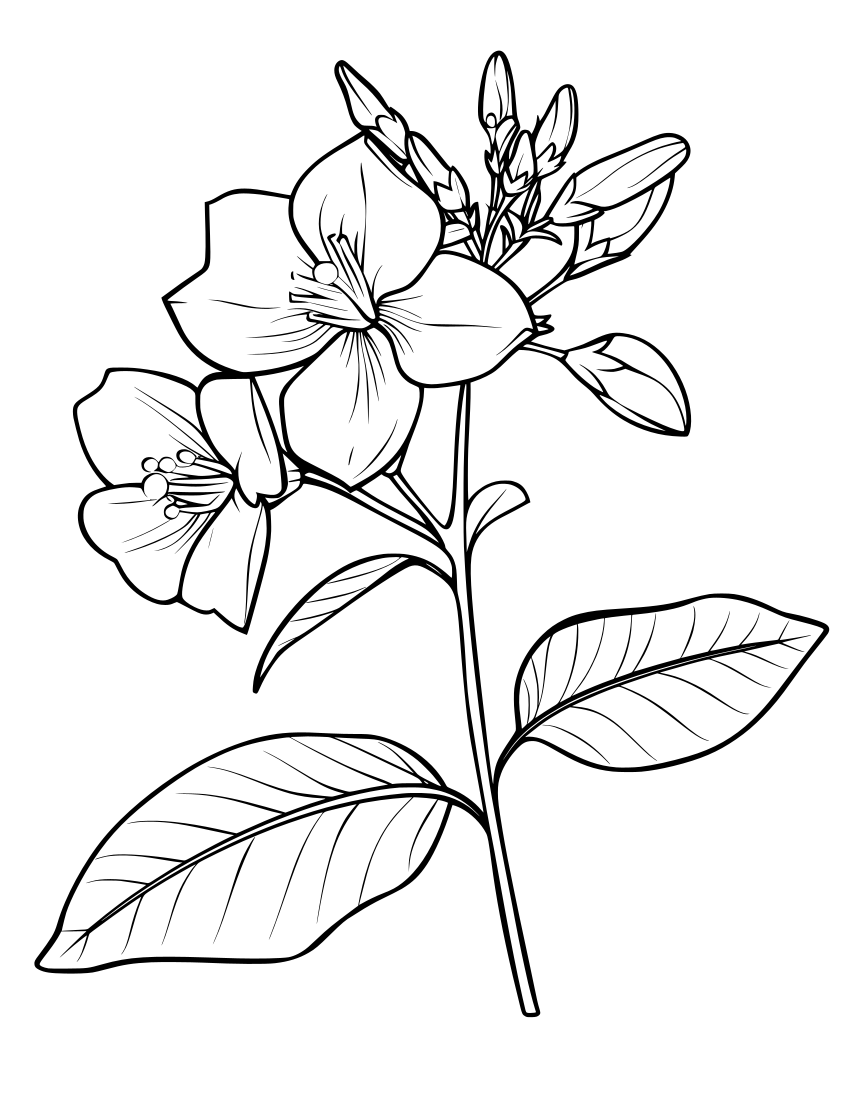
Botanical Dahlia Coloring Page presents the dahlia as a precise botanical study — combining the scientific accuracy of a natural history illustration with the aesthetic sensibility of a work of art. Part of our free flower coloring pages collection, this design is for colorists who love to engage with the actual form, structure and character of the flower they are coloring, not just its decorative potential.
The dahlia is the national flower of Mexico, where the Aztecs cultivated it for food (the tubers are edible), medicine and decoration. When the Spanish brought dahlias to Europe in the late 18th century, there were attempts to cultivate them as a food crop — but it was as an ornamental flower that the dahlia triumphed. The early 19th century saw the beginning of "dahlia mania": intensive breeding programmes in France, Germany and England produced increasingly spectacular varieties, and dahlia shows became major social events. By 1826, over 200 varieties were in cultivation; today there are over 57,000 registered varieties. The dahlia is named after the Swedish botanist Anders Dahl, a student of Linnaeus — who never knew the extraordinary proliferation his namesake would achieve.
Dahlias offer perhaps the greatest formal variety of any coloring subject: from simple single flowers to elaborate cactus dahlias with spiky quilled petals, waterlily dahlias with broad flat blooms, and dinner-plate dahlias that can exceed 30cm in diameter. The pompom and ball forms — perfect geometric spheres of tightly packed florets — are particularly satisfying to color with a systematic, radial approach. Dahlias are available in every color except blue: the so-called "black" dahlias (like "Karma Choc") are an extraordinary deep chocolate-burgundy that photographs almost black. Bi-colored varieties with distinct zones or tips in contrasting colors offer spectacular coloring possibilities.
Botanical illustration demands engagement with the actual structure of the dahlia as a living plant. Before coloring, take a moment to study the design: identify the different floral parts (petals, sepals, stamens, pistil), the leaf attachment and venation pattern, the stem structure. Color each element with reference to its botanical reality: leaves are lighter on the upper surface (which receives more light) and darker on the underside. Stems show subtle surface texture. The goal is not a pretty decoration but an accurate, beautiful record — in which truth to observation is the highest aesthetic value. This botanical coloring page is available as a free high-quality PDF. Print on premium paper for the finest result — a completed page is a genuine piece of natural history art worth displaying.
Leave a Comment
Comments
No comments yet. Be the first!