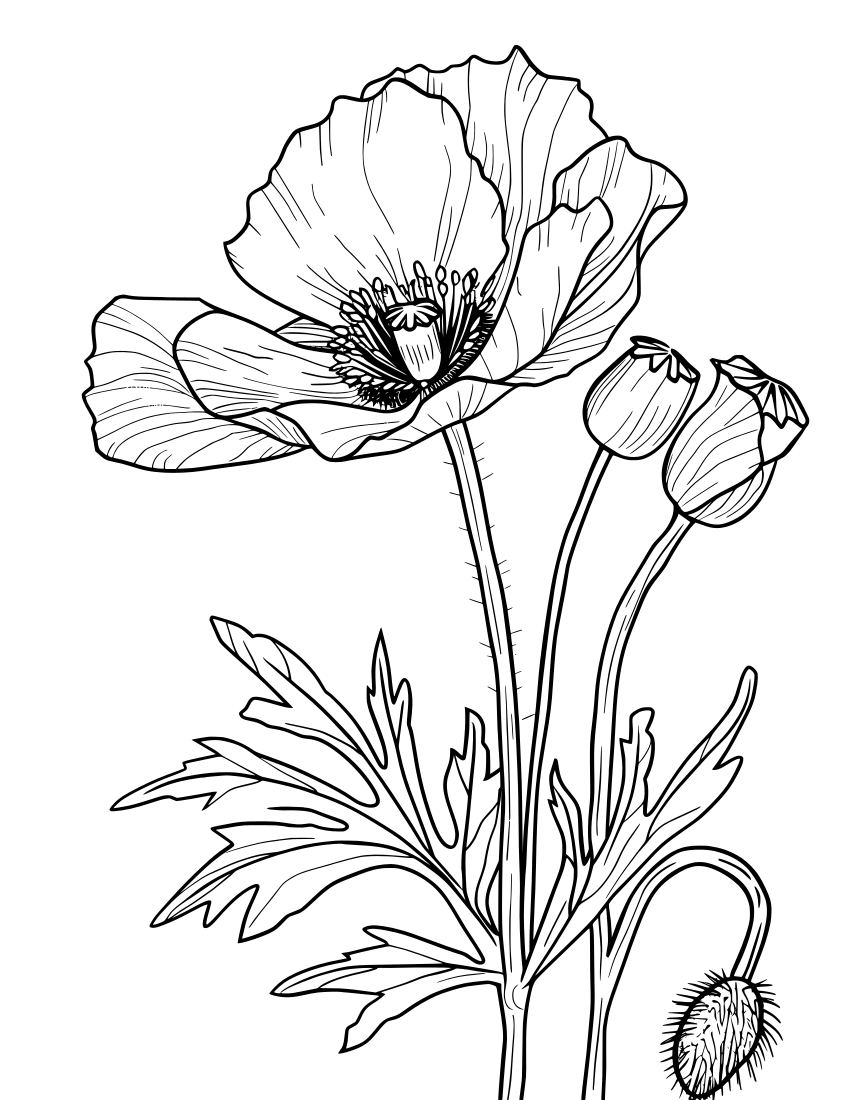
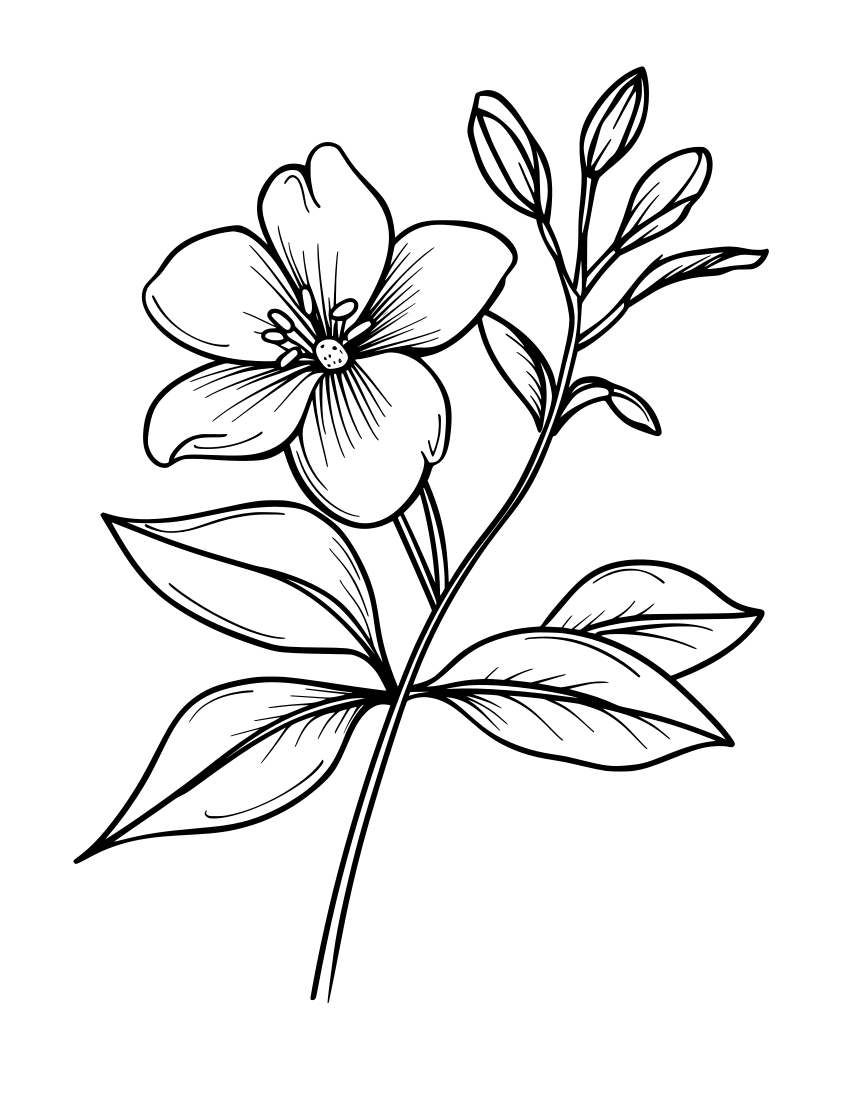
Delicate Cosmos Coloring Page presents the cosmos in the finest tradition of botanical line art — every petal edge, leaf vein and stem detail rendered with the precision and delicacy of a 19th-century scientific illustration. Part of our free flower coloring pages collection, this design is created for colorists who love the meditative satisfaction of fine, careful work.
The cosmos takes its name from the Greek word for "ordered universe" — a name chosen by Spanish priests in Mexico who were struck by the perfectly regular arrangement of the petals, which seemed to them an expression of divine mathematical order. Native to the Mexican highlands, cosmos was brought to Spain in the late 18th century and quickly spread through European gardens. Despite its delicate appearance, cosmos is extraordinarily easy to grow — it thrives in poor soil with minimal care, blooming abundantly from summer through autumn. This generous, undemanding nature has made it a symbol of harmony, balance and the beauty of simplicity — a flower that asks for nothing and gives everything.
Cosmos flowers have an airy, almost ethereal quality: their fine, thread-like stems and feathery foliage give the whole plant a delicate, floating appearance, and the flowers themselves — eight broad ray petals around a simple yellow disc — have a clean, elegant simplicity. The petals are often semi-transparent in strong light, with a slightly silky texture. Colors range from pure white and shell-pink through vivid magenta, carmine and deep burgundy. Many cosmos petals show a subtle venation pattern — fine darker lines radiating from the center along each petal — which adds beautiful botanical detail when suggested with a light hand.
Fine botanical line art requires fine tools and a fine touch. Use sharpened colored pencils (harder leads — H or 2H — for the thinnest details) and build color in multiple light layers rather than applying it all at once. For the cosmos's more detailed elements — vein patterns, stamen details, petal textures — work with minimal pressure and maximum patience. Leave highlights completely uncolored: this is especially important for delicate designs where a white highlight on a petal edge or the tip of a stamen suggests three-dimensionality without heavy shading. This delicate coloring page is available as a free high-resolution PDF. Print on smooth, heavier paper (100 g/m² or above) for the finest coloring experience — the delicacy of the design deserves the best surface you can offer it.
Leave a Comment
Comments
No comments yet. Be the first!