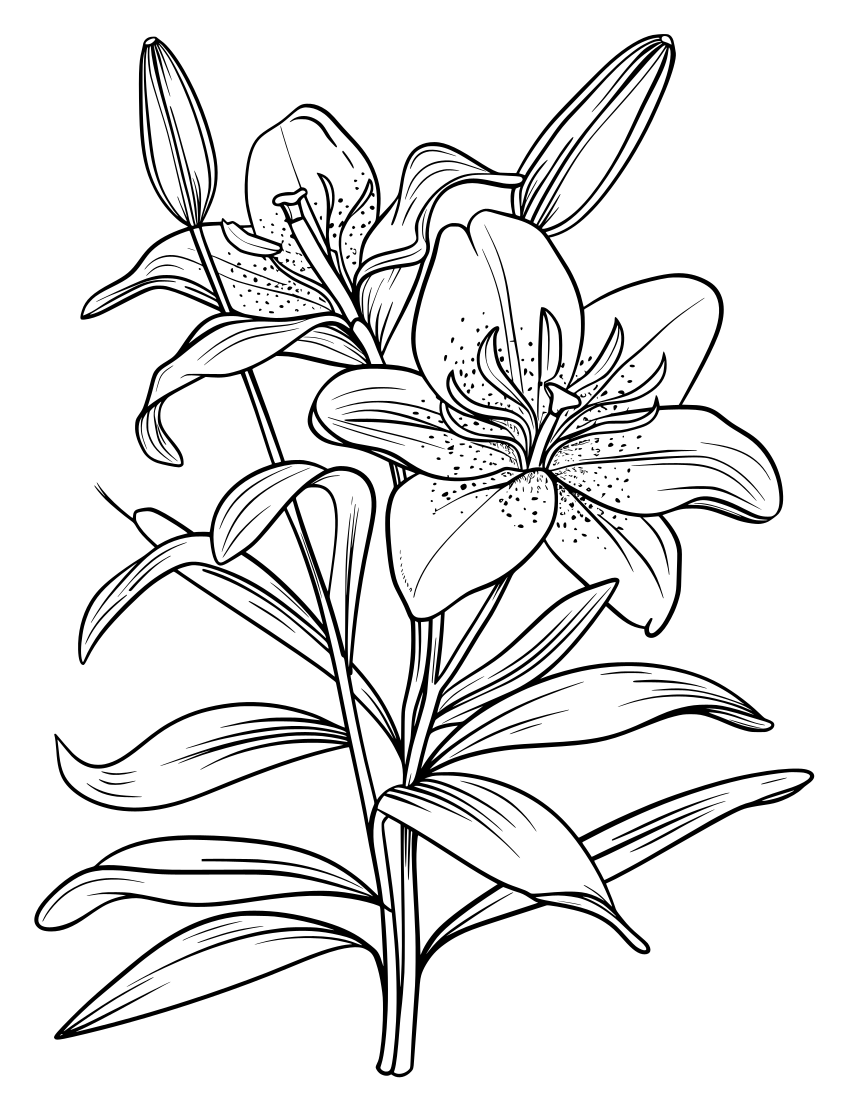
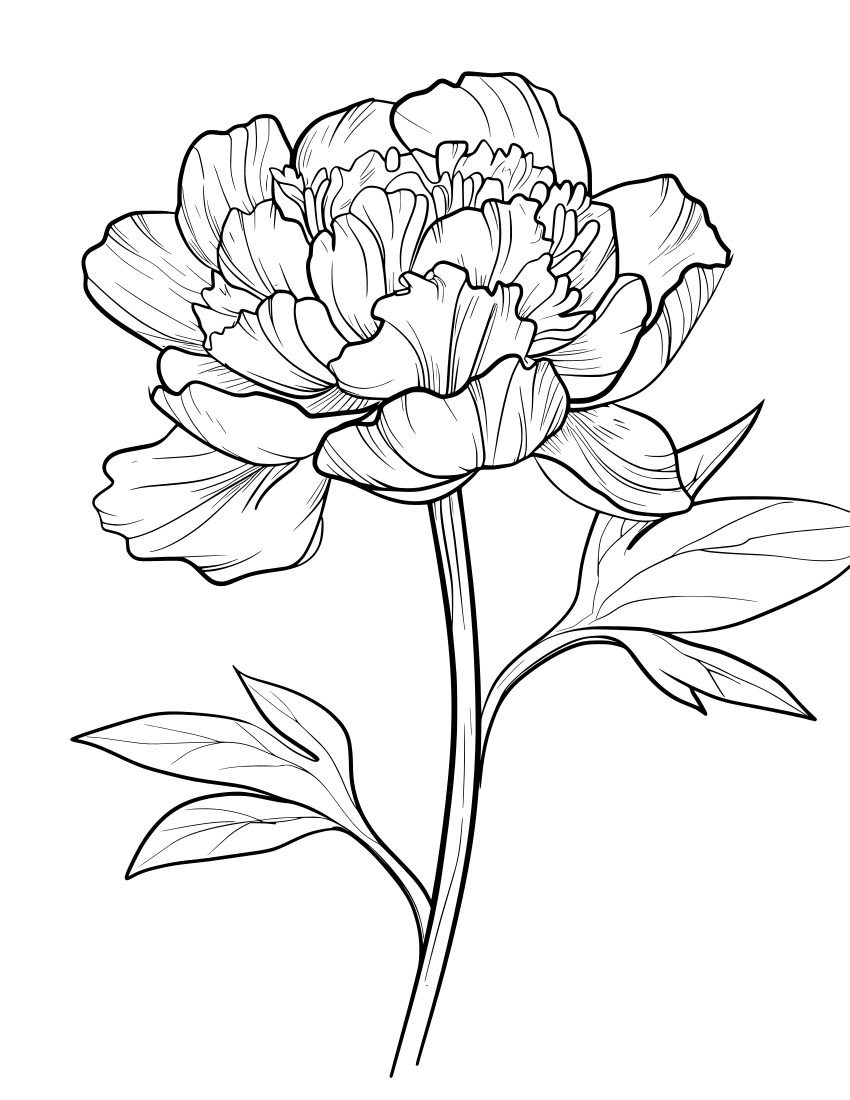
Delicate Hydrangea Coloring Page presents the hydrangea in the finest tradition of botanical line art — every petal edge, leaf vein and stem detail rendered with the precision and delicacy of a 19th-century scientific illustration. Part of our free flower coloring pages collection, this design is created for colorists who love the meditative satisfaction of fine, careful work.
The hydrangea has the unusual botanical property of changing its flower color based on soil chemistry: in acidic soil (low pH), aluminum is available to the plant and the flowers turn blue; in alkaline soil, they turn pink. This strange responsiveness to its environment has made the hydrangea a symbol of heartfelt emotion and understanding in Japan, where it is called ajisai and celebrated each June during the rainy season. In the Japanese language of flowers, hydrangea carries the meaning of gratitude and deep understanding — though the Victorians gave it a less flattering attribution: boastfulness and vanity (perhaps because of its large, showy flower heads). The hydrangea was introduced to Europe from Japan in 1790 and became a major garden plant during the Victorian era.
The hydrangea's flower head is actually a cluster of dozens to hundreds of tiny individual florets, each with four rounded sepals. This clustered structure creates a beautiful challenge: a single "bloom" actually contains many colors and values as light hits the mounds and shadows gather in the hollows. Rather than filling the entire head with a single flat color, vary the tone continuously — lighter on the florets facing upward toward the light, progressively darker in the recesses between clusters. Blues and mauves often show a slight warm-pink shift at the petal edges that adds beautiful complexity.
Fine botanical line art requires fine tools and a fine touch. Use sharpened colored pencils (harder leads — H or 2H — for the thinnest details) and build color in multiple light layers rather than applying it all at once. For the hydrangea's more detailed elements — vein patterns, stamen details, petal textures — work with minimal pressure and maximum patience. Leave highlights completely uncolored: this is especially important for delicate designs where a white highlight on a petal edge or the tip of a stamen suggests three-dimensionality without heavy shading. This delicate coloring page is available as a free high-resolution PDF. Print on smooth, heavier paper (100 g/m² or above) for the finest coloring experience — the delicacy of the design deserves the best surface you can offer it.
Leave a Comment
Comments
No comments yet. Be the first!