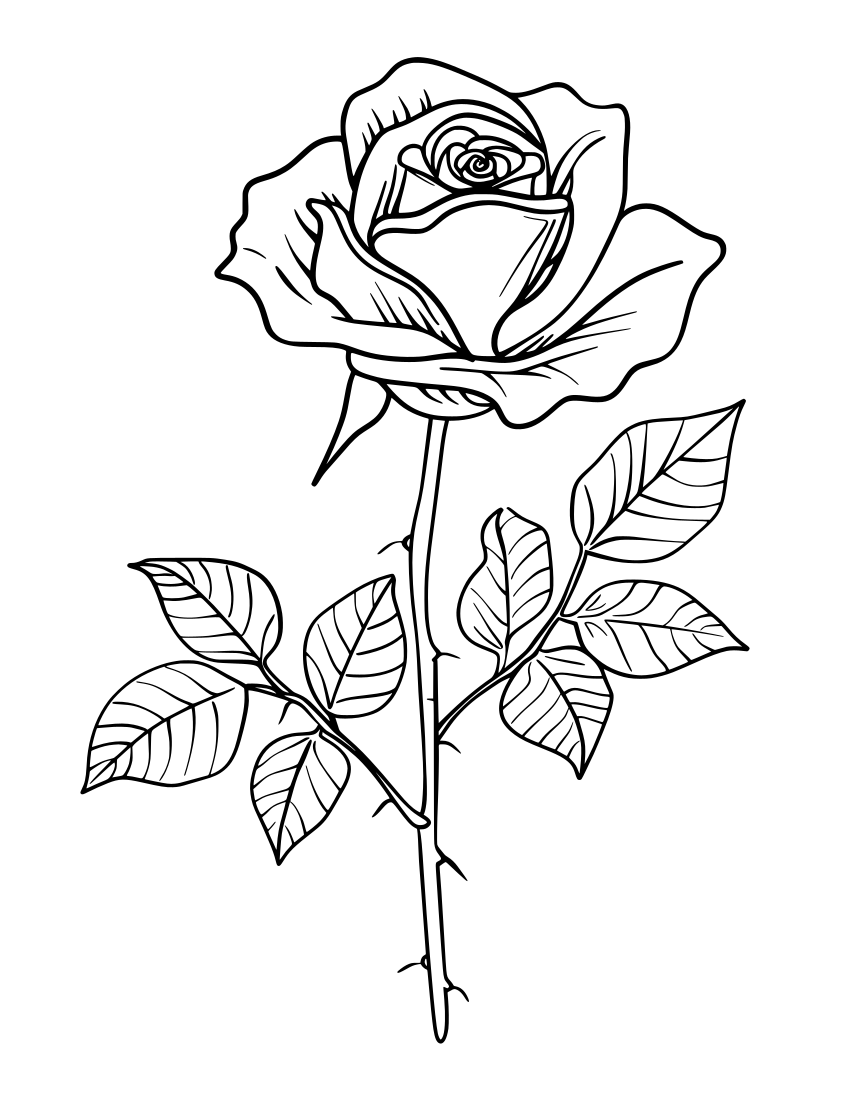
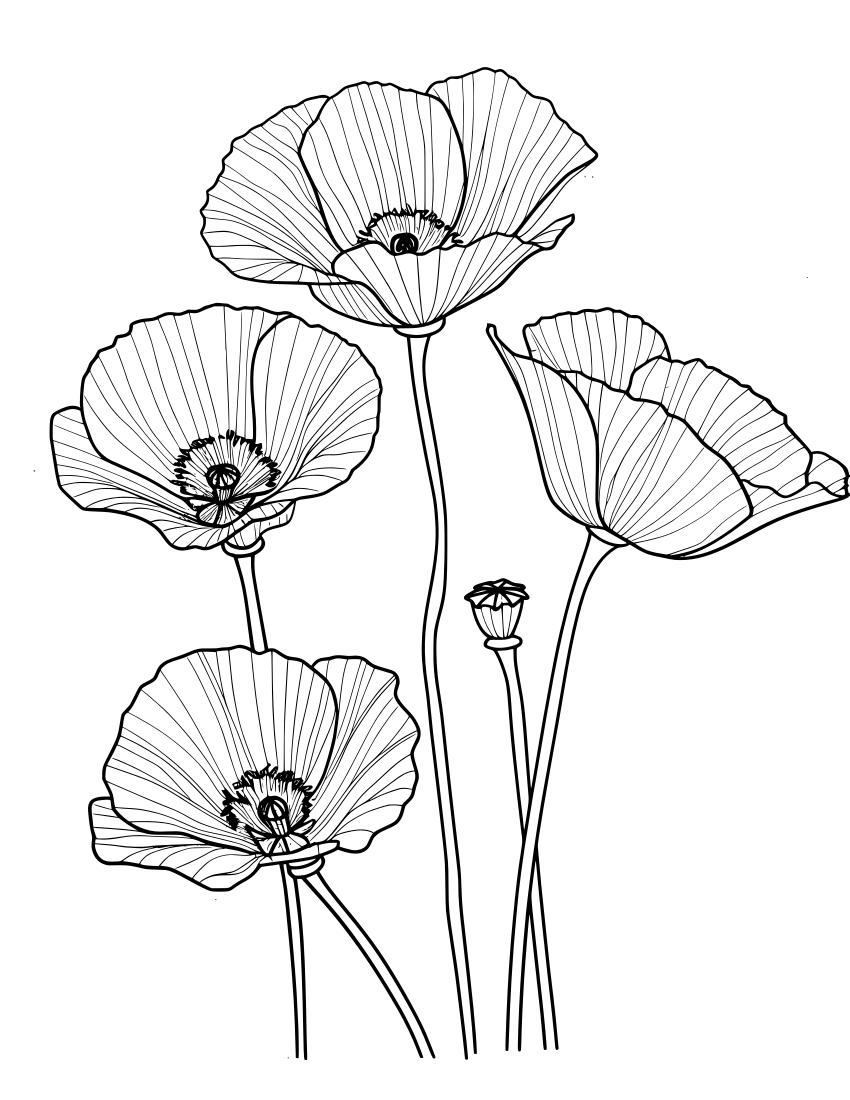
Delicate Daisy Coloring Page presents the daisy in the finest tradition of botanical line art — every petal edge, leaf vein and stem detail rendered with the precision and delicacy of a 19th-century scientific illustration. Part of our free flower coloring pages collection, this design is created for colorists who love the meditative satisfaction of fine, careful work.
The daisy's name comes from the Anglo-Saxon daes eage — "day's eye" — because the flower opens at dawn and closes at dusk, following the light like a miniature sun. It is one of Britain's most beloved wildflowers, growing in every meadow and lawn from Cornwall to the Highlands. In Celtic tradition, the daisy (known as "Gowan") was used for love divination — the original "he loves me, he loves me not." Chaucer wrote of "the dayesye" with deep affection in The Legend of Good Women. In the Victorian language of flowers, the daisy meant innocence, loyal love and "I will think of you."
The daisy's classic beauty lies in its simplicity: pure white ray petals surrounding a warm, rounded yellow disc. But real daisies are never quite as flat as they first appear — the underside of the ray petals often carries a faint rose or lilac blush, especially at the base. The central disc has wonderful texture: a dome of tiny florets that darkens at the very centre. Try a warm amber or orange at the disc centre blending outward to bright yellow at the edges for a naturalistic, sunlit effect.
Fine botanical line art requires fine tools and a fine touch. Use sharpened colored pencils (harder leads — H or 2H — for the thinnest details) and build color in multiple light layers rather than applying it all at once. For the daisy's more detailed elements — vein patterns, stamen details, petal textures — work with minimal pressure and maximum patience. Leave highlights completely uncolored: this is especially important for delicate designs where a white highlight on a petal edge or the tip of a stamen suggests three-dimensionality without heavy shading. This delicate coloring page is available as a free high-resolution PDF. Print on smooth, heavier paper (100 g/m² or above) for the finest coloring experience — the delicacy of the design deserves the best surface you can offer it.
Leave a Comment
Comments
No comments yet. Be the first!