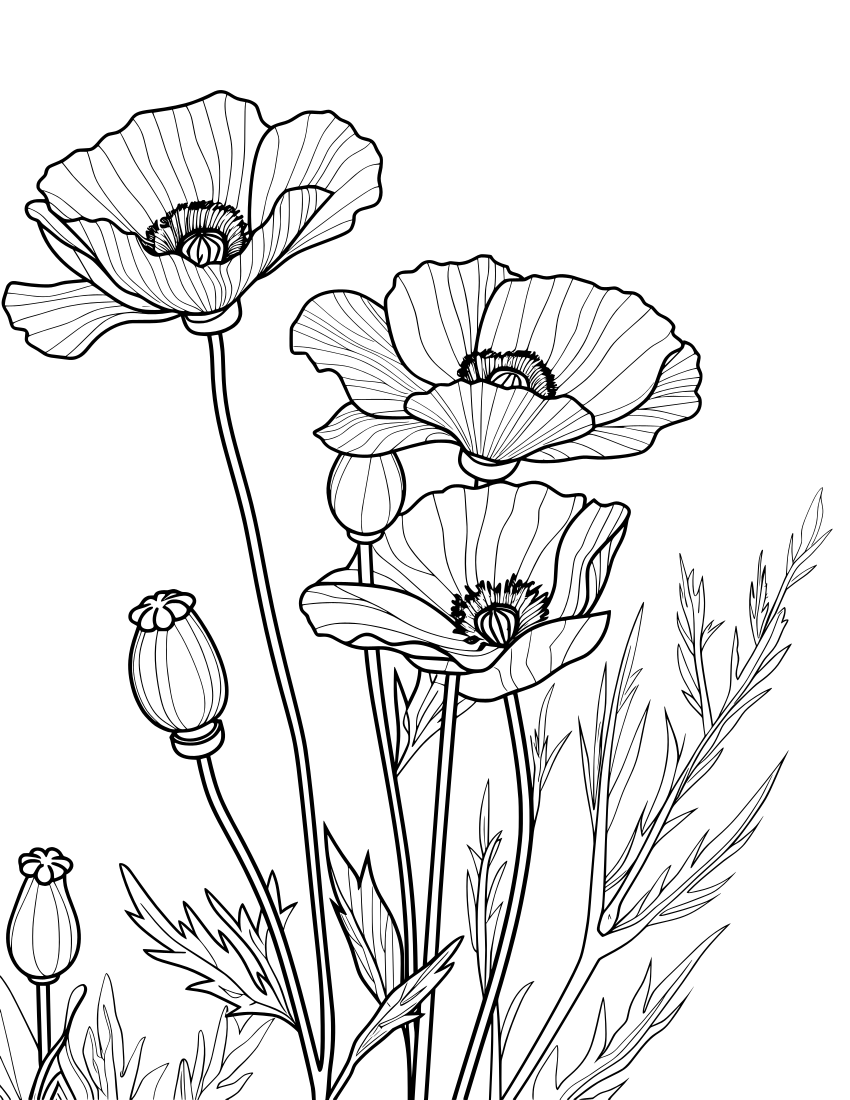
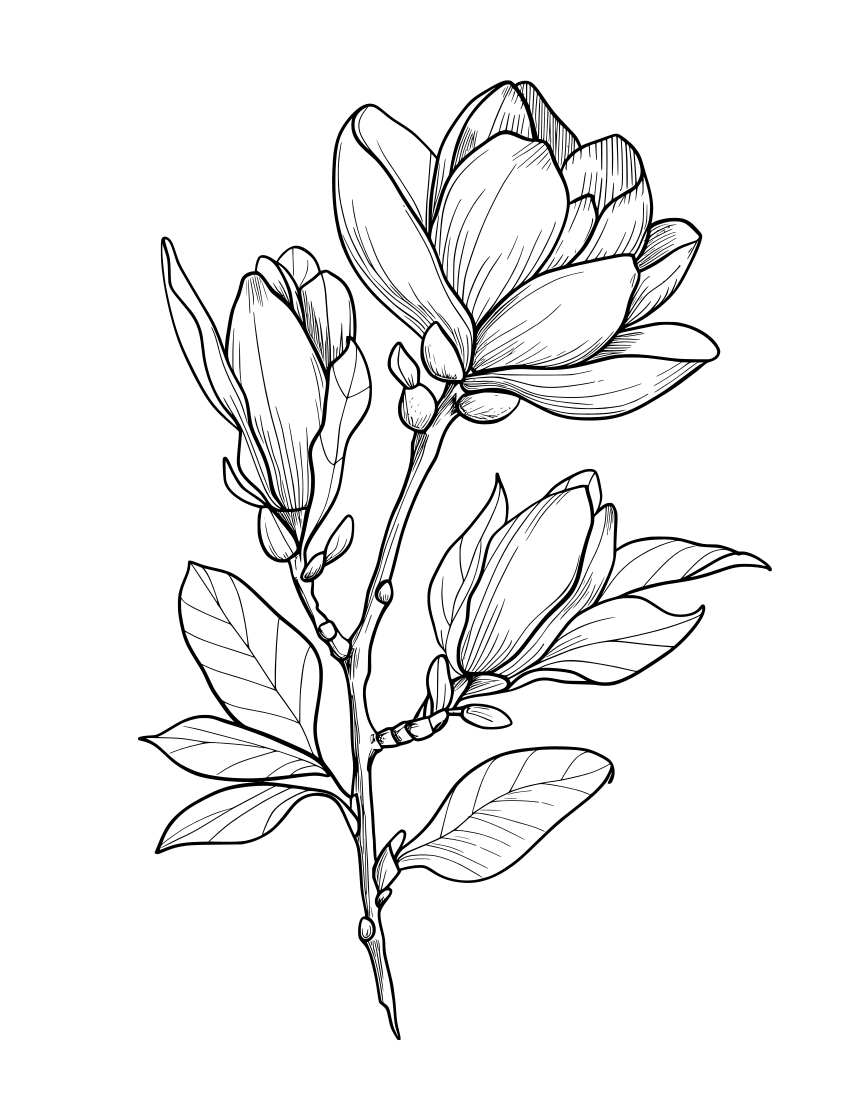
Delicate Tulip Coloring Page presents the tulip in the finest tradition of botanical line art — every petal edge, leaf vein and stem detail rendered with the precision and delicacy of a 19th-century scientific illustration. Part of our free flower coloring pages collection, this design is created for colorists who love the meditative satisfaction of fine, careful work.
The tulip's story is one of obsession and financial madness. Originally a wildflower of the Central Asian steppes, it was cultivated in the Ottoman Empire for centuries before Dutch merchants brought it to Holland in the 1590s. What followed — "Tulip Mania" of 1636–1637 — was history's first recorded speculative bubble: a single Semper Augustus tulip bulb sold for as much as a canal house in Amsterdam. The Dutch Golden Age painters celebrated the tulip in extraordinary flower still-lifes, and Ottoman craftsmen wove them into tiles, textiles and manuscripts with such obsessive frequency that the 16th–18th century Ottoman aesthetic is sometimes called the "Tulip Period."
Tulips are wonderfully satisfying to color because of their clean, architectural cup shape and naturally bold, saturated colors. Real tulips come in nearly every hue except blue — from purest white through every shade of yellow, orange, red, pink and purple to near-black. The petals of a single tulip often show a subtle gradient from a lighter base to a richer tip. For parrot tulips or fringed varieties, add delicate irregular edges in a slightly darker or contrasting tone to capture their flamboyant character.
Fine botanical line art requires fine tools and a fine touch. Use sharpened colored pencils (harder leads — H or 2H — for the thinnest details) and build color in multiple light layers rather than applying it all at once. For the tulip's more detailed elements — vein patterns, stamen details, petal textures — work with minimal pressure and maximum patience. Leave highlights completely uncolored: this is especially important for delicate designs where a white highlight on a petal edge or the tip of a stamen suggests three-dimensionality without heavy shading. This delicate coloring page is available as a free high-resolution PDF. Print on smooth, heavier paper (100 g/m² or above) for the finest coloring experience — the delicacy of the design deserves the best surface you can offer it.
Leave a Comment
Comments
No comments yet. Be the first!