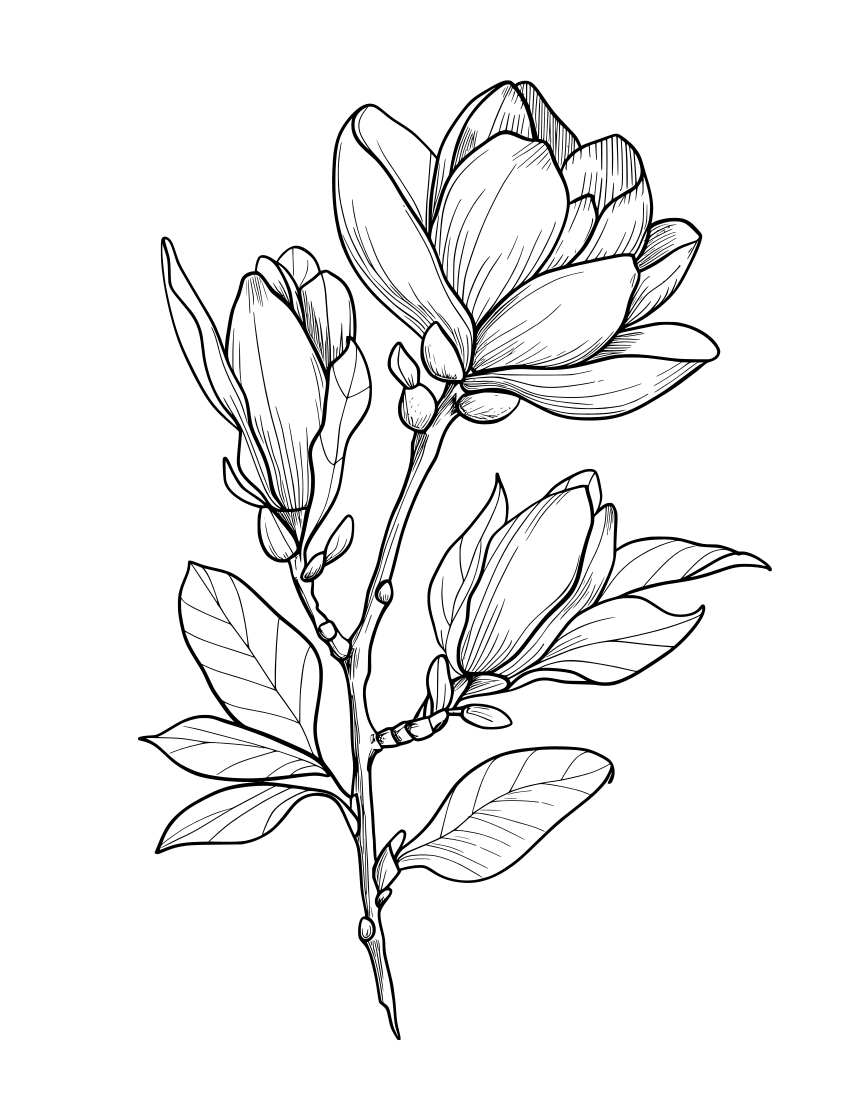
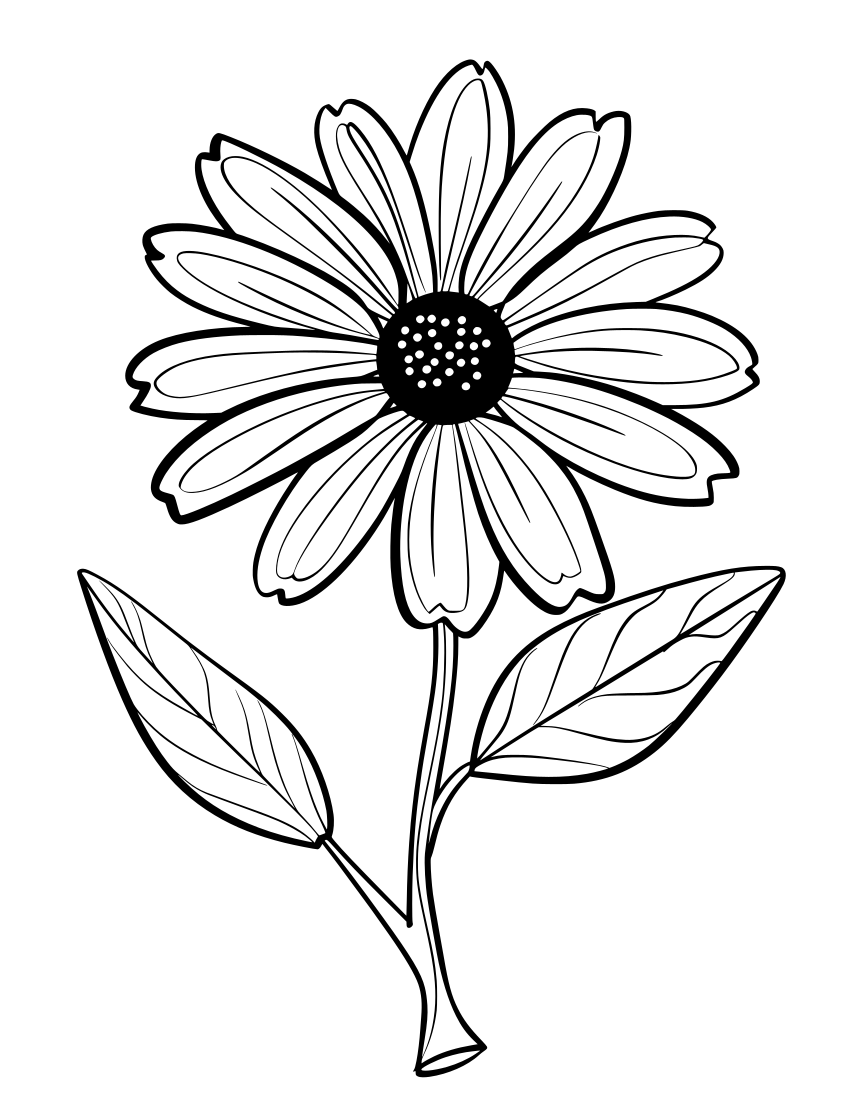
Delicate Sunflower Coloring Page presents the sunflower in the finest tradition of botanical line art — every petal edge, leaf vein and stem detail rendered with the precision and delicacy of a 19th-century scientific illustration. Part of our free flower coloring pages collection, this design is created for colorists who love the meditative satisfaction of fine, careful work.
The sunflower is native to the Americas, where it was cultivated by Indigenous peoples for over 5,000 years — not just as food and oil, but as a sacred plant associated with solar deities. Spanish explorers brought it to Europe in the 16th century, where it became a symbol of devotion and adoration (a flower that turns to follow the sun). But it was Vincent van Gogh who made the sunflower immortal: his series of sunflower paintings (1887–1889) — painted in brilliant cadmium yellow as a welcome gift for his friend Paul Gauguin — became among the most recognised images in Western art, a testament to the sunflower's raw, joyful exuberance.
The sunflower's dramatic scale rewards bold coloring. The central disc — a dense spiral of tiny florets following Fibonacci mathematics — ranges from golden yellow at the outside through rich amber and deep brown to near-black at the center. The ray petals vary from bright cadmium yellow at the tips to a deeper, more orange-gold at the base. Use the full range of your yellows and oranges; the sunflower can absorb saturated, vivid color without losing its freshness. The dark, velvety disc centre provides a magnificent contrast anchor.
Fine botanical line art requires fine tools and a fine touch. Use sharpened colored pencils (harder leads — H or 2H — for the thinnest details) and build color in multiple light layers rather than applying it all at once. For the sunflower's more detailed elements — vein patterns, stamen details, petal textures — work with minimal pressure and maximum patience. Leave highlights completely uncolored: this is especially important for delicate designs where a white highlight on a petal edge or the tip of a stamen suggests three-dimensionality without heavy shading. This delicate coloring page is available as a free high-resolution PDF. Print on smooth, heavier paper (100 g/m² or above) for the finest coloring experience — the delicacy of the design deserves the best surface you can offer it.
Leave a Comment
Comments
No comments yet. Be the first!