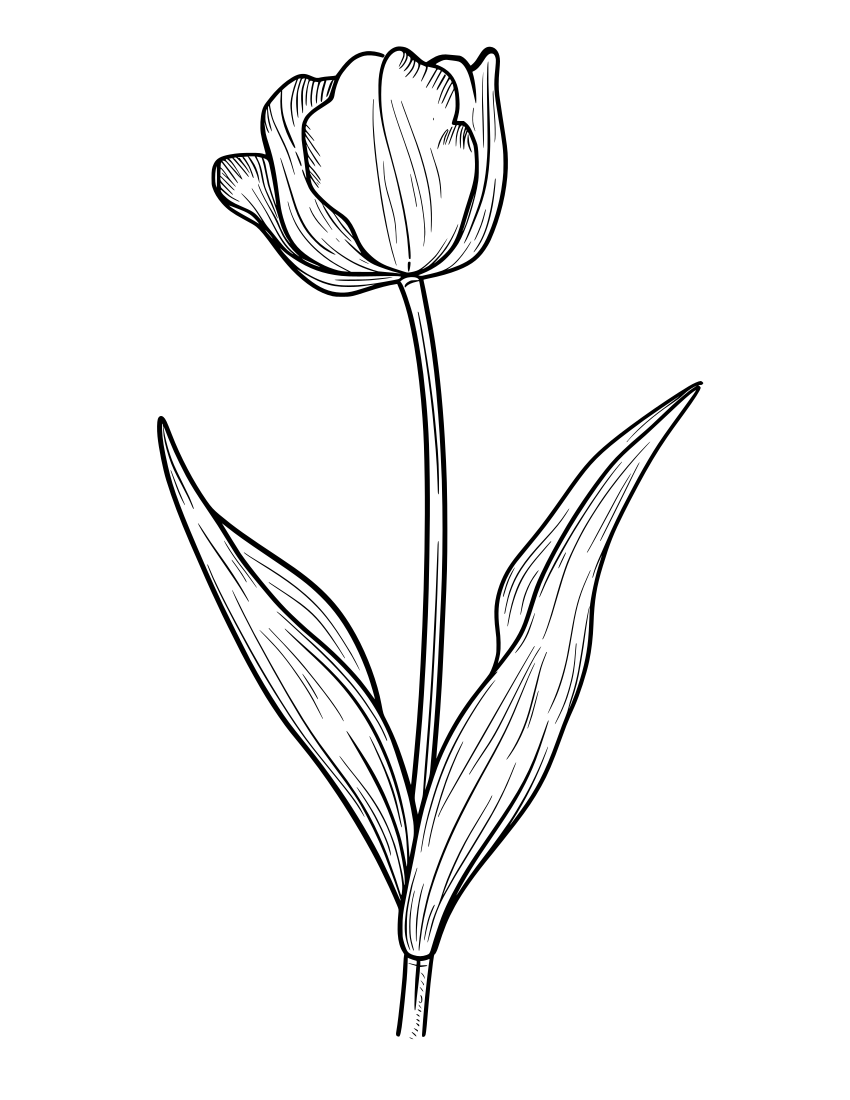
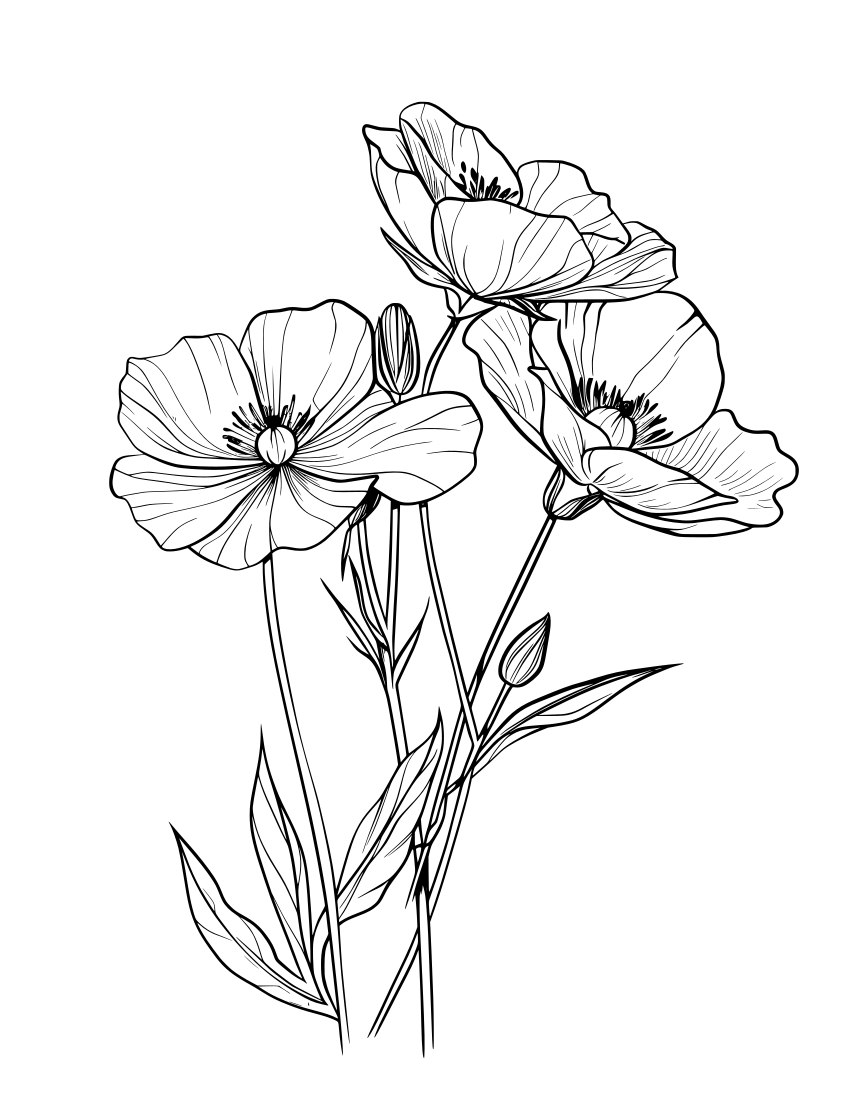
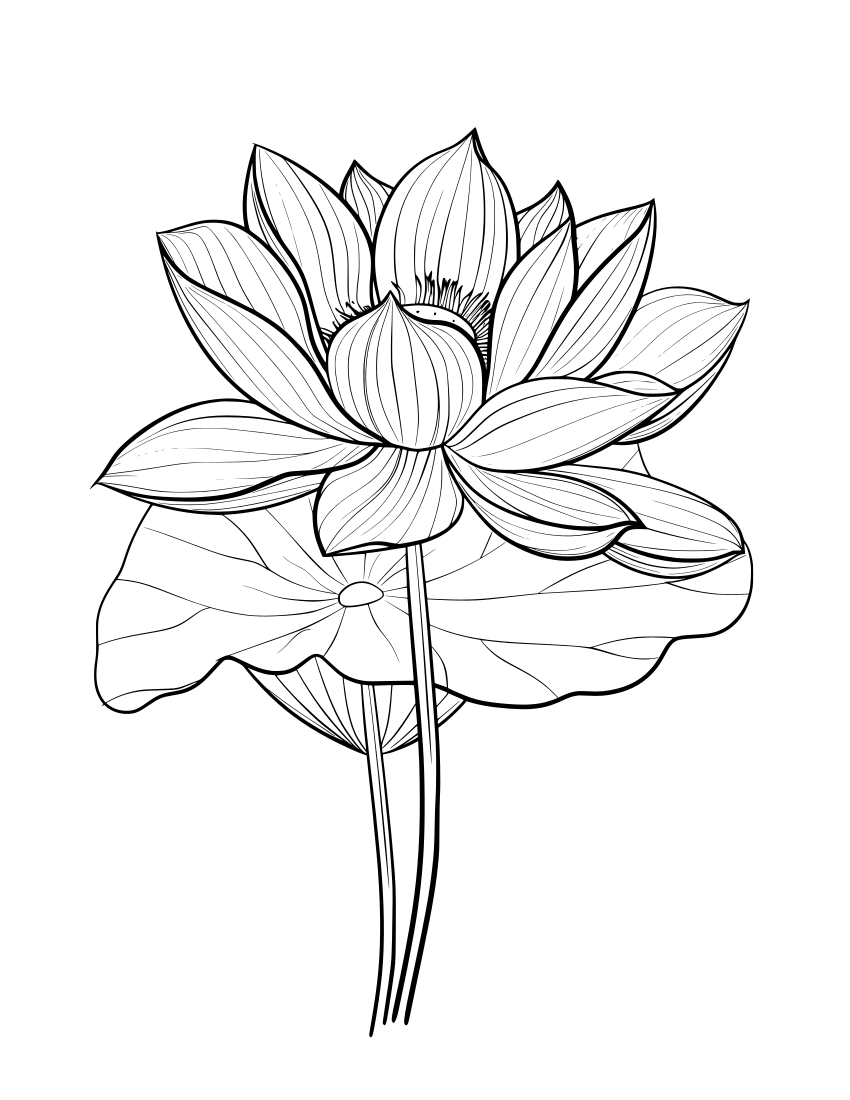
Delicate Poppy Coloring Page presents the poppy in the finest tradition of botanical line art — every petal edge, leaf vein and stem detail rendered with the precision and delicacy of a 19th-century scientific illustration. Part of our free flower coloring pages collection, this design is created for colorists who love the meditative satisfaction of fine, careful work.
The poppy carries more history than almost any other flower. In ancient Greece, it was sacred to Morpheus, god of sleep — its association with Hypnos and the underworld made it a symbol of eternal rest. By the 19th century, the opium poppy had become entangled with empire, addiction and the Opium Wars. But the poppy's most powerful symbolic moment came in April 1915, when the Canadian physician John McCrae wrote "In Flanders Fields" — inspired by the red poppies blooming over the graves of fallen soldiers in Belgium. The red poppy became the symbol of remembrance for the First World War, adopted across the Commonwealth, transforming a simple wildflower into the most emotionally charged botanical symbol of the 20th century.
The corn poppy's beauty lies in its apparent simplicity — four papery scarlet petals around a dramatic dark center — and the near-translucency of those petals in sunlight. This translucency is the key coloring challenge and opportunity: apply red lightly and in layers, leaving some white paper showing through the thinner petal areas. A deep wine or near-black blush at the petal base transitions to vivid vermillion at the tips. The central boss of stamens and the blue-black seed pod are magnificent details — render the stamens individually in dark indigo or black for a striking focal point.
Fine botanical line art requires fine tools and a fine touch. Use sharpened colored pencils (harder leads — H or 2H — for the thinnest details) and build color in multiple light layers rather than applying it all at once. For the poppy's more detailed elements — vein patterns, stamen details, petal textures — work with minimal pressure and maximum patience. Leave highlights completely uncolored: this is especially important for delicate designs where a white highlight on a petal edge or the tip of a stamen suggests three-dimensionality without heavy shading. This delicate coloring page is available as a free high-resolution PDF. Print on smooth, heavier paper (100 g/m² or above) for the finest coloring experience — the delicacy of the design deserves the best surface you can offer it.
Leave a Comment
Comments
No comments yet. Be the first!