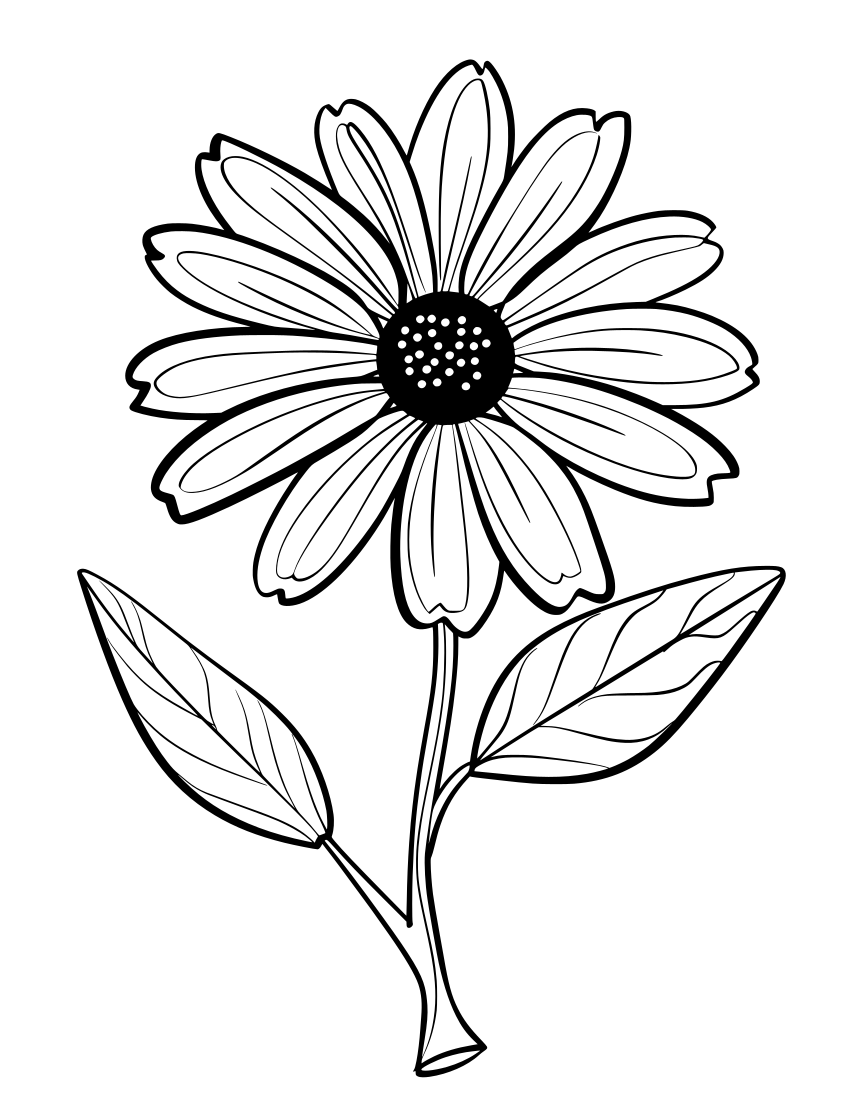
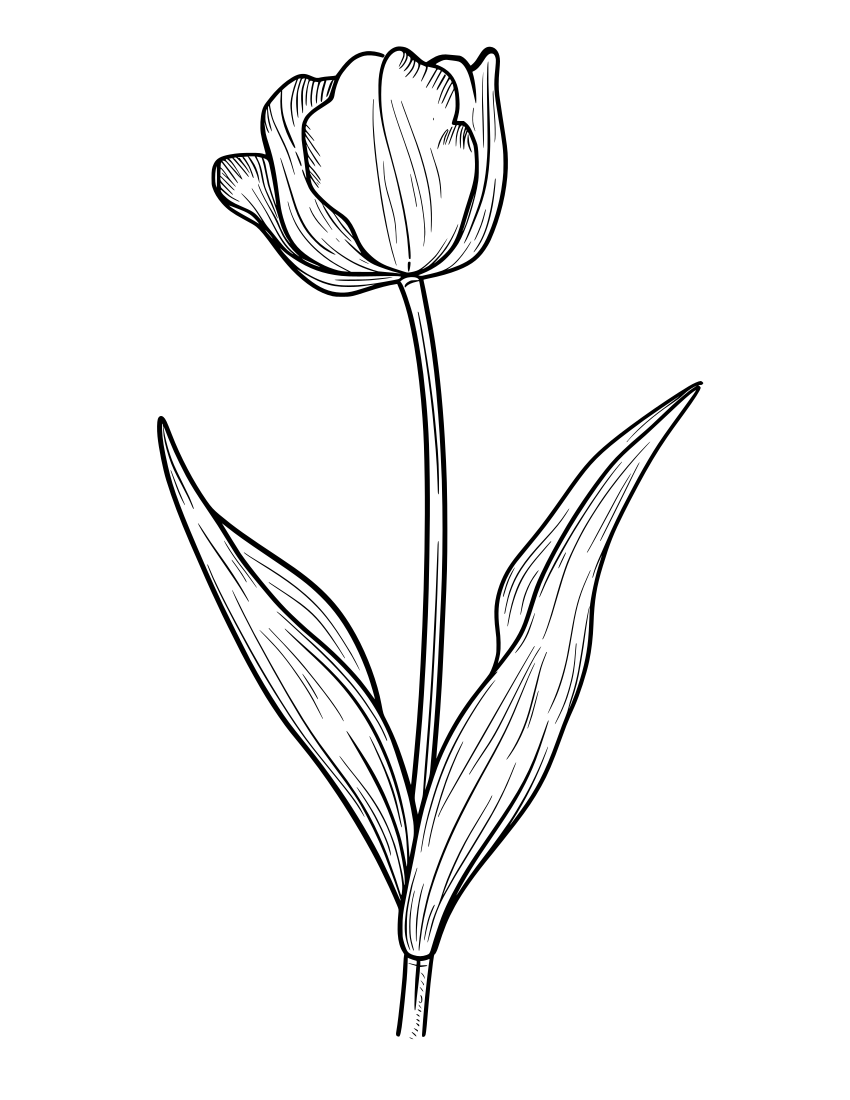
Delicate Orchid Coloring Page presents the orchid in the finest tradition of botanical line art — every petal edge, leaf vein and stem detail rendered with the precision and delicacy of a 19th-century scientific illustration. Part of our free flower coloring pages collection, this design is created for colorists who love the meditative satisfaction of fine, careful work.
With over 28,000 species, orchids are the most diverse plant family on Earth — they grow on every continent except Antarctica and have evolved astonishing strategies to attract specific pollinators: some mimic female bees so perfectly that male bees attempt to mate with them. Victorian collectors were seized by "Orchid Mania" in the 1800s, paying fortunes for rare specimens and sending collectors to die in tropical jungles to find new species. The name "orchid" comes from the Greek orchis, a reference to the shape of the root tuber — used since antiquity to prepare supposed aphrodisiac drinks. Today the orchid remains a symbol of rare, exotic beauty and refined luxury.
Orchids display a bilateral symmetry unlike any other common flower — their petals are precisely mirrored, with the distinctive lip petal (labellum) acting as a landing platform for pollinators. This symmetry makes orchids enormously satisfying to color with a precise, methodical approach. The labellum is typically the most vividly colored and patterned element: deep purple veining on cream, spotted magenta on white, or vivid yellow with red freckles. The outer petals and sepals are often more quietly colored — use this contrast to make the labellum sing.
Fine botanical line art requires fine tools and a fine touch. Use sharpened colored pencils (harder leads — H or 2H — for the thinnest details) and build color in multiple light layers rather than applying it all at once. For the orchid's more detailed elements — vein patterns, stamen details, petal textures — work with minimal pressure and maximum patience. Leave highlights completely uncolored: this is especially important for delicate designs where a white highlight on a petal edge or the tip of a stamen suggests three-dimensionality without heavy shading. This delicate coloring page is available as a free high-resolution PDF. Print on smooth, heavier paper (100 g/m² or above) for the finest coloring experience — the delicacy of the design deserves the best surface you can offer it.
Leave a Comment
Comments
No comments yet. Be the first!