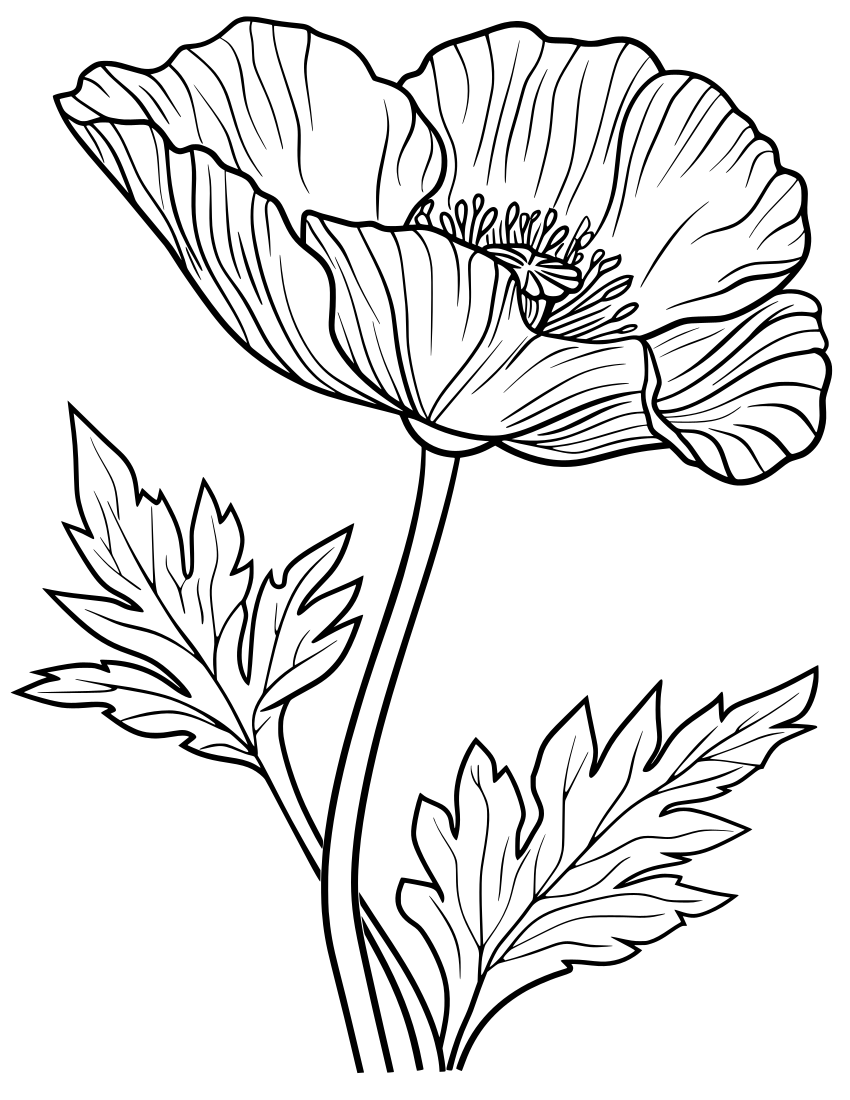
Vintage Aster Coloring Page evokes the refined world of Victorian botanical printing — the illustrated gift books, chromolithographic flower plates and hand-colored engravings that made botanical art one of the great aesthetic achievements of the 19th century. Part of our free flower coloring pages collection, this design is made for colorists who love the muted, harmonious palette of the historical botanical tradition.
The aster takes its name from the Greek word for "star" — an accurate description of its perfectly star-like flower form. In ancient Greece, asters were burned as incense to drive away evil spirits, and garlands of asters were placed on the altars of the gods. The Cherokees used asters medicinally; the ancient Chinese regarded the aster as a symbol of love and wisdom. In the Victorian language of flowers, the aster meant patience, elegance and "I will think of you." The Michaelmas daisy (Aster novi-belgii), an aster species, became one of Victorian England's most beloved garden flowers — its blue-purple flowers blooming in September just as summer releases its hold, providing color when most other flowers have faded.
The aster's star-like radiation of narrow ray petals around a bright yellow or golden disc makes it one of the most structurally satisfying flowers to color. Classic asters range from pure white through pale lavender to rich violet-purple, with some cultivars in deep red, pink and soft blue. The petal color is typically most intense at the tip and slightly paler where the petals meet the disc. The yellow central disc provides a warm, contrasting anchor: work it from bright gold at the outer edge to deeper amber-orange at the very center. The fine, precise ray petals benefit from a careful, patient approach — line art rendering with strokes following the petal direction.
Achieving an authentic vintage botanical aesthetic requires deliberate restraint with your palette. Choose colors that feel slightly aged, slightly muted: dusty rose rather than hot pink, sage green rather than bright emerald, antique gold rather than vivid yellow. A very light wash of warm grey or pale sepia applied as a base layer creates the illusion of aged paper. Fine pencil hatching in the shadow areas — rather than flat color fills — echoes the engraving technique of 18th- and 19th-century botanical plates. The aster in a vintage treatment has the quality of a specimen encountered in an old illustrated book: precious, carefully observed, quietly beautiful. This vintage-style coloring page is free to download and print. Complete it with a muted botanical palette and it looks extraordinary mounted in a simple gilt or dark wood frame.
Leave a Comment
Comments
No comments yet. Be the first!