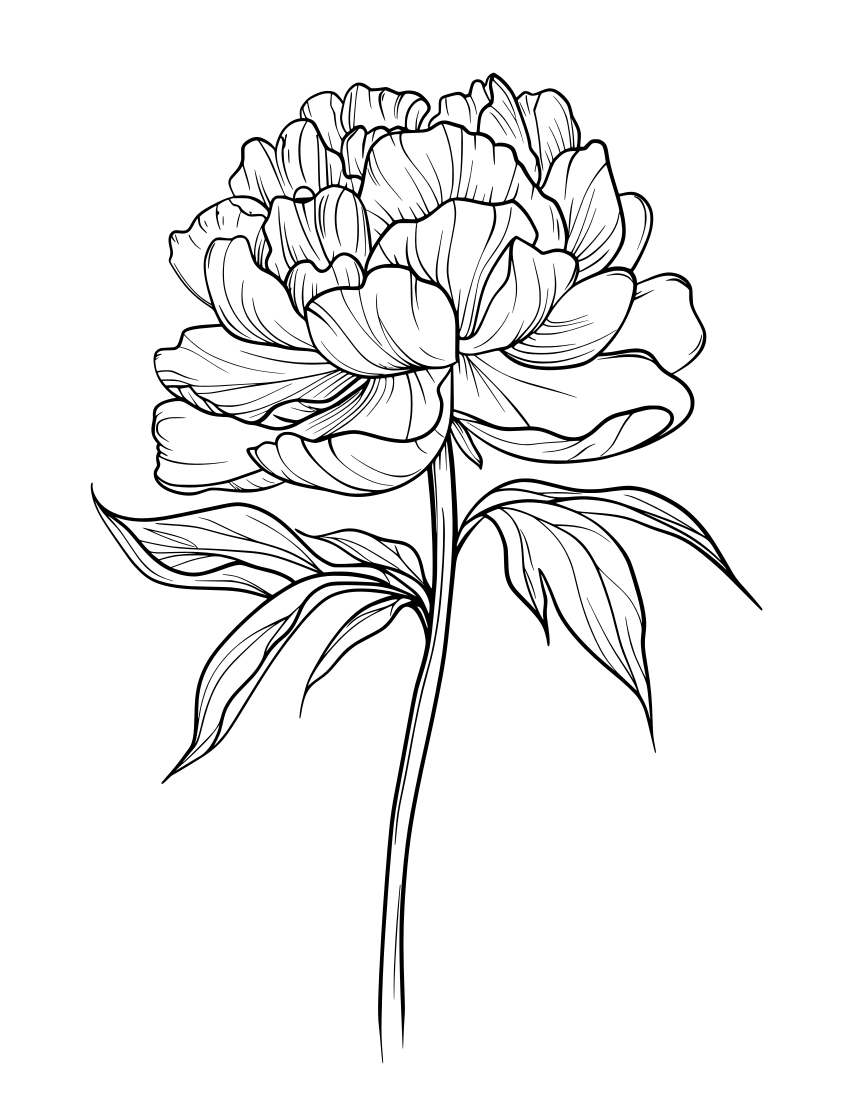
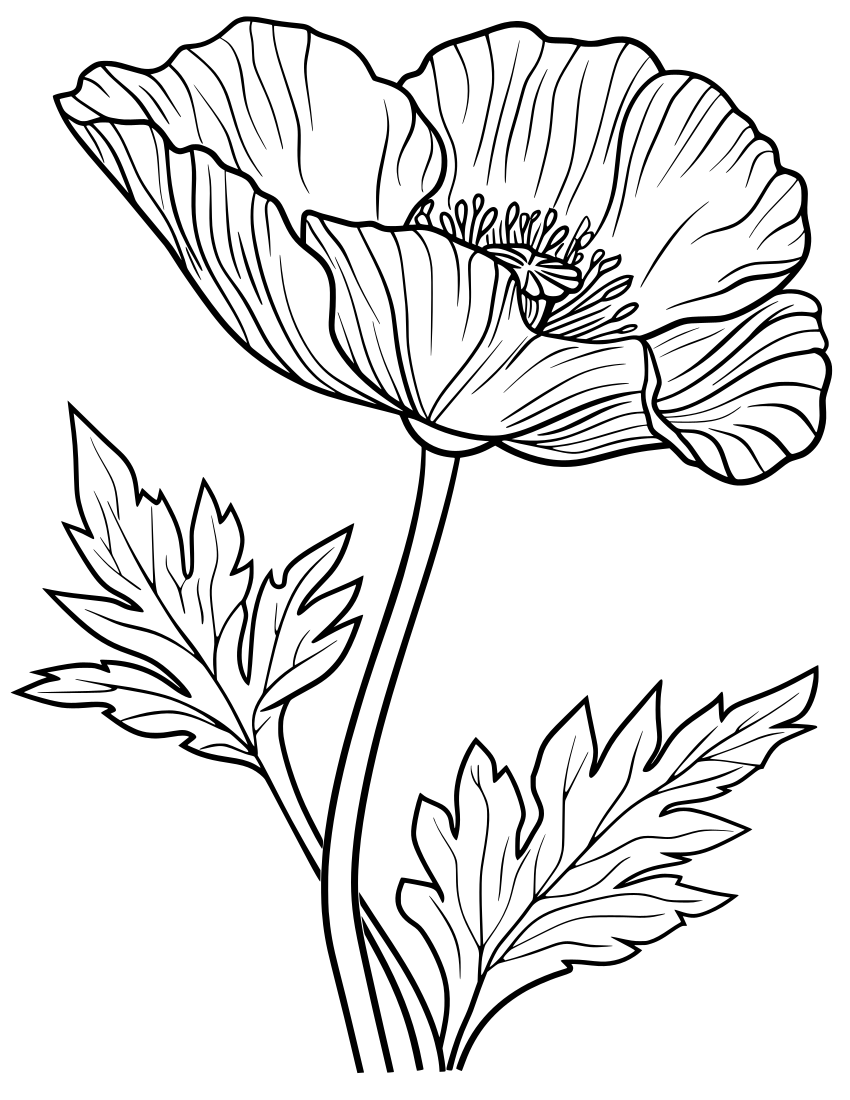
Vintage Carnation Coloring Page evokes the refined world of Victorian botanical printing — the illustrated gift books, chromolithographic flower plates and hand-colored engravings that made botanical art one of the great aesthetic achievements of the 19th century. Part of our free flower coloring pages collection, this design is made for colorists who love the muted, harmonious palette of the historical botanical tradition.
The carnation has one of the longest histories in cultivation of any ornamental flower — it was grown in ancient China over 2,000 years ago and in ancient Greece, where it was known as dianthos, "flower of the gods." In the Victorian language of flowers, carnations carried precise color-coded meanings: red for deep love, pink for a mother's undying love, white for pure love and luck, yellow for rejection, purple for capriciousness. It was Anna Jarvis who chose the white carnation as the symbol of Mother's Day in 1908 — honoring her own mother who had always worn a white carnation. The carnation is also deeply associated with political movements: in Portugal's 1974 Carnation Revolution, soldiers placed carnations in their rifle barrels as a symbol of peaceful change.
The carnation's fringed, deeply ruffled petals — as if each petal has been cut with pinking shears at the edge — give it a texture no other flower matches. This fringe is the key coloring detail: render the petal edges with a slightly irregular, feathery touch using fine strokes of the same color, marginally darker or lighter than the main petal tone. Carnations are natural graduates: many varieties show a white or cream base that intensifies toward a richer hue at the petal tips. Working light to dark from base to fringed edge captures this quality perfectly. The calyx (the green collar below the bloom) has a beautiful tubular structure worth rendering carefully.
Achieving an authentic vintage botanical aesthetic requires deliberate restraint with your palette. Choose colors that feel slightly aged, slightly muted: dusty rose rather than hot pink, sage green rather than bright emerald, antique gold rather than vivid yellow. A very light wash of warm grey or pale sepia applied as a base layer creates the illusion of aged paper. Fine pencil hatching in the shadow areas — rather than flat color fills — echoes the engraving technique of 18th- and 19th-century botanical plates. The carnation in a vintage treatment has the quality of a specimen encountered in an old illustrated book: precious, carefully observed, quietly beautiful. This vintage-style coloring page is free to download and print. Complete it with a muted botanical palette and it looks extraordinary mounted in a simple gilt or dark wood frame.
Leave a Comment
Comments
No comments yet. Be the first!