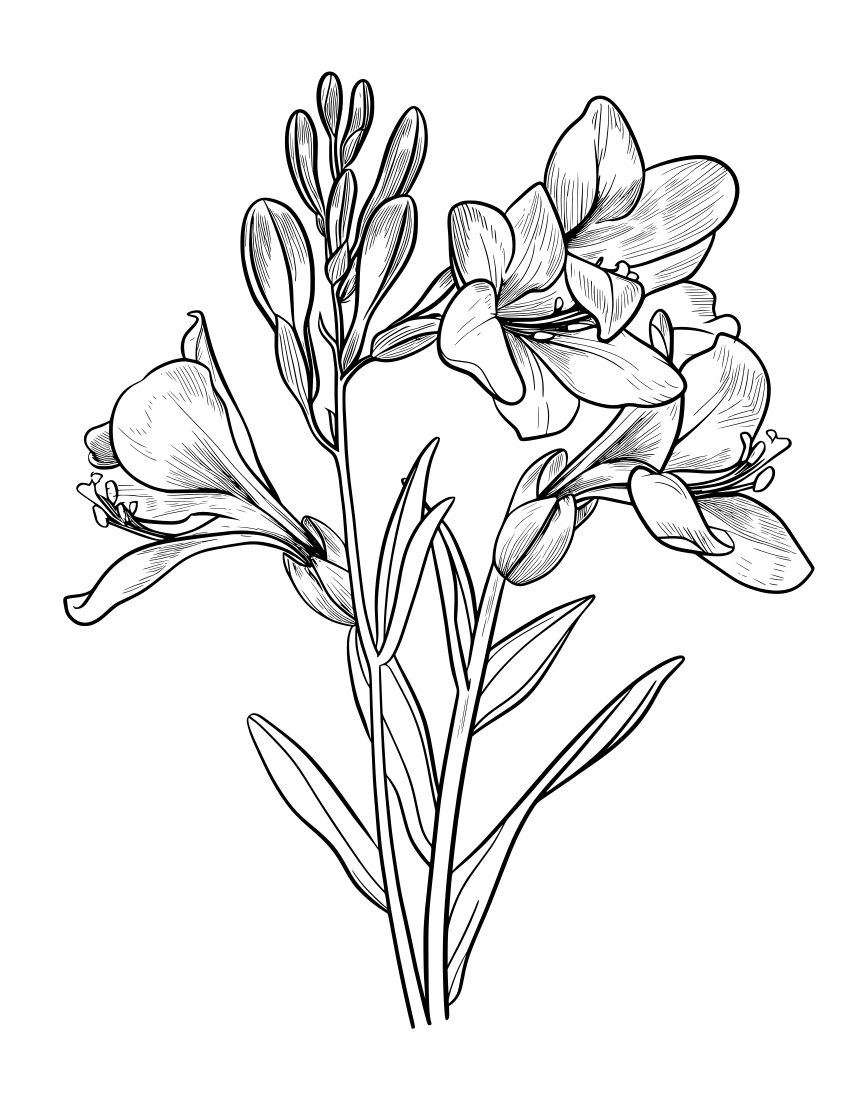
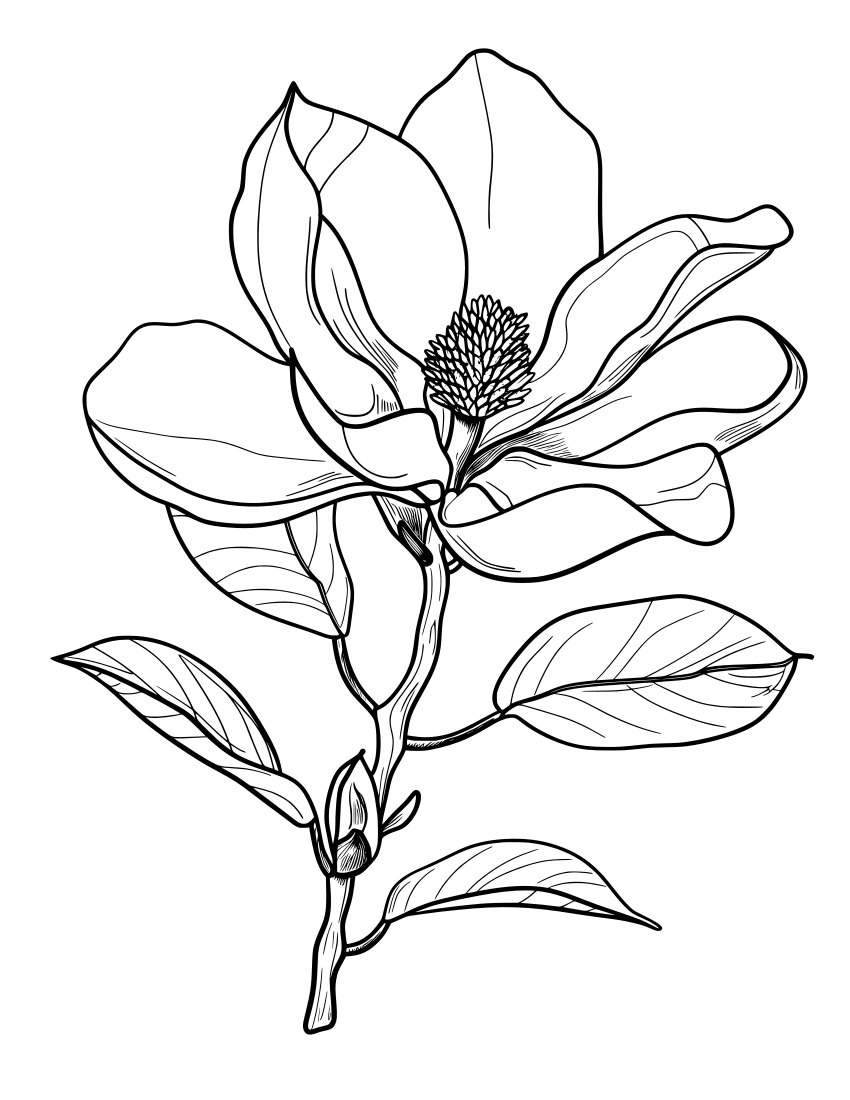
Vintage Zinnia Coloring Page evokes the refined world of Victorian botanical printing — the illustrated gift books, chromolithographic flower plates and hand-colored engravings that made botanical art one of the great aesthetic achievements of the 19th century. Part of our free flower coloring pages collection, this design is made for colorists who love the muted, harmonious palette of the historical botanical tradition.
The zinnia is named after the 18th-century German botanist Johann Gottfried Zinn — though Zinn himself never saw the flower, as it was named posthumously by Linnaeus in 1759. Native to the dry highland meadows of Mexico and Central America, zinnias were introduced to Europe by Spanish explorers and initially dismissed as too simple to be fashionable. Not until the 20th century, when breeders developed the extraordinary range of vivid colors and double-flower forms now available, did the zinnia become a garden staple. In 2016, astronaut Scott Kelly grew zinnias aboard the International Space Station — the first flowering plant cultivated in space — making the zinnia a genuinely interplanetary flower.
Zinnias are among the most richly colored flowers in the garden — their jewel-toned palette of scarlet, magenta, burnt orange, deep gold, ivory and coral makes them ideal for bold, saturated coloring. Single-flowered varieties have simple daisy-like structure with flat ray petals and a raised central disc; double varieties are pompon-like with dozens of overlapping petals. For double zinnias, establish a color scheme and apply it consistently through the layers, slightly deeper at the center and lighter at the outermost petals. The stems are notably hairy and rough — render them in a warm, textured mid-green.
Achieving an authentic vintage botanical aesthetic requires deliberate restraint with your palette. Choose colors that feel slightly aged, slightly muted: dusty rose rather than hot pink, sage green rather than bright emerald, antique gold rather than vivid yellow. A very light wash of warm grey or pale sepia applied as a base layer creates the illusion of aged paper. Fine pencil hatching in the shadow areas — rather than flat color fills — echoes the engraving technique of 18th- and 19th-century botanical plates. The zinnia in a vintage treatment has the quality of a specimen encountered in an old illustrated book: precious, carefully observed, quietly beautiful. This vintage-style coloring page is free to download and print. Complete it with a muted botanical palette and it looks extraordinary mounted in a simple gilt or dark wood frame.
Leave a Comment
Comments
No comments yet. Be the first!