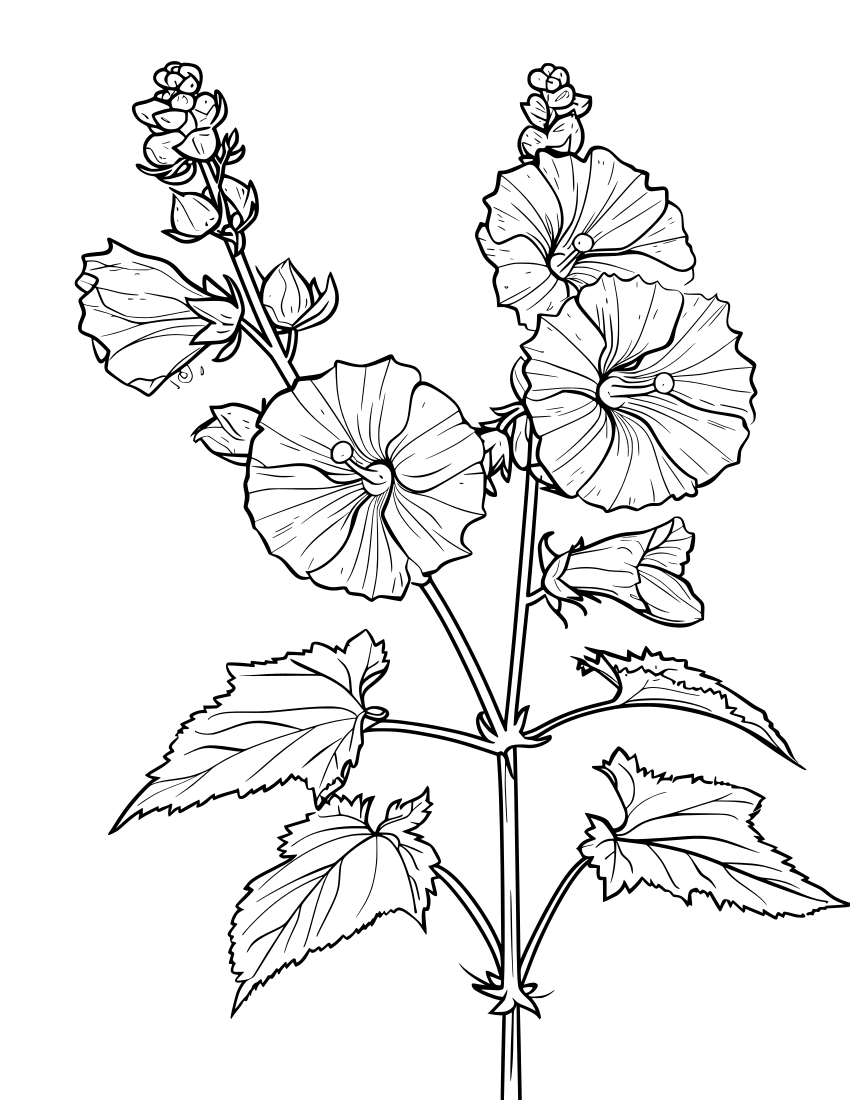
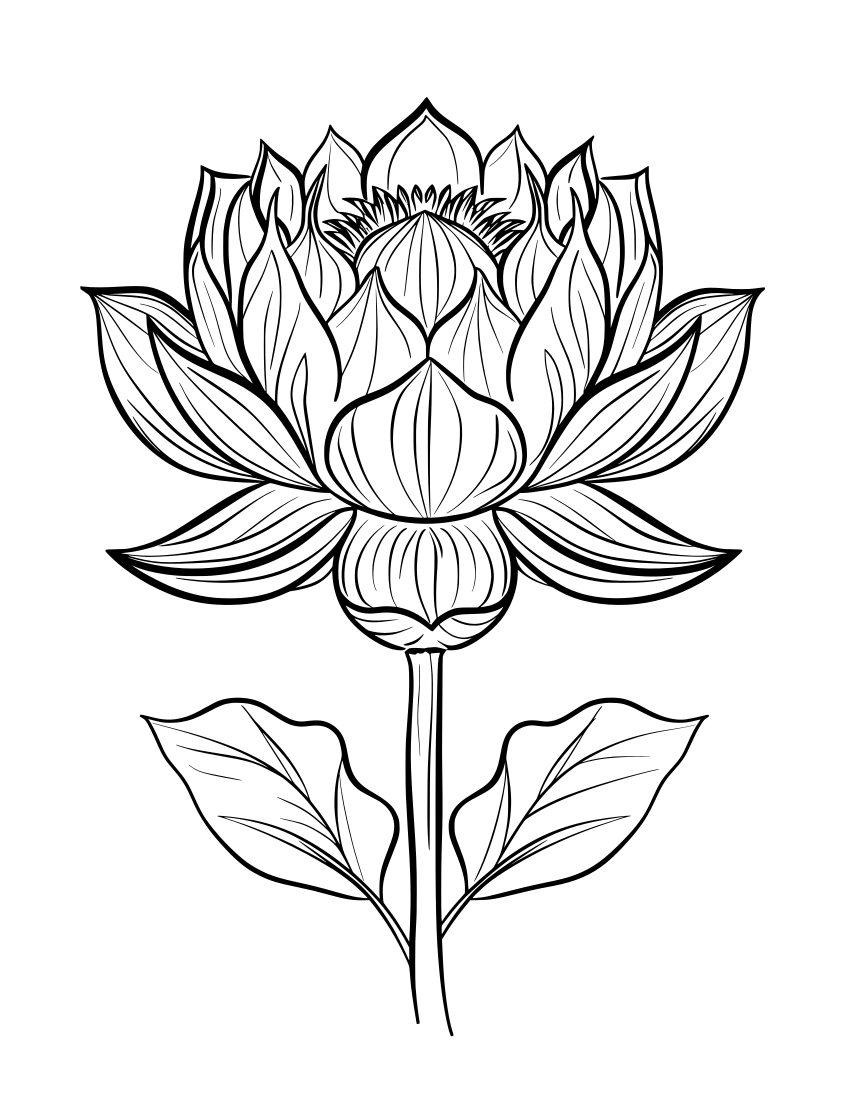
Vintage Poppy Coloring Page evokes the refined world of Victorian botanical printing — the illustrated gift books, chromolithographic flower plates and hand-colored engravings that made botanical art one of the great aesthetic achievements of the 19th century. Part of our free flower coloring pages collection, this design is made for colorists who love the muted, harmonious palette of the historical botanical tradition.
The poppy carries more history than almost any other flower. In ancient Greece, it was sacred to Morpheus, god of sleep — its association with Hypnos and the underworld made it a symbol of eternal rest. By the 19th century, the opium poppy had become entangled with empire, addiction and the Opium Wars. But the poppy's most powerful symbolic moment came in April 1915, when the Canadian physician John McCrae wrote "In Flanders Fields" — inspired by the red poppies blooming over the graves of fallen soldiers in Belgium. The red poppy became the symbol of remembrance for the First World War, adopted across the Commonwealth, transforming a simple wildflower into the most emotionally charged botanical symbol of the 20th century.
The corn poppy's beauty lies in its apparent simplicity — four papery scarlet petals around a dramatic dark center — and the near-translucency of those petals in sunlight. This translucency is the key coloring challenge and opportunity: apply red lightly and in layers, leaving some white paper showing through the thinner petal areas. A deep wine or near-black blush at the petal base transitions to vivid vermillion at the tips. The central boss of stamens and the blue-black seed pod are magnificent details — render the stamens individually in dark indigo or black for a striking focal point.
Achieving an authentic vintage botanical aesthetic requires deliberate restraint with your palette. Choose colors that feel slightly aged, slightly muted: dusty rose rather than hot pink, sage green rather than bright emerald, antique gold rather than vivid yellow. A very light wash of warm grey or pale sepia applied as a base layer creates the illusion of aged paper. Fine pencil hatching in the shadow areas — rather than flat color fills — echoes the engraving technique of 18th- and 19th-century botanical plates. The poppy in a vintage treatment has the quality of a specimen encountered in an old illustrated book: precious, carefully observed, quietly beautiful. This vintage-style coloring page is free to download and print. Complete it with a muted botanical palette and it looks extraordinary mounted in a simple gilt or dark wood frame.
Leave a Comment
Comments
No comments yet. Be the first!