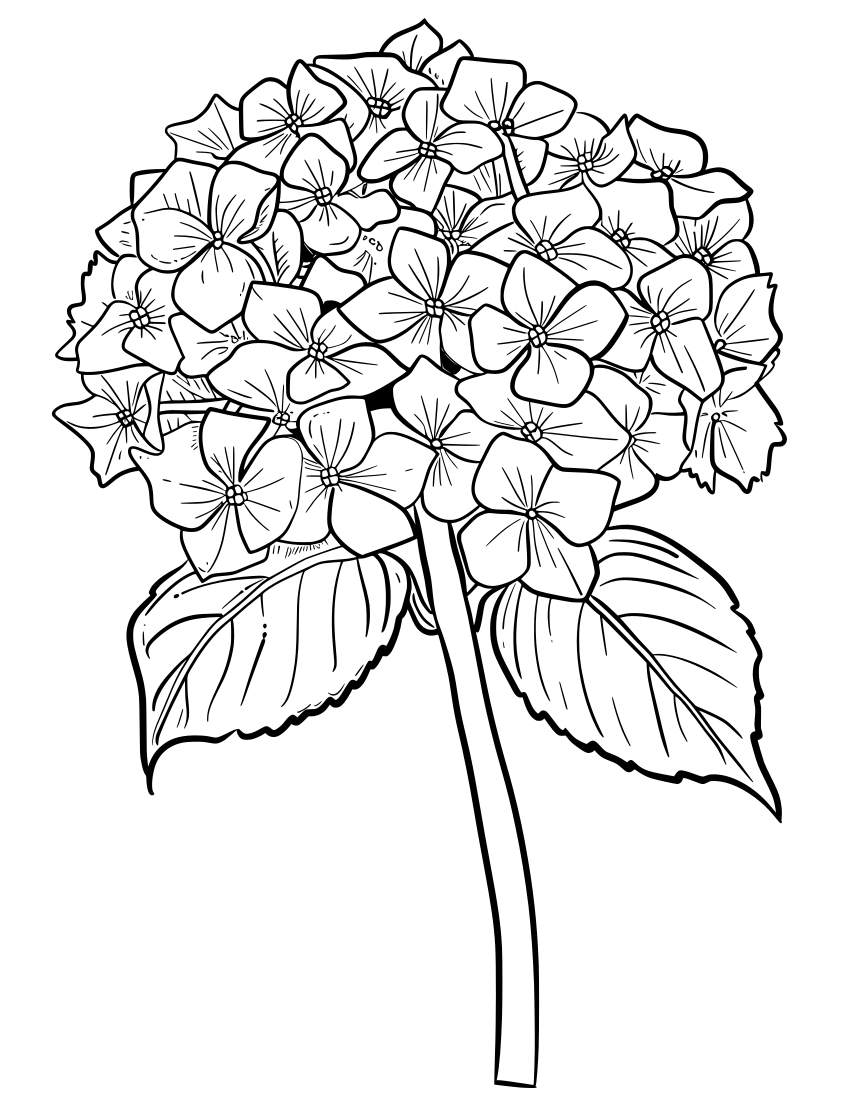
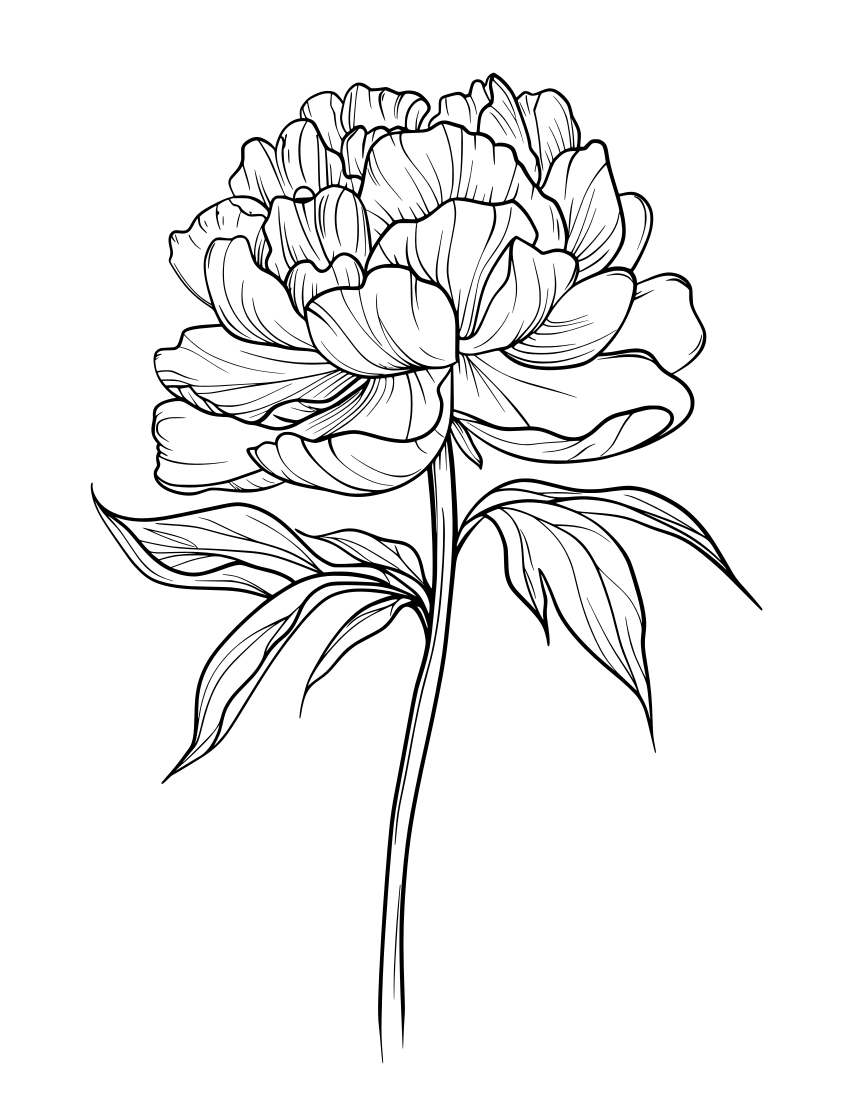
Vintage Violet Coloring Page evokes the refined world of Victorian botanical printing — the illustrated gift books, chromolithographic flower plates and hand-colored engravings that made botanical art one of the great aesthetic achievements of the 19th century. Part of our free flower coloring pages collection, this design is made for colorists who love the muted, harmonious palette of the historical botanical tradition.
The violet has been one of Europe's most poetically cherished wildflowers for centuries. Shakespeare wrote of the "sweet violet" in Twelfth Night and Hamlet, and the flower was associated with faithfulness and modesty across medieval European poetry. During the Victorian era, the sweet violet (Viola odorata) was fashionable as a nosegay flower — small bunches sold by street vendors and worn pinned to lapels or tucked into hair. The violet held extraordinary political significance in 19th-century France: when Napoleon was sent to Elba in 1814, his supporters adopted the violet as his symbol, earning him the nickname "Corporal Violet." Upon his return from Elba the following year, Parisians greeted him throwing violets. The violet became the flower of a revolution.
Violets are exquisitely subtle flowers: the five petals are not uniformly colored but show a radiating pattern of darker "nectar guides" — fine lines or striations that lead pollinators toward the center. The two upper petals are typically the deepest purple; the three lower petals are slightly lighter, often with distinctive dark purple veining on a pale background. For the classic sweet violet, work a deep blue-violet at the petal bases blending to a paler lavender at the edges, then add the fine nectar-guide lines last in a deeper shade. The vivid yellow-orange stamens in the center are a beautiful, tiny accent.
Achieving an authentic vintage botanical aesthetic requires deliberate restraint with your palette. Choose colors that feel slightly aged, slightly muted: dusty rose rather than hot pink, sage green rather than bright emerald, antique gold rather than vivid yellow. A very light wash of warm grey or pale sepia applied as a base layer creates the illusion of aged paper. Fine pencil hatching in the shadow areas — rather than flat color fills — echoes the engraving technique of 18th- and 19th-century botanical plates. The violet in a vintage treatment has the quality of a specimen encountered in an old illustrated book: precious, carefully observed, quietly beautiful. This vintage-style coloring page is free to download and print. Complete it with a muted botanical palette and it looks extraordinary mounted in a simple gilt or dark wood frame.
Leave a Comment
Comments
No comments yet. Be the first!