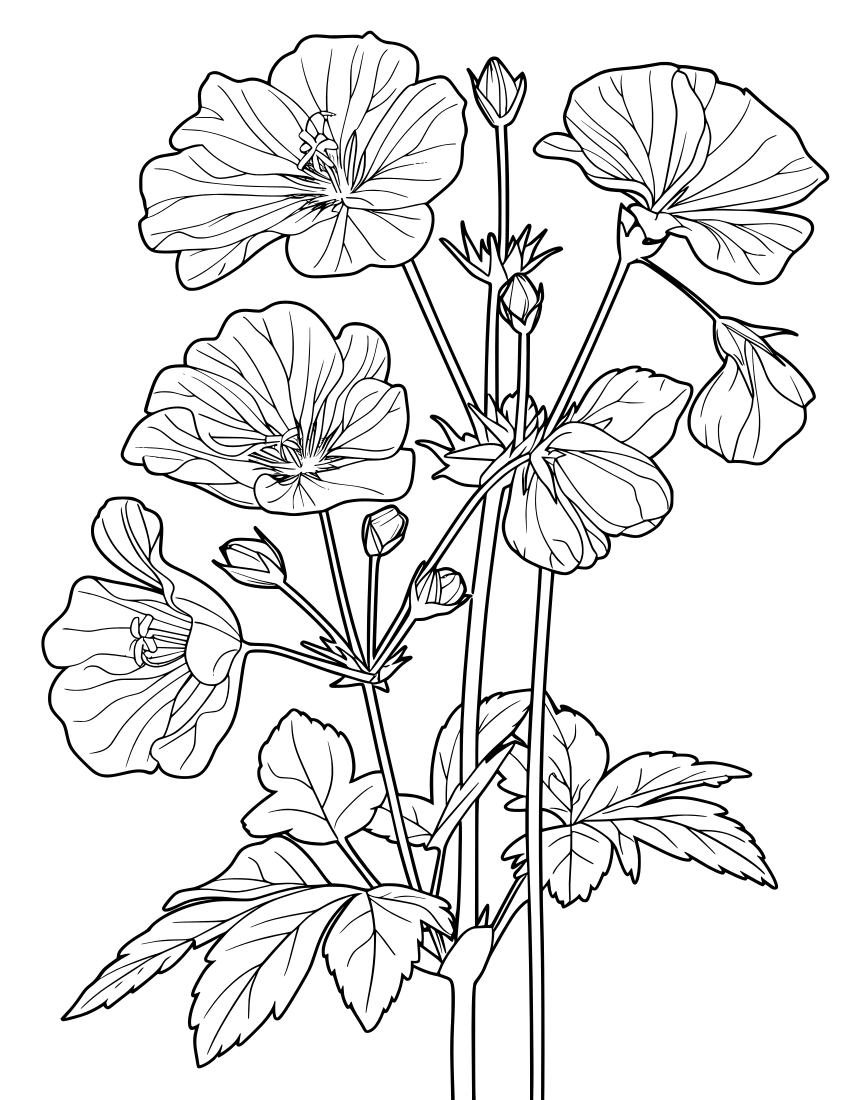
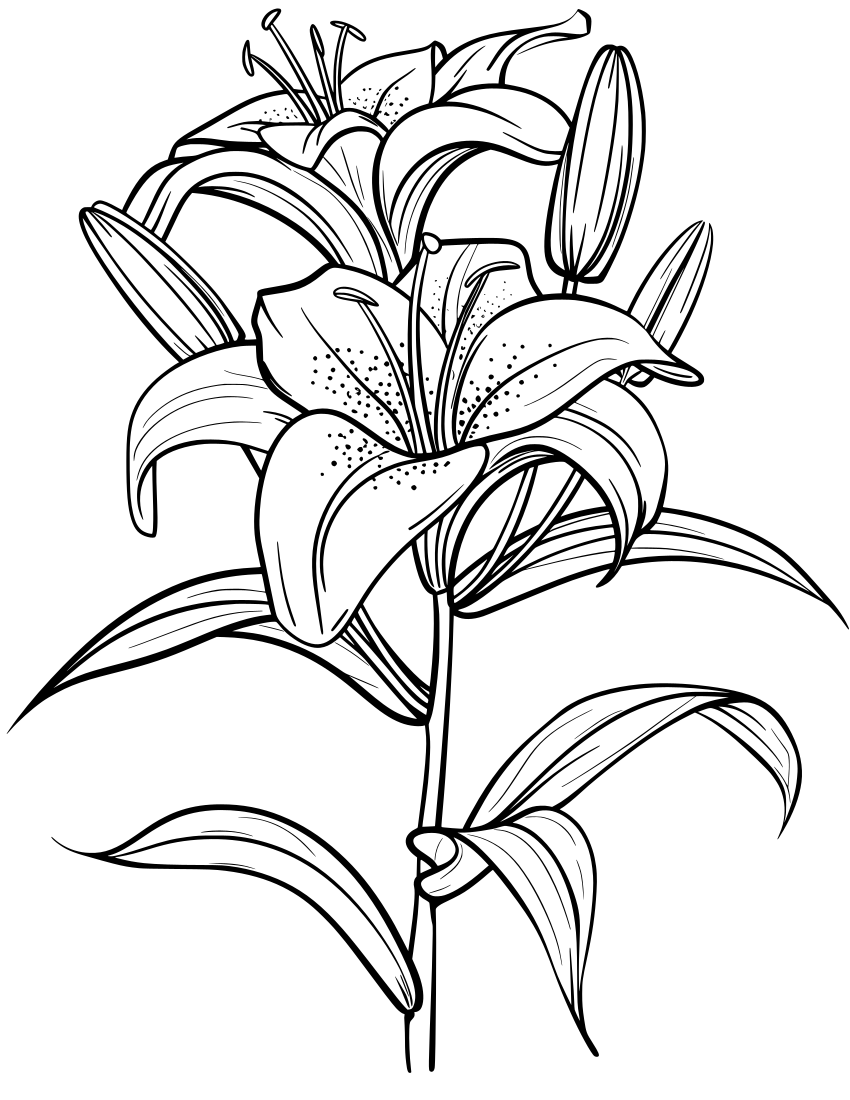
Botanical Geranium Coloring Page presents the geranium as a precise botanical study — combining the scientific accuracy of a natural history illustration with the aesthetic sensibility of a work of art. Part of our free flower coloring pages collection, this design is for colorists who love to engage with the actual form, structure and character of the flower they are coloring, not just its decorative potential.
The geranium (technically Pelargonium — a related but distinct genus) has been the quintessential windowbox flower of European cities for over two centuries, but its origins are South African. Pelargoniums were first brought to Europe from the Cape Colony in the early 17th century and became a botanical obsession: by the Victorian era, over 500 varieties were in cultivation, and the pelargonium had become a symbol of domestic propriety and middle-class respectability. The geranium in the window was the floral equivalent of net curtains — evidence of a clean, respectable household. More romantically, the geranium is used in the perfume industry: rose-scented geranium oil (Pelargonium graveolens) is one of the most important natural fragrance materials, used in rose-type perfumes since antiquity.
Geraniums are visually bold and characterful: their round-headed flower clusters (umbels) of vivid red, pink, salmon, coral, white or bi-colored florets sit above distinctively marked, rounded leaves with a darker concentric ring pattern. This leaf marking is a wonderful coloring detail — a zone of deeper green in a band across the mid-leaf, sometimes almost bronze or brown. The flower umbels benefit from treating each individual floret as a distinct unit: five petals, often with slightly different values, rather than filling the entire cluster as a single flat mass. The vivid flower colors against the strongly marked foliage create a characteristically cheerful, saturated effect.
Botanical illustration demands engagement with the actual structure of the geranium as a living plant. Before coloring, take a moment to study the design: identify the different floral parts (petals, sepals, stamens, pistil), the leaf attachment and venation pattern, the stem structure. Color each element with reference to its botanical reality: leaves are lighter on the upper surface (which receives more light) and darker on the underside. Stems show subtle surface texture. The goal is not a pretty decoration but an accurate, beautiful record — in which truth to observation is the highest aesthetic value. This botanical coloring page is available as a free high-quality PDF. Print on premium paper for the finest result — a completed page is a genuine piece of natural history art worth displaying.
Leave a Comment
Comments
No comments yet. Be the first!