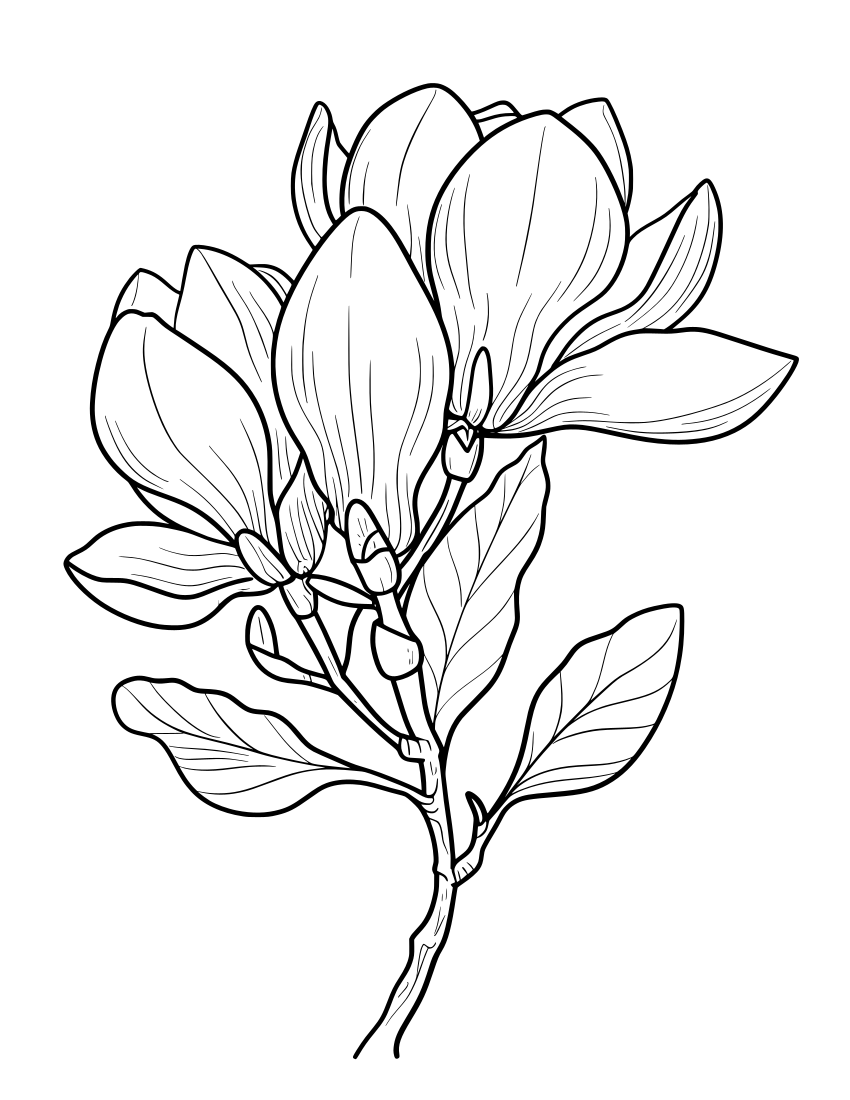
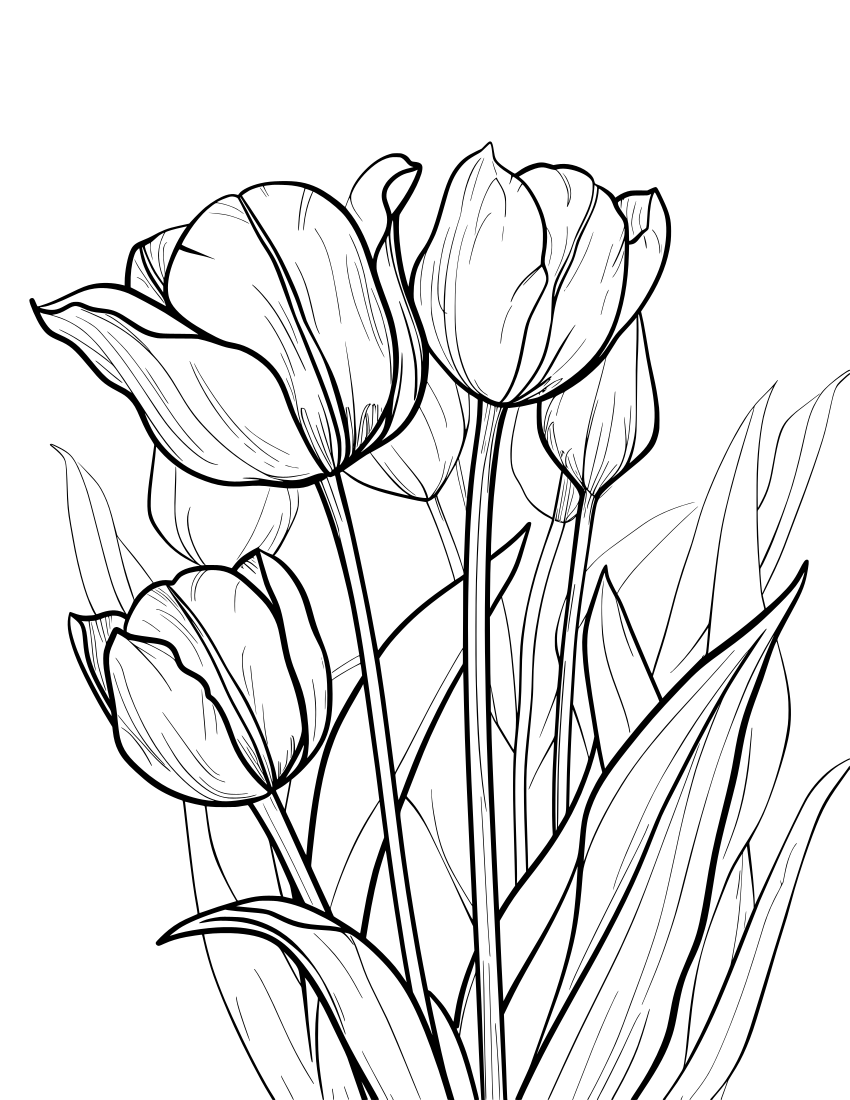
Botanical Lotus Coloring Page presents the lotus as a precise botanical study — combining the scientific accuracy of a natural history illustration with the aesthetic sensibility of a work of art. Part of our free flower coloring pages collection, this design is for colorists who love to engage with the actual form, structure and character of the flower they are coloring, not just its decorative potential.
The lotus occupies a unique place in world spirituality. In Hindu and Buddhist cosmology, the lotus is the throne of the gods: Brahma the creator sits on a lotus emerging from the navel of Vishnu; the Buddha is always depicted seated on a lotus. This symbolism derives from the lotus's miraculous biology: the plant rises each morning from muddy, stagnant water to open its pure, pristine flowers above the surface — a living metaphor for spiritual transcendence, the emergence of the pure from the impure. Ancient Egyptians worshipped the blue lotus (Nymphaea caerulea) as a symbol of creation and rebirth — it appears in thousands of wall paintings and carvings. The lotus seed can lie dormant for 1,300 years and still germinate.
The lotus displays a beautiful architectural symmetry: concentric rings of petals surrounding a distinctive flat-topped seed pod at the center. The outer petals are typically the largest and most open; as you move inward, the petals become progressively smaller and more upright, cupping the center pod. Indian sacred lotuses range from pure white through the palest pink to a deep, warm rose — color them accordingly, with the deepest tones at the petal bases and the lightest at the tips. The seed pod itself is a wonderful geometric element: a dome of holes, best rendered in warm olive or ochre.
Botanical illustration demands engagement with the actual structure of the lotus as a living plant. Before coloring, take a moment to study the design: identify the different floral parts (petals, sepals, stamens, pistil), the leaf attachment and venation pattern, the stem structure. Color each element with reference to its botanical reality: leaves are lighter on the upper surface (which receives more light) and darker on the underside. Stems show subtle surface texture. The goal is not a pretty decoration but an accurate, beautiful record — in which truth to observation is the highest aesthetic value. This botanical coloring page is available as a free high-quality PDF. Print on premium paper for the finest result — a completed page is a genuine piece of natural history art worth displaying.
Leave a Comment
Comments
No comments yet. Be the first!