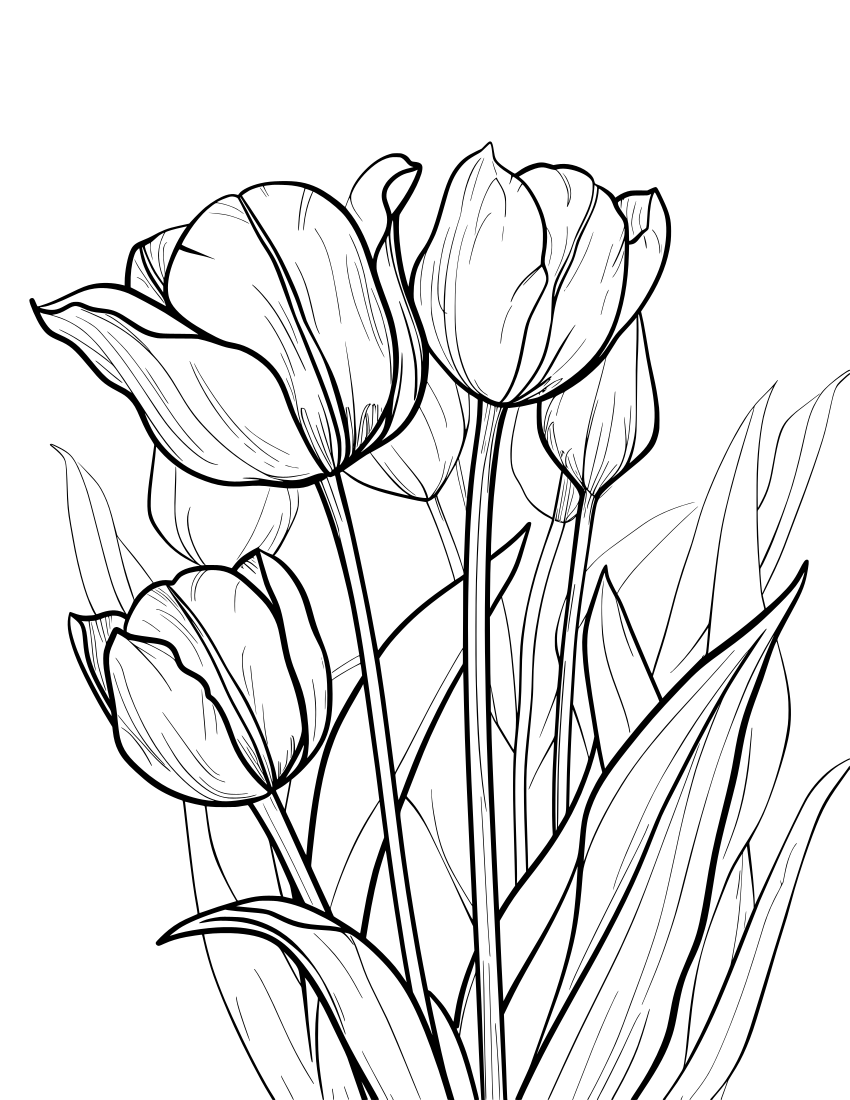
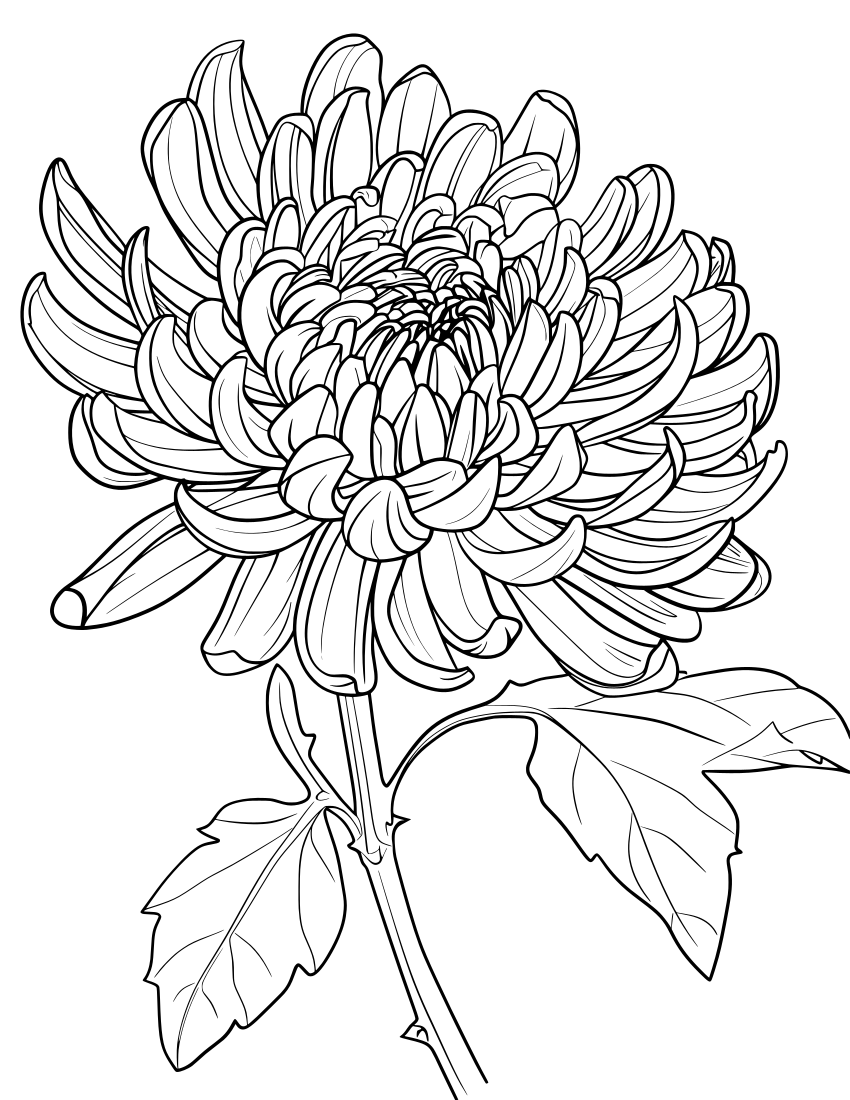
Botanical Daffodil Coloring Page presents the daffodil as a precise botanical study — combining the scientific accuracy of a natural history illustration with the aesthetic sensibility of a work of art. Part of our free flower coloring pages collection, this design is for colorists who love to engage with the actual form, structure and character of the flower they are coloring, not just its decorative potential.
The daffodil has been a symbol of spring's return for thousands of years — but it entered the literary imagination most powerfully through William Wordsworth's poem "I Wandered Lonely as a Cloud" (1807), inspired by a mass of daffodils he and his sister Dorothy encountered at Ullswater in the Lake District. "Ten thousand saw I at a glance, / Tossing their heads in sprightly dance." In Welsh tradition, the daffodil is the national flower, worn on St. David's Day (1 March). In ancient Greek mythology, the daffodil is named for Narcissus, the youth who fell in love with his own reflection and was transformed into a flower — giving us the word "narcissism." The daffodil is also the symbol of cancer charities in several countries, sold in the millions each year to fund cancer research.
The daffodil's distinctive two-part structure — the flat, star-like "perianth" of six petals surrounding the central trumpet-shaped "corona" — offers a beautiful coloring opportunity. The corona (trumpet) is typically deeper and more vivid in color than the surrounding petals: rich golden orange for classic daffodils, apricot or deep coral for some varieties. The perianth petals are cooler and lighter, often a clean lemon-yellow or cream-white. Let the trumpet be your color statement; the petals provide the backdrop. The long, elegant stems and strap-like leaves are a clean, cool blue-green.
Botanical illustration demands engagement with the actual structure of the daffodil as a living plant. Before coloring, take a moment to study the design: identify the different floral parts (petals, sepals, stamens, pistil), the leaf attachment and venation pattern, the stem structure. Color each element with reference to its botanical reality: leaves are lighter on the upper surface (which receives more light) and darker on the underside. Stems show subtle surface texture. The goal is not a pretty decoration but an accurate, beautiful record — in which truth to observation is the highest aesthetic value. This botanical coloring page is available as a free high-quality PDF. Print on premium paper for the finest result — a completed page is a genuine piece of natural history art worth displaying.
Leave a Comment
Comments
No comments yet. Be the first!