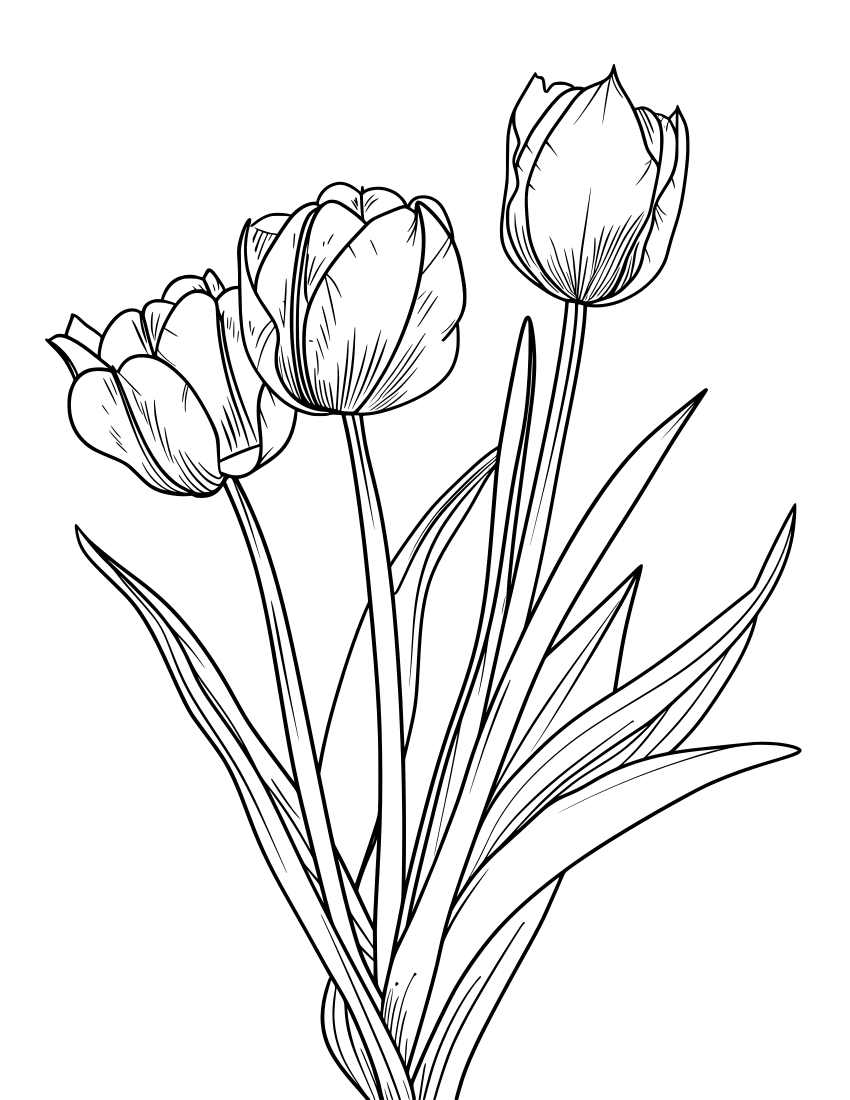
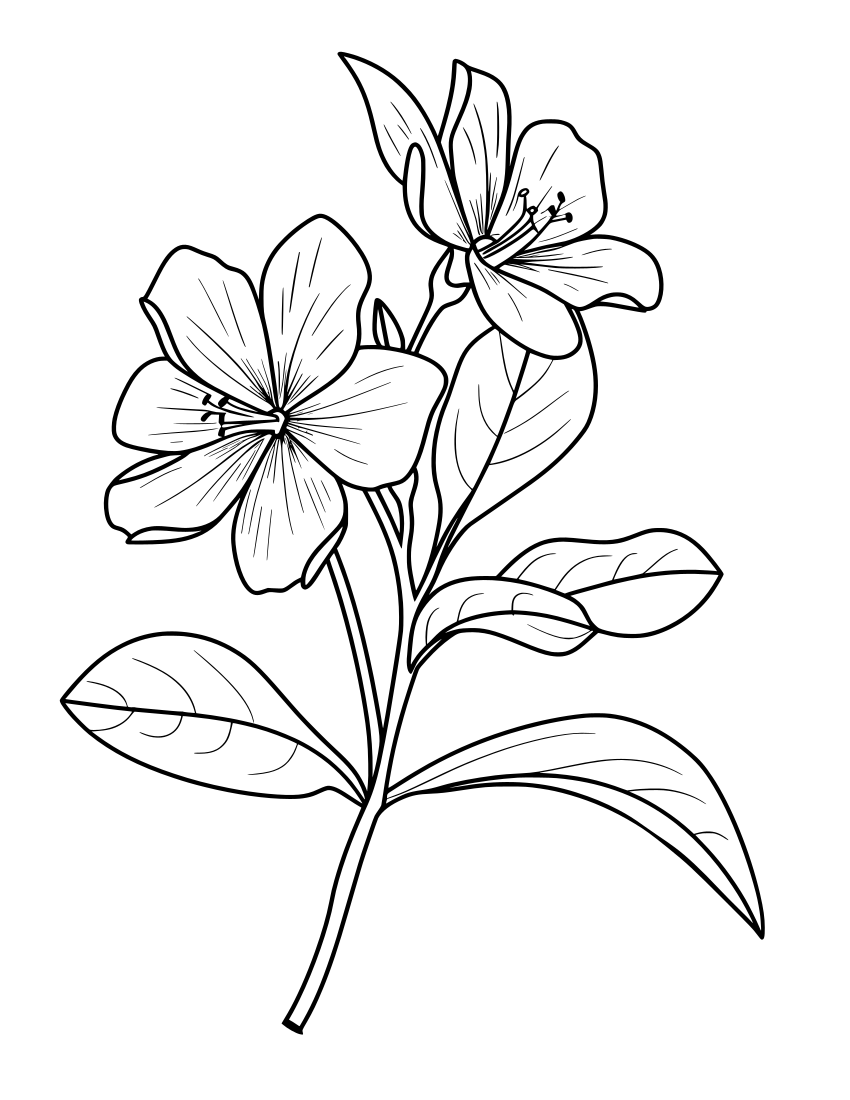
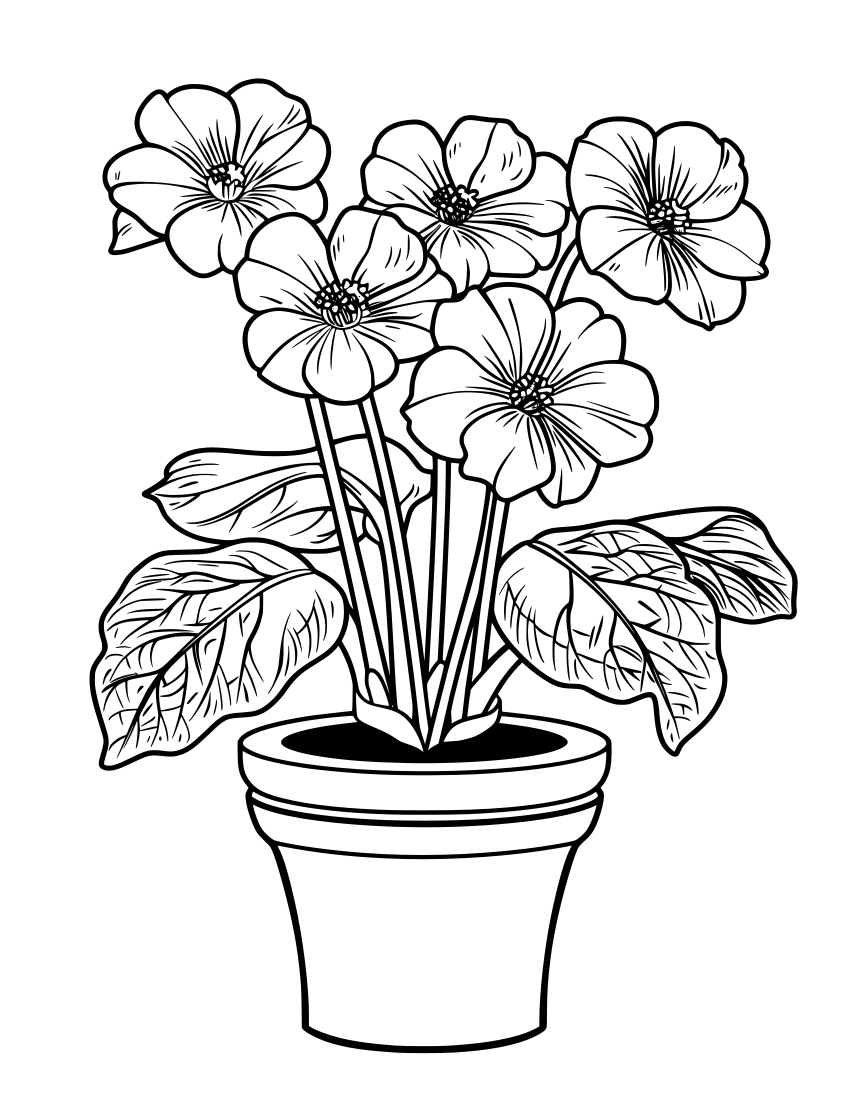
Botanical Violet Coloring Page presents the violet as a precise botanical study — combining the scientific accuracy of a natural history illustration with the aesthetic sensibility of a work of art. Part of our free flower coloring pages collection, this design is for colorists who love to engage with the actual form, structure and character of the flower they are coloring, not just its decorative potential.
The violet has been one of Europe's most poetically cherished wildflowers for centuries. Shakespeare wrote of the "sweet violet" in Twelfth Night and Hamlet, and the flower was associated with faithfulness and modesty across medieval European poetry. During the Victorian era, the sweet violet (Viola odorata) was fashionable as a nosegay flower — small bunches sold by street vendors and worn pinned to lapels or tucked into hair. The violet held extraordinary political significance in 19th-century France: when Napoleon was sent to Elba in 1814, his supporters adopted the violet as his symbol, earning him the nickname "Corporal Violet." Upon his return from Elba the following year, Parisians greeted him throwing violets. The violet became the flower of a revolution.
Violets are exquisitely subtle flowers: the five petals are not uniformly colored but show a radiating pattern of darker "nectar guides" — fine lines or striations that lead pollinators toward the center. The two upper petals are typically the deepest purple; the three lower petals are slightly lighter, often with distinctive dark purple veining on a pale background. For the classic sweet violet, work a deep blue-violet at the petal bases blending to a paler lavender at the edges, then add the fine nectar-guide lines last in a deeper shade. The vivid yellow-orange stamens in the center are a beautiful, tiny accent.
Botanical illustration demands engagement with the actual structure of the violet as a living plant. Before coloring, take a moment to study the design: identify the different floral parts (petals, sepals, stamens, pistil), the leaf attachment and venation pattern, the stem structure. Color each element with reference to its botanical reality: leaves are lighter on the upper surface (which receives more light) and darker on the underside. Stems show subtle surface texture. The goal is not a pretty decoration but an accurate, beautiful record — in which truth to observation is the highest aesthetic value. This botanical coloring page is available as a free high-quality PDF. Print on premium paper for the finest result — a completed page is a genuine piece of natural history art worth displaying.
Leave a Comment
Comments
No comments yet. Be the first!