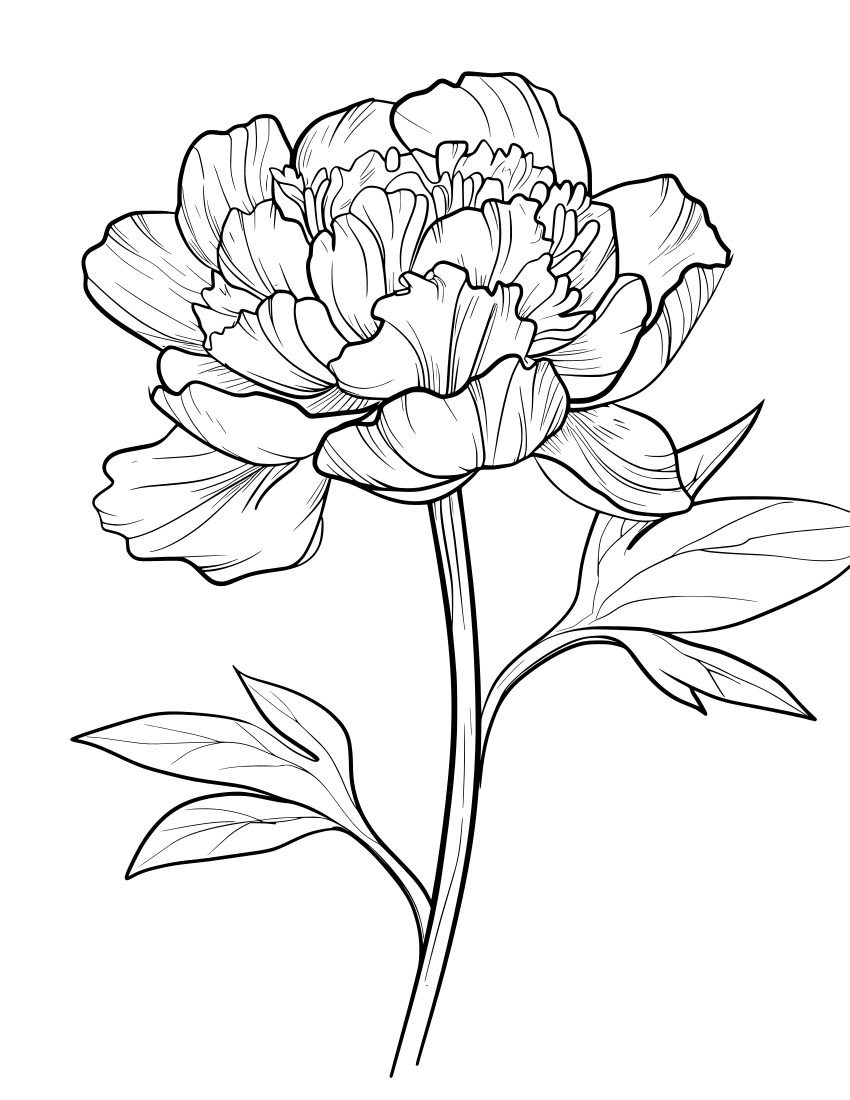
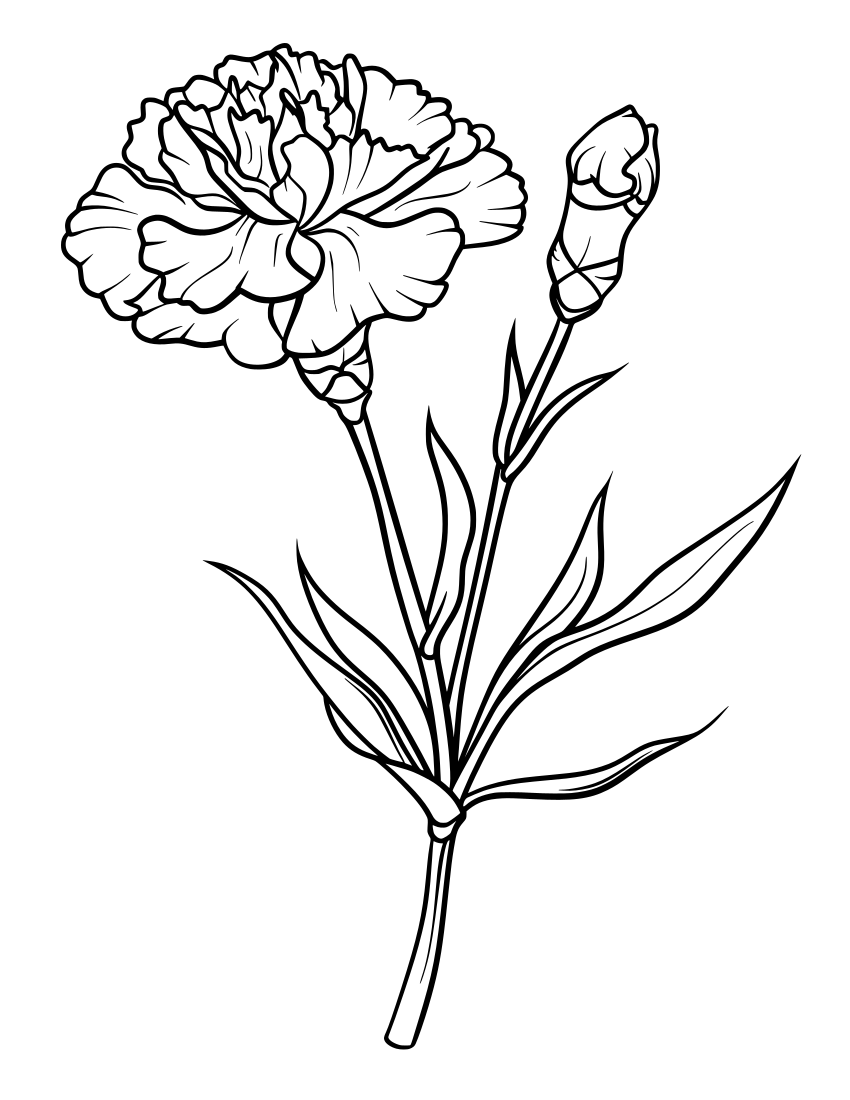
Delicate Chrysanthemum Coloring Page presents the chrysanthemum in the finest tradition of botanical line art — every petal edge, leaf vein and stem detail rendered with the precision and delicacy of a 19th-century scientific illustration. Part of our free flower coloring pages collection, this design is created for colorists who love the meditative satisfaction of fine, careful work.
The chrysanthemum has been cultivated in China for over 2,500 years, where it is one of the "Four Gentlemen" of Chinese art (alongside plum blossom, orchid and bamboo) — representing autumn, nobility and longevity. Introduced to Japan in the 8th century CE, it became so central to Japanese culture that the 16-petalled chrysanthemum serves as the Imperial Seal of Japan, and the Emperor sits on the Chrysanthemum Throne. Japan celebrates the Kiku no Sekku (Festival of Chrysanthemums) each ninth day of the ninth month. When chrysanthemums reached Europe in the 17th century, they caused a botanical sensation — and today the chrysanthemum remains one of the world's most commercially important cut flowers, grown in vast quantities for festivals, funerals and daily bouquets worldwide.
Chrysanthemums come in an extraordinary variety of forms — from simple daisy-like single flowers to dense spherical pompons, from reflexed varieties with backward-curving petals to spider chrysanthemums with long, quill-like ray florets. The pompon form is perhaps the most visually satisfying to color: a perfect sphere of tightly packed petals, each one slightly darker toward the centre and lighter at the tip. Use a systematic approach — work from the outermost ring of petals inward, incrementally deepening the color with each ring. Classic chrysanthemum colors include deep golden yellow, rich bronze, vivid red, pure white and soft lavender.
Fine botanical line art requires fine tools and a fine touch. Use sharpened colored pencils (harder leads — H or 2H — for the thinnest details) and build color in multiple light layers rather than applying it all at once. For the chrysanthemum's more detailed elements — vein patterns, stamen details, petal textures — work with minimal pressure and maximum patience. Leave highlights completely uncolored: this is especially important for delicate designs where a white highlight on a petal edge or the tip of a stamen suggests three-dimensionality without heavy shading. This delicate coloring page is available as a free high-resolution PDF. Print on smooth, heavier paper (100 g/m² or above) for the finest coloring experience — the delicacy of the design deserves the best surface you can offer it.
Leave a Comment
Comments
No comments yet. Be the first!