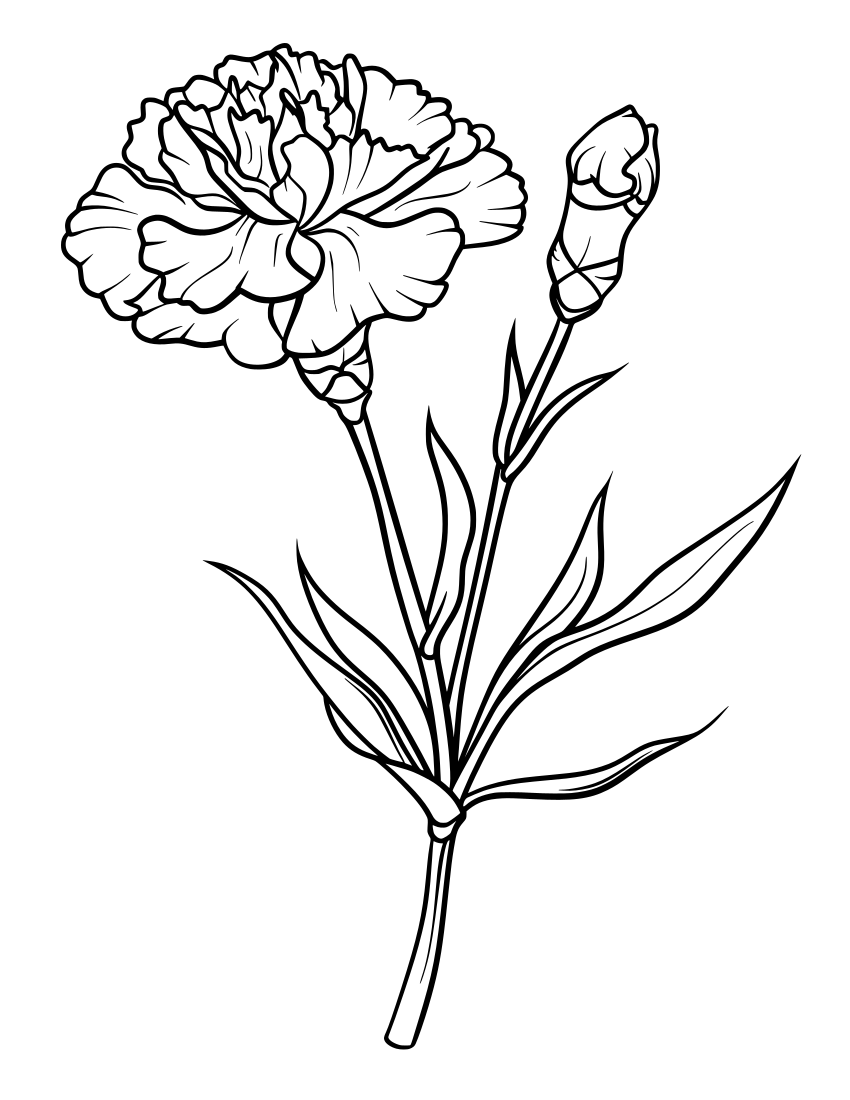
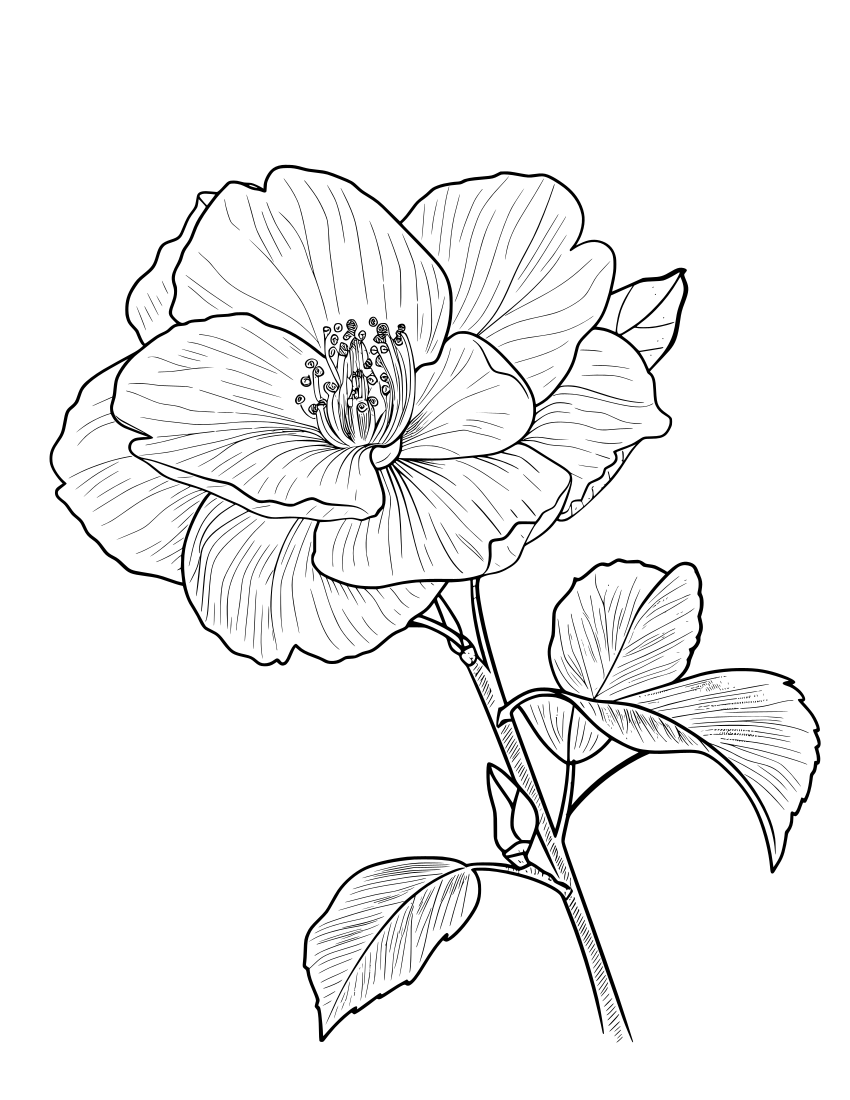
Delicate Dahlia Coloring Page presents the dahlia in the finest tradition of botanical line art — every petal edge, leaf vein and stem detail rendered with the precision and delicacy of a 19th-century scientific illustration. Part of our free flower coloring pages collection, this design is created for colorists who love the meditative satisfaction of fine, careful work.
The dahlia is the national flower of Mexico, where the Aztecs cultivated it for food (the tubers are edible), medicine and decoration. When the Spanish brought dahlias to Europe in the late 18th century, there were attempts to cultivate them as a food crop — but it was as an ornamental flower that the dahlia triumphed. The early 19th century saw the beginning of "dahlia mania": intensive breeding programmes in France, Germany and England produced increasingly spectacular varieties, and dahlia shows became major social events. By 1826, over 200 varieties were in cultivation; today there are over 57,000 registered varieties. The dahlia is named after the Swedish botanist Anders Dahl, a student of Linnaeus — who never knew the extraordinary proliferation his namesake would achieve.
Dahlias offer perhaps the greatest formal variety of any coloring subject: from simple single flowers to elaborate cactus dahlias with spiky quilled petals, waterlily dahlias with broad flat blooms, and dinner-plate dahlias that can exceed 30cm in diameter. The pompom and ball forms — perfect geometric spheres of tightly packed florets — are particularly satisfying to color with a systematic, radial approach. Dahlias are available in every color except blue: the so-called "black" dahlias (like "Karma Choc") are an extraordinary deep chocolate-burgundy that photographs almost black. Bi-colored varieties with distinct zones or tips in contrasting colors offer spectacular coloring possibilities.
Fine botanical line art requires fine tools and a fine touch. Use sharpened colored pencils (harder leads — H or 2H — for the thinnest details) and build color in multiple light layers rather than applying it all at once. For the dahlia's more detailed elements — vein patterns, stamen details, petal textures — work with minimal pressure and maximum patience. Leave highlights completely uncolored: this is especially important for delicate designs where a white highlight on a petal edge or the tip of a stamen suggests three-dimensionality without heavy shading. This delicate coloring page is available as a free high-resolution PDF. Print on smooth, heavier paper (100 g/m² or above) for the finest coloring experience — the delicacy of the design deserves the best surface you can offer it.
Leave a Comment
Comments
No comments yet. Be the first!