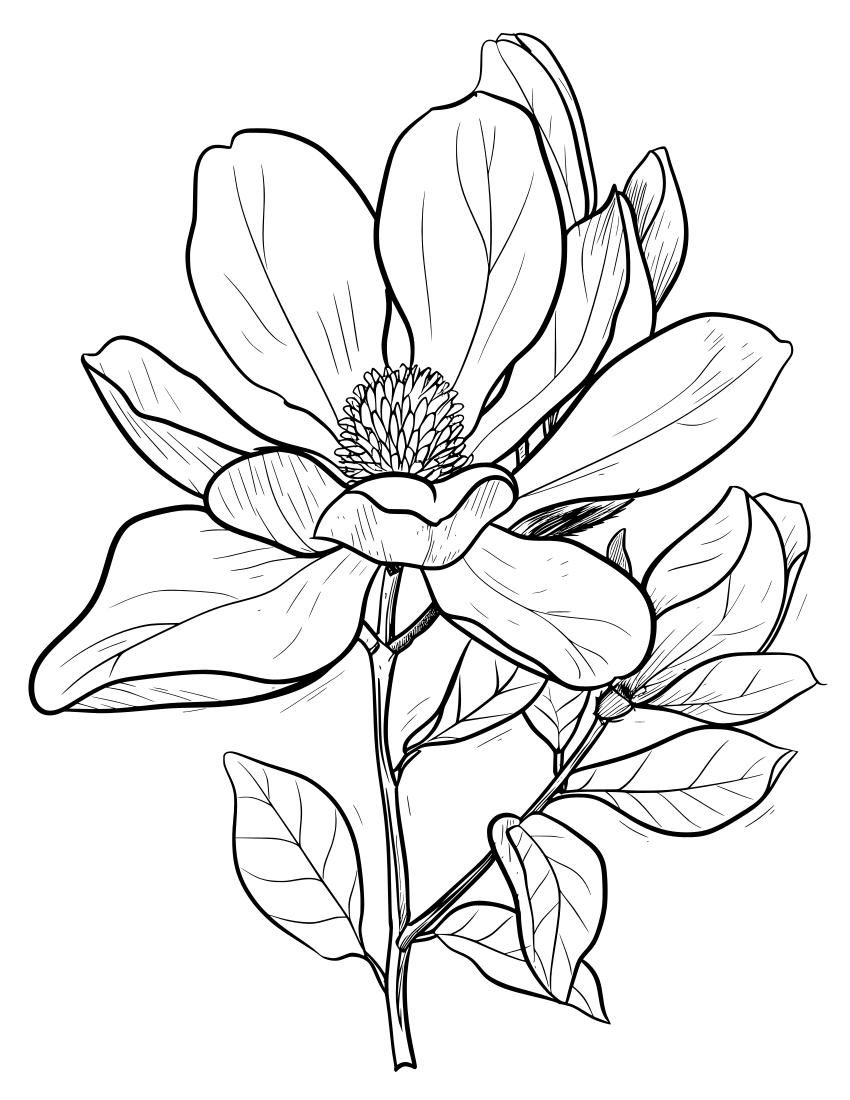
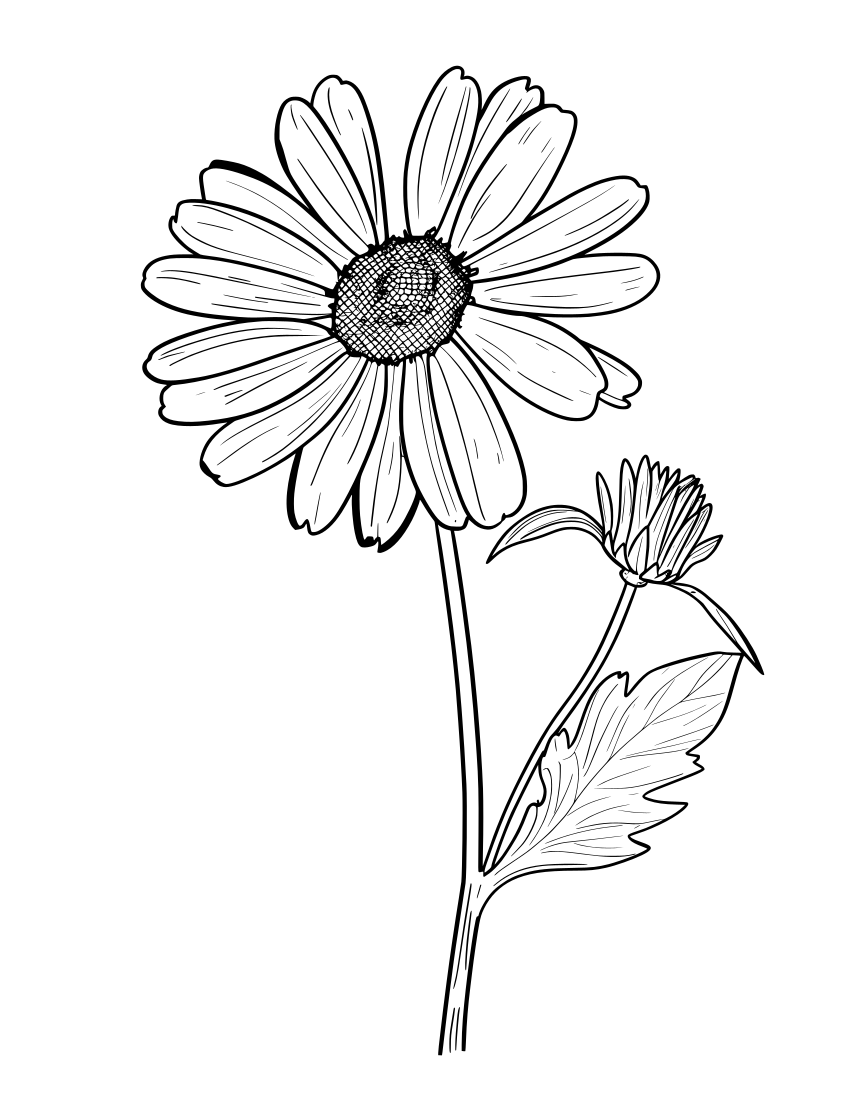
Delicate Geranium Coloring Page presents the geranium in the finest tradition of botanical line art — every petal edge, leaf vein and stem detail rendered with the precision and delicacy of a 19th-century scientific illustration. Part of our free flower coloring pages collection, this design is created for colorists who love the meditative satisfaction of fine, careful work.
The geranium (technically Pelargonium — a related but distinct genus) has been the quintessential windowbox flower of European cities for over two centuries, but its origins are South African. Pelargoniums were first brought to Europe from the Cape Colony in the early 17th century and became a botanical obsession: by the Victorian era, over 500 varieties were in cultivation, and the pelargonium had become a symbol of domestic propriety and middle-class respectability. The geranium in the window was the floral equivalent of net curtains — evidence of a clean, respectable household. More romantically, the geranium is used in the perfume industry: rose-scented geranium oil (Pelargonium graveolens) is one of the most important natural fragrance materials, used in rose-type perfumes since antiquity.
Geraniums are visually bold and characterful: their round-headed flower clusters (umbels) of vivid red, pink, salmon, coral, white or bi-colored florets sit above distinctively marked, rounded leaves with a darker concentric ring pattern. This leaf marking is a wonderful coloring detail — a zone of deeper green in a band across the mid-leaf, sometimes almost bronze or brown. The flower umbels benefit from treating each individual floret as a distinct unit: five petals, often with slightly different values, rather than filling the entire cluster as a single flat mass. The vivid flower colors against the strongly marked foliage create a characteristically cheerful, saturated effect.
Fine botanical line art requires fine tools and a fine touch. Use sharpened colored pencils (harder leads — H or 2H — for the thinnest details) and build color in multiple light layers rather than applying it all at once. For the geranium's more detailed elements — vein patterns, stamen details, petal textures — work with minimal pressure and maximum patience. Leave highlights completely uncolored: this is especially important for delicate designs where a white highlight on a petal edge or the tip of a stamen suggests three-dimensionality without heavy shading. This delicate coloring page is available as a free high-resolution PDF. Print on smooth, heavier paper (100 g/m² or above) for the finest coloring experience — the delicacy of the design deserves the best surface you can offer it.
Leave a Comment
Comments
No comments yet. Be the first!