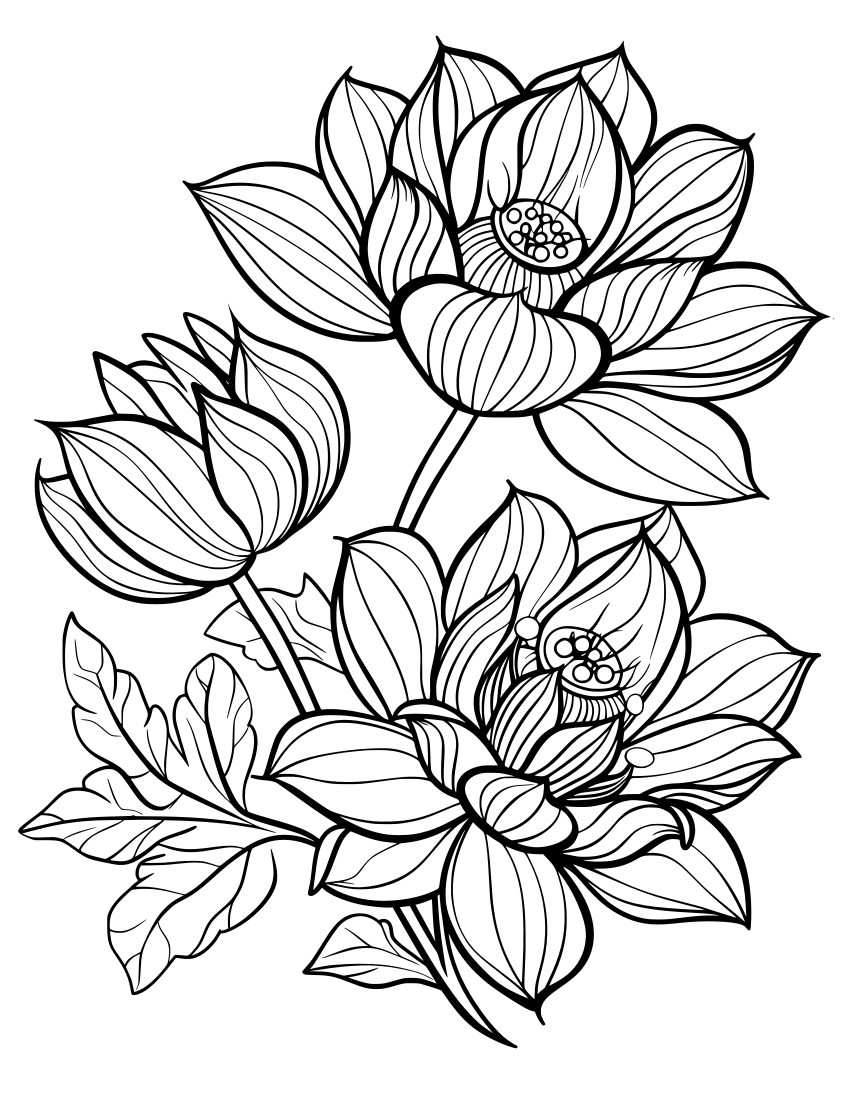
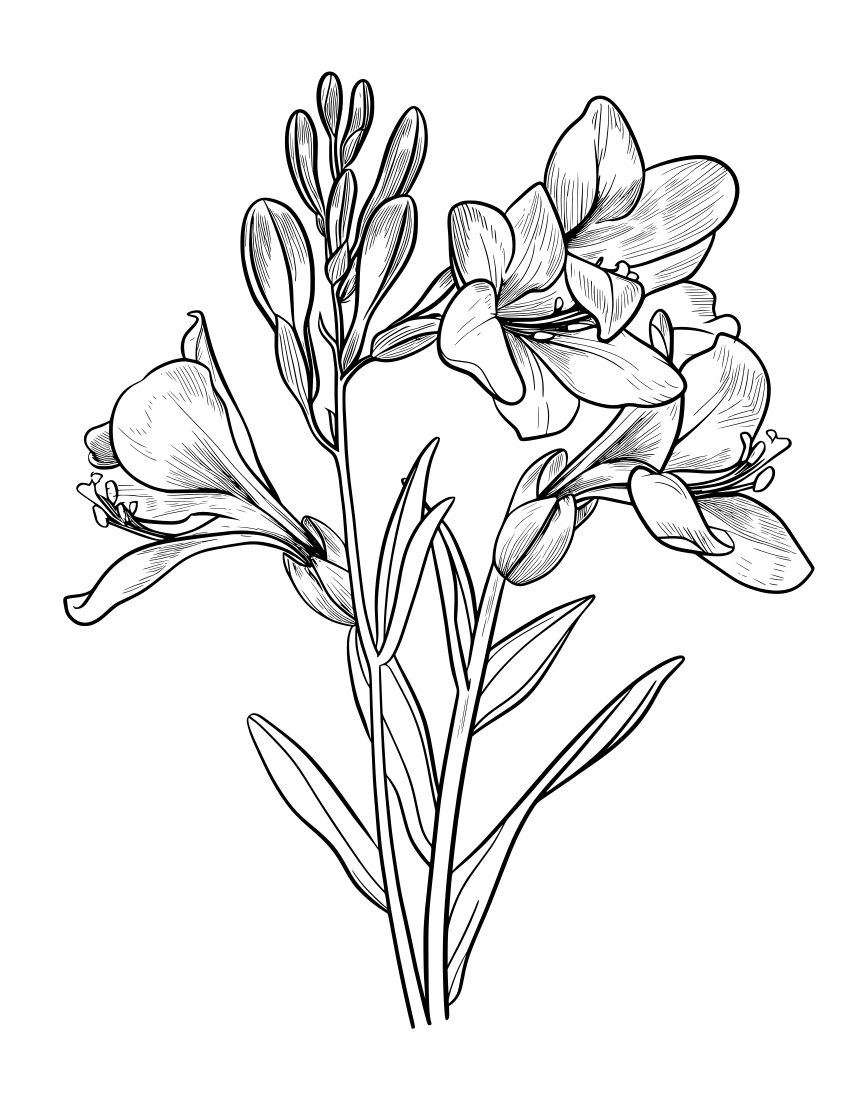
Vintage Marigold Coloring Page evokes the refined world of Victorian botanical printing — the illustrated gift books, chromolithographic flower plates and hand-colored engravings that made botanical art one of the great aesthetic achievements of the 19th century. Part of our free flower coloring pages collection, this design is made for colorists who love the muted, harmonious palette of the historical botanical tradition.
No flower is more deeply embedded in the spiritual life of two great cultures — the Aztec and the Hindu — than the marigold. In ancient Mexico, marigolds (cempasúchil) were sacred to the dead: their vivid orange color and strong scent were believed to guide spirits back to the world of the living during the Festival of the Dead. This tradition lives on in Mexico's extraordinary DÃa de los Muertos celebrations, where marigold petals are still strewn in elaborate paths leading from cemetery to home altar. In India, the marigold is the most important flower in Hindu ritual: temple offerings, wedding garlands, festival decorations and funeral rites all use marigolds in vast quantities — India produces over 400,000 tonnes of marigolds annually.
Marigolds come in a glorious range of warm colors — from pale lemon through golden yellow, tangerine, deep orange to rusty red-brown — often with multiple tones in a single bloom. The densely packed ray florets (each "petal" is actually an individual flower) create a pompon-like roundness that responds beautifully to careful tonal work: lighter at the outer edges, progressively richer and more saturated as you fill the inner layers. The contrast between the vivid orange of the flower and the pungent, feathery, deep green foliage is one of the most satisfying in the garden to render.
Achieving an authentic vintage botanical aesthetic requires deliberate restraint with your palette. Choose colors that feel slightly aged, slightly muted: dusty rose rather than hot pink, sage green rather than bright emerald, antique gold rather than vivid yellow. A very light wash of warm grey or pale sepia applied as a base layer creates the illusion of aged paper. Fine pencil hatching in the shadow areas — rather than flat color fills — echoes the engraving technique of 18th- and 19th-century botanical plates. The marigold in a vintage treatment has the quality of a specimen encountered in an old illustrated book: precious, carefully observed, quietly beautiful. This vintage-style coloring page is free to download and print. Complete it with a muted botanical palette and it looks extraordinary mounted in a simple gilt or dark wood frame.
Leave a Comment
Comments
No comments yet. Be the first!